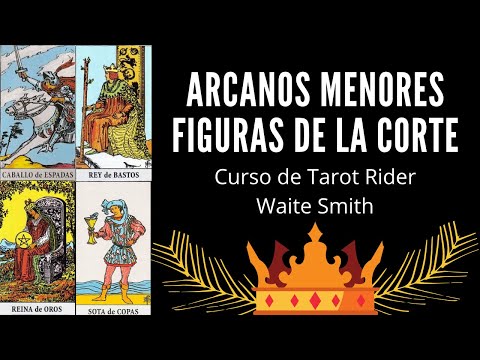
ARCANOS MENORES: SOTA, CABALLERO, REINA Y REY - Curso de Tarot online gratuito Rider Waite Smith
Understanding the Court Cards in Tarot
Introduction to Court Cards
- The video introduces the topic of court cards in the minor arcana of tarot, specifically within the Ryder-Waite deck.
- The presenter, Andy, welcomes viewers and encourages new subscribers to engage with the channel.
Significance of Court Cards
- Each suit (Cups, Swords, Wands, Pentacles) contains four additional court cards: Page (Sota), Knight (Caballero), Queen (Reina), and King (Rey).
- Court cards can represent not only people but also energies or messages; they are complex symbols that require careful interpretation.
Interpretation Challenges
- Understanding whether a court card represents the querent, someone close to them, or an energy is crucial for accurate readings.
- The meanings shared among all Pages, Knights, Queens, and Kings will be explored before delving into their specific interpretations by suit.
Characteristics of Court Cards
- Pages symbolize beginnings—new projects or communications—while Knights indicate active situations and movement.
- Queens often represent mature relationships and feminine energy; Kings signify completion and stability in situations.
Physical Descriptions Associated with Court Cards
- Pages may represent younger individuals or children; Knights typically embody energetic young adults aged 25–35.
Understanding Court Cards in Tarot
The Representation of Gender in Court Cards
- The court cards (kings, queens, knights, and pages) can represent any gender; their interpretation depends on the energy of the querent.
- Individuals may embody masculine or feminine energies regardless of their physical representation; for example, some women may exhibit strong leadership qualities while some men may be more emotionally receptive.
Elements Associated with Court Cards
- Each suit corresponds to an element: Pentacles (Earth), Swords (Air), Cups (Water), and Wands (Fire).
- Understanding these elements is crucial for interpreting the nuances of each court card's meaning.
Detailed Analysis of Page Cards
Page of Pentacles
- Represents a young person eager to learn and materialize projects; they are detail-oriented and perfectionistic.
- Inverted, it suggests frustration or stagnation in new economic ventures.
Page of Wands
- Symbolizes a restless youth looking towards future adventures and projects; often associated with travel.
- When inverted, it indicates potential hyperactivity or an inability to focus on tasks at hand.
Page of Swords
- Depicts a vigilant individual ready to face challenges despite lacking experience; emphasizes communication skills.
- Inverted, it could signify stress related to academic endeavors or negative surveillance behavior.
Page of Cups
- Represents a creative and emotional youth with artistic inclinations; has strong connections with nature.
- Inverted, it reflects emotional instability and immaturity in handling feelings.
Knight Cards Overview
Knight of Pentacles
- Characterized as steady but slow-moving; signifies reliable economic growth opportunities.
- Inverted, it warns against financial stagnation or missed opportunities due to lack of action.
Knight of Wands
- A dynamic figure known for high energy and ambition; often linked with sexual power and exploration.
- When reversed, it suggests difficulties in controlling temper or delays in work-related projects.
Knight of Swords
- An intelligent knight who acts quickly based on conviction; excels in communication but risks impulsivity.
- Inverted, this card warns against hasty actions leading to conflicts or verbal disputes.
Knight of Cups
Understanding Tarot Court Cards
The Significance of Love and Relationships in Tarot
- The concept of love is presented as beneficial, indicating a potential suitor who may struggle with emotional management or manipulation.
- A halted or frustrated relationship can signify stagnation, particularly when court cards appear inverted.
Archetypes of the Queens in Tarot
Queen of Pentacles
- Represents a nurturing woman archetype, attentive to her surroundings and skilled in business; fertility is also a key aspect.
- Inverted, she may symbolize a controlling mother figure or caregiver who restricts others' growth and could indicate exhaustion from caregiving roles.
Queen of Wands
- Known for her strong connection to sexuality and mysticism; she embodies leadership and independence.
- When inverted, this queen may represent insecurity or misuse of power to harm others, possibly depicting an overbearing boss.
Queen of Swords
- Portrays intelligence and communication skills; often associated with academia or writing but can be perceived as cold.
- Inverted, she might reflect gossiping tendencies or an authoritative figure lacking effective communication skills.
Queen of Cups
- Embodies emotional depth and healing abilities; represents wisdom in managing emotions.
- Inverted, it suggests someone who is emotionally guarded or manipulative towards others’ feelings.
Archetypes of the Kings in Tarot
King of Pentacles
- Known as the "King Midas" for his business acumen; he exudes confidence and stability.
- Inverted, he may depict stinginess or poor financial management skills leading to monotony.
King of Wands
- A charismatic leader known for decisiveness; typically represents authority figures like bosses or community leaders.
- When inverted, he could symbolize physical violence or reluctance to lead effectively.
King of Swords
- Represents intelligence and strong communication skills; often linked to teaching roles but can come off as detached.
- Inverted, he may show obstinacy leading to verbal conflicts where his opinions dominate discussions.
King of Cups
- Symbolizes emotional balance and control; often associated with professions in medicine and creative fields.
Exploring Tarot Court Cards and Their Symbols
Overview of Tarot Court Cards
- The video discusses additional videos that will delve into the symbols associated with each tarot card, aiming to deepen understanding of their meanings.
- Viewers are encouraged to leave questions in the comments section for further clarification on the topics discussed.
Conclusion and Encouragement
- The presenter expresses hope that viewers enjoyed learning about the court figures of the Ryder-Waite tarot deck and gained new insights.
- A reminder is given to like and share the video if it was helpful, promoting community engagement.