Burj Khalifa | The Secrets of its incredibly Strong Foundation
New Section
The foundation of the Burj Khalifa is discussed, highlighting its depth, construction challenges, and the importance of electricity for its stability.
Foundation Construction Challenges
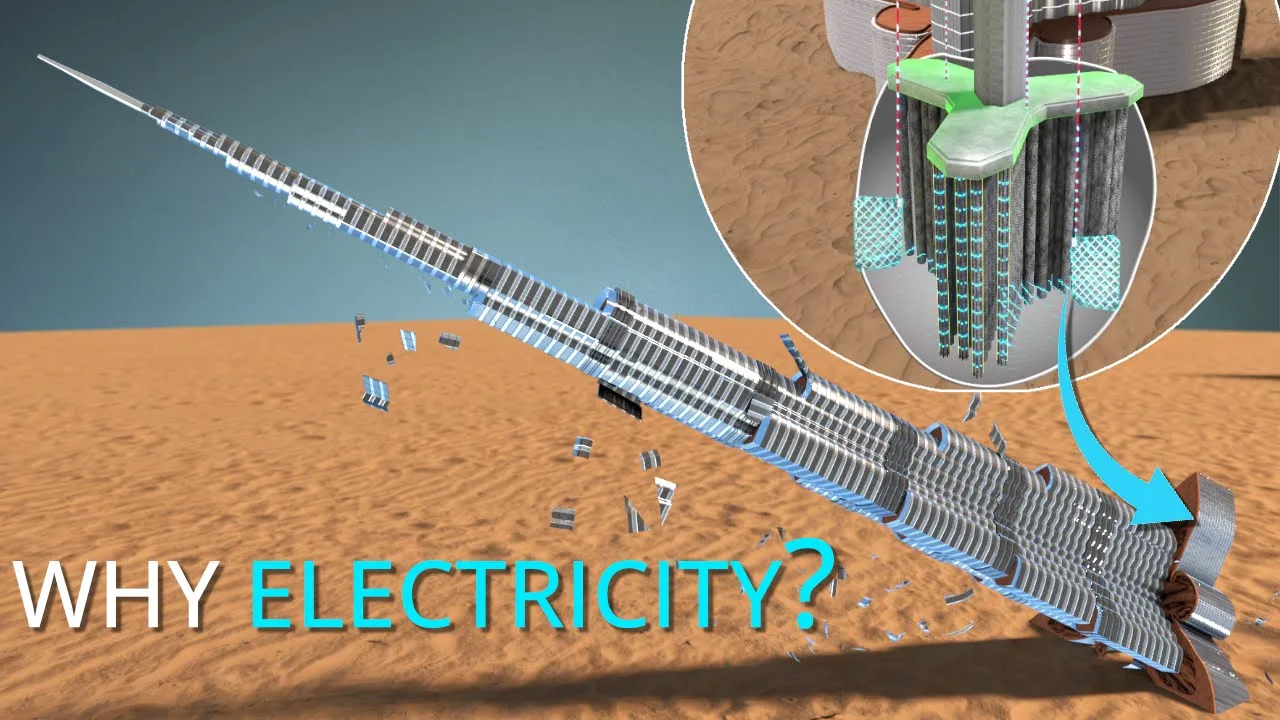
- The foundation of the Burj Khalifa is as deep as a ten-story building and must carry electricity 24/7 to maintain its strength.
- Constructing the raft foundation involved pouring a massive amount of concrete in extreme heat, requiring work at night and mixing with ice cubes.
- The process included placing steel rebar, pouring concrete in four parts over 24 hours each due to Dubai's high temperatures.
Soil Settlement Challenge
Soil settlement challenges faced during the construction of the Burj Khalifa are explored, emphasizing the importance of proper design calculations.
Understanding Soil Settlement
- Chief Design Engineer Mr. Bill Baker faces challenges like soil settlement due to incorrect design calculations.
- Normal building construction relies on hard strata for support; however, Dubai's loose sand poses settlement risks if not managed properly.
Innovative Foundation Solution
The innovative solution by Chief Engineer Bill Baker involving frictional force and piles to prevent excessive settlement is detailed.
Frictional Force Solution
- Traditional raft foundations were unsuitable due to weak soil; hence, frictional force generated by piles was used for stability.
- Piles equal to 10 floors' height were added below the foundation to counteract settling issues effectively.
Pile Construction Challenges
Challenges faced during pile construction are discussed, focusing on drilling techniques and groundwater management.
Overcoming Construction Hurdles
- Groundwater issues required using drilling fluid to prevent borehole collapse during pile construction.
- Special concrete (SCC C60) that flows easily was utilized due to deep boreholes where traditional compacting methods were impractical.
Enhancing Structural Integrity
Strategies employed to enhance structural integrity against sandstorms are examined through design modifications and rigorous testing.
Strengthening Against Sandstorms
- To withstand heavy sandstorms, increasing pile numbers in specific areas improved structural resilience significantly.
New Section
In this section, the speaker discusses the use of physics in preventing corrosion by utilizing a cathodic protection system involving rebar as the cathode and titanium mesh as the sacrificial anode.
Physics Behind Corrosion Prevention
- The rebar is utilized as the cathode, while a titanium mesh serves as the sacrificial anode.
- Direct current (DC) from rectifiers is applied between them, causing electrons to deposit on the cathode, preventing corrosion of the rebar but leading to heavy corrosion of the anode metal.
New Section
This part delves into the importance of supplying optimal current flow in preventing corrosion and highlights the consequences of oversupplying current, such as hydrogen embrittlement.
Optimal Current Flow and Consequences
- Anodes need replacement after years; optimal current flow is crucial to prevent corrosion completely.
- Oversupplying current can result in hydrogen embrittlement, making bars brittle and prone to cracking quickly.
New Section
The speaker emphasizes the necessity for accuracy in developing a cathodic protection system to avoid oversupply or under-supply of electricity, which could weaken foundations over time.
Importance of Accuracy in Cathodic Protection System
- The developed cathodic protection system must be precise with electricity supply to avoid issues like oversupply or under-supply.
- Any failure in electricity supply within this system could lead to foundation weakening over time.