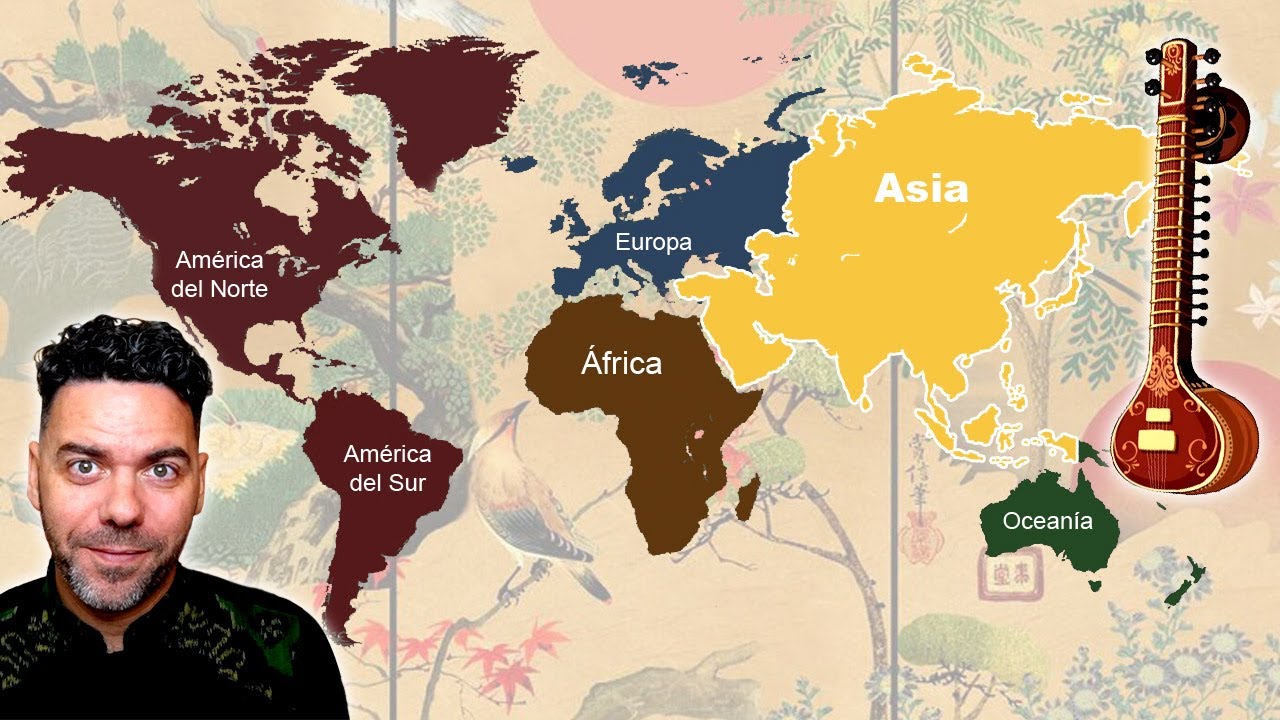
Músicas del mundo: ASIA
Music Traditions Across Continents
The speaker introduces a new series focusing on music traditions from around the world, starting with an exploration of folk music across continents.
Music in Asia
- Chinese music dates back to 2000 years before our era, with written signs appearing during ancient times. Philosophers emphasized the moral values of music for societal order.
- Traditional Chinese music emphasizes melody over harmony, with instruments like erhu, pipa, and guqin being popular.
- Japan's musical history, though not as ancient as China's, includes refined elements like court music (gagaku) and traditional arts leading to opera.
Music in India
- Indian music has deep roots in Vedic chants and classical traditions. Instruments like tanpura and sarangi are significant in Hindustani music.
- The sitar plays a crucial role in interpreting ragas, showcasing virtuosity among musicians.
Music in Indonesia
- Indonesia's diverse culture is reflected in its various forms of music, dance, and theater due to its vast island composition.
Music of Indonesia and Japan
The discussion compares the music of China, India, Indonesia, and Japan, highlighting the unique evolution of Indonesian music intertwined with poetry and dance.
Music Evolution in Indonesia
- Indonesian music is closely linked to poetry and dance, characterized by a magical and religious essence.
- The gamelan serves as a fundamental instrumental base in Indonesian music, originating around the 8th century. It is perceived as a single instrument played by multiple individuals.
Musical Characteristics of Indonesia
- Indonesian music is divided into three main sectors: Java, Bali, and peripheral islands.
- The gamelan in Indonesia consists of various metallophones, gongs, and instruments like gambang cai liao or bonang. Balinese gamelan is more ornate compared to Javanese gamelan.
Musical Elements in Japanese Culture
This segment explores the significance of singing in Japanese culture along with the integration of poetry into vocal performances.
Importance of Singing in Japan
- Singing holds significant importance in Japanese culture where poetry is always sung rather than recited.
- Various vocal forms and meters are associated with dance representations.
Conclusion