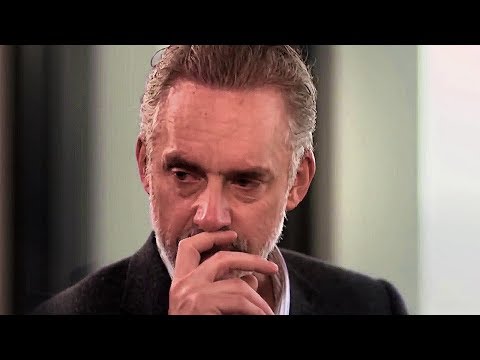
THE 13 TRUTHS - JORDAN PETERSON - INCREDIBLE SPEECH
Importance of Treating Yourself and Others Well
In this section, the speaker emphasizes the importance of treating oneself and others well. He notes that failure to do so can lead to negative consequences for both individuals and society as a whole.
The Power of Encouragement
- People often hesitate to share good news about their lives because they fear a negative response.
- Encouragement is a powerful force that can help individuals get their lives together.
- Every person who gets their act together has the capacity to spread positivity around them.
Treating Yourself Like You Matter
- Failing to treat yourself well can lead to vengefulness, cruelty, and suffering for both yourself and those around you.
- Taking care of yourself is necessary in order to be a positive force in the world.
Treating Others Like They Matter
- Failing to treat others well can lead to lying, cheating, stealing, and impulsive relationships.
- When everyone acts out the proposition that everyone matters, society functions better.
Taking Responsibility for Failure
In this section, the speaker discusses taking responsibility for failure as an alternative to cursing fate. He argues that failure to act often leads to catastrophic consequences.
The Heroic Attitude of Self-Correction
- The Jews in the Old Testament took responsibility for their failures instead of cursing fate.
- Every person is responsible for everything that happens to themself and others.
Failure To Act Leads To Catastrophe
- Failure to take risks when the situation presents itself can lead to catastrophic consequences.
- Not opposing something that should be opposed leads to a shrinking of oneself and growth of the negative thing.
The Danger of False Self-Esteem
In this section, the speaker discusses the danger of false self-esteem and how it can prevent individuals from taking responsibility for their failures.
The Problem with Self-Esteem
- The psychological profession has been promoting self-esteem for fifty years.
- People often suffer more than they think is tenable and need to take responsibility for their failures instead of being told they are okay as they are.
Turning the Lights On
In this section, Dr. Peterson discusses how to deal with people who do not listen to you and the importance of being a controlled monster.
Dealing with People Who Do Not Listen
- If people are not listening to you, stop talking to them.
- Watch them instead and they will tell you what they're up to.
- Find people that will listen and talk to them.
Being a Controlled Monster
- It is important to be a monster but also controlled.
- The hero has to be narrow has to be a monster but a controlled monster.
Finding Goals in Life
In this section, Dr. Peterson talks about finding goals in life when you don't know where you want to go.
Following Prohibitions
- Morality is following a sequence of prohibitions.
- Lay prohibitions on behaviors that would make your life miserable.
Fixing Small Things
- Look around within your sphere of influence and fix things that need repair.
- Start by cleaning up your room and distinguishing between chaos and order.
- Ask yourself what small thing can I do today so that tomorrow morning is better than this morning was?
- Take on slightly larger tasks each day.
The Importance of Having a Purpose
In this section, Dr. Peterson discusses the importance of having a purpose in life and how it can affect our reward system.
Purpose and Reward System
- Having a purpose is important as it provides sustenance to our reward system.
- Our incentive reward system works on dopamine, which is also the neurochemical that tracks opiates, cocaine, and amphetamines.
- If we don't have enough meaning in our lives, we are more prone to addiction.
- Rats put in cages with nothing to do become addicted to cocaine easily. However, rats living with other rats are less likely to get addicted.
- The magnitude of the reward experienced while moving towards a goal is proportionate to the importance of the goal.
Benefits of Having a Purpose
- Having a purpose is life-affirming and directly motivates us by energizing us and focusing our attention.
- It takes some pain out of life by being analgesic and suppressing anxiety.
- Religious or philosophical training can help us find our purpose in life.
Treating Yourself and Others Like They Matter
In this section, Dr. Peterson talks about treating yourself like you matter and how it affects your relationships with others.
Treating Yourself Like You Matter
- We need to treat ourselves like we matter so that we take care of ourselves instead of becoming vengeful or cruel towards others.
- If we don't treat ourselves well, we suffer more, become malevolent towards others, and end up alone or incarcerated.
Treating Others Like They Matter
- If we don't treat others like they matter, we lie to them, cheat them, and steal from them.
- People who thrive act out the proposition that everyone matters.
- We need to set up a schedule that balances responsibility and reward.
Setting Up a Schedule That Works for You
In this section, Dr. Peterson talks about setting up a schedule that works for you.
Creating an Ideal Day
- Set up your day so that it's the best possible day you could have practically speaking.
- Ensure that at the end of the day, you're not in worse shape than when you started.
- Negotiate with yourself to find the right ratio of responsibility to reward.
Setting Goals
In this section, the speaker talks about setting goals and how it can positively impact one's life.
Importance of Setting Goals
- People who get what they want don't just figure out what they want, but also make a plan to achieve it.
- One should aim for what would be good for them instead of what they think they want.
- To achieve goals, one must reorient their life in every possible way to make the probability of achieving them as certain as possible.
Criteria for Success
- A huge part of why people fail is because they don't set up criteria for success.
- If you actually want something, you can have it now. The question then becomes: What do you mean by "actually want"?
- Reorient your life in every possible way to make the probability that your goal will occur as certain as possible.
Self-Evaluation
- Sit down and ask yourself what remarkably stupid things am I doing on a regular basis that absolutely screw up my life?
- Stop doing things that are not in your best interest. Strengthen yourself by stopping these habits repeatedly over time.
Improving Conscientiousness
In this section, Dr. Jordan Peterson discusses how to improve one's industriousness and conscientiousness by setting goals and developing micro habits.
Micro Habits for Conscientiousness
- Set up aims for yourself that you value.
- Draw on potential sources of motivation based on the Big Five personality traits.
- Consider different dimensions of your life, such as friendships, intimate relationships, family structure, career goals, time management, and mental/physical health.
- Break down long-term goals into micro processes that are rewarding in proportion to their causal association with the goal.
The Dopaminergic Incentive Reward System
In this section, Dr. Jordan Peterson explains how the dopaminergic incentive reward system works and why it is important to have a valued goal.
Importance of Having a Valued Goal
- The dopaminergic incentive reward system works better when it produces positive emotion while moving towards a valued goal.
- Specify your long-term ideal and set up a goal structure that makes you excited about succeeding while also being terrified to fail.
- Consult your own temperament and do a structural analysis of the sub-components of human existence to determine what is valuable across the lifespan.
Building Your Ideal Self
In this section, Dr. Jordan Peterson emphasizes the importance of figuring out who you want to be and using everything you learn as a means of building that person.
Building Your Ideal Self
- Figure out who you want to be and aim at that.
- Specify goals that make you say, "If that could happen as a consequence of my efforts, it would clearly be worthwhile."
- Use everything you learn as a means of building the person you want to be.
Willful Blindness
In this section, the speaker talks about how avoiding failure can lead to not knowing when you fail. He recommends setting up a goal structure and having a vision for your life that justifies your effort.
Importance of Knowing When You Fail
- Avoiding failure can lead to not knowing when you fail.
- It's important to have a goal structure and vision for your life that justifies your effort.
Pathway Forward
- Adopt a mode of being that has some nobility so that you can tolerate yourself and perhaps even have some respect for yourself.
- Avoid deceit particularly in language but also by the adoption of responsibility for the conditions of existence and some attempt on your part to actually rectify them.
Overcoming Fear
In this section, the speaker talks about how exposing oneself voluntarily to things they are afraid of can make them stronger. He encourages people to stand up in the face of what they're afraid of.
Benefits of Overcoming Fear
- Exposing oneself voluntarily to things they are afraid of can make them stronger.
- People get stronger and we don't know the limits to that.
- If people start really trying just to make things worse we have no idea how much better they would get just because of that.
Wasting Opportunities
- People waste opportunities by inefficient studying or watching things on YouTube.
- Wasting 20 hours a week is wasting $50,000 per year if one's time is worth $20 an hour.
- If one stopped wasting opportunities, they could be much more efficient (10 times more efficient or 20 times more efficient).
Maximizing Capacity
In this section, the speaker talks about maximizing one's capacity by not wasting opportunities. He encourages people to ask themselves what would happen if they stopped wasting the opportunities that are in front of them.
Maximizing Capacity
- People run at about 51% of their capacity.
- Wasting opportunities is a way bigger catastrophe for young people than older people.
- If one stopped wasting opportunities, they could be who knows how much more efficient (10 times more efficient or 20 times more efficient).
- We don't know the limits to how efficient people can get.
Making Things Better
- People should stop making things worse and start trying to make things better.
- There's real promise in admitting that one is not everything they could be because it means there's another way that they could look at the world and act in the world.
The Importance of Individual Responsibility
In this section, the speaker discusses how an individual's actions can have a significant impact on their network and the world around them.
The Significance of Being a Node in a Network
- The speaker emphasizes that individuals are nodes in a network and that their actions can have far-reaching consequences.
- With social media, individuals are connected to thousands of people, making them only one or two degrees away from millions or billions.
- The speaker notes that our actions are like ripples in a pond, affecting things in ways we cannot fully comprehend.
The Terror of Realizing the Importance of Our Actions
- While it may be tempting to believe that our actions do not matter, the reality is that they do.
- However, taking responsibility for our actions can be terrifying because it means everything we do matters.
- Some people choose nihilism as an easier path because it absolves them of responsibility.
Living Forthrightly in the World
- The speaker argues that living forthrightly in the world is essential for avoiding pathological behavior and creating a better world.
- Solzhenitsyn's experiences demonstrate how living a pathological life leads to suffering for oneself and others.
Turn any video into a summary like this
YouTube links, meetings, lectures. With transcripts, search, and chat.