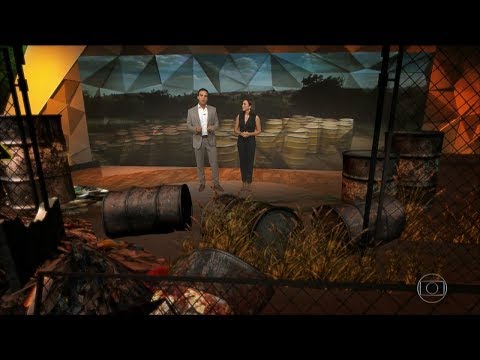
Césio 137: 30 anos - Fantástico - 03/09/2017
The Goiânia Accident: A 30-Year Retrospective
Overview of the Incident
- The transcript discusses the worst radioactive accident in Brazil's history, which occurred due to a series of unfortunate events involving cesium-137.
- Flammarion Goulart, one of those convicted for the incident, reflects on his lack of awareness regarding responsibility and guilt over the past three decades.
Timeline of Events
- On September 13, 1987, two scavengers removed part of an abandoned medical device from a clinic in Goiânia.
- By September 18, they sold this device to a junkyard where workers discovered a glowing powder inside it.
- After feeling unwell, Evair (the junkyard owner) initially attributed his sickness to food poisoning from feijoada.
Discovery and Initial Reactions
- Lady, Evair's daughter, played with the glowing substance brought home by her father. Soon after, she began experiencing health issues.
- Maria Gabriela, Evair's wife, took action by bringing the suspicious material to health authorities on September 28.
Scientific Investigation
- A physicist was called on September 30 to assess radiation levels at the health department where the glowing item was located; it was confirmed as cesium-137.
- Experts were summoned immediately as they realized that there was an uncontrolled radioactive source posing significant danger.
Public Health Crisis
- Panic ensued in Goiânia as thousands sought medical attention fearing contamination; monitoring efforts revealed extensive exposure among residents.
- The nature of radiation exposure is explained: proximity and duration affect risk levels; mere presence near radioactive materials does not make one radioactive unless direct contact occurs.
Consequences and Health Impacts
- Serious risks arise when individuals ingest or inhale radioactive substances; this leads to internal contamination which is far more dangerous than external exposure.
- Treatments exist for removing cesium from the body but can take months; Anderson recounts his experience during quarantine following exposure.
Victims' Stories
- Personal accounts highlight severe injuries sustained by victims like Odete and others who suffered long-term effects from their exposure to cesium.
- The tragic outcomes included multiple fatalities among those directly affected by handling or being near contaminated materials.
Final Tragedy
The Tragic Consequences of a Radioactive Accident
Overview of the Incident and Legal Consequences
- Four individuals, including three doctors and a physicist, were buried in lead coffins after being convicted of involuntary manslaughter in 1996. They received sentences of three years and two months under open regime.
- The doctors Carlos Bezerra, Dourado, Orlando Teixeira, and physicist Flamarion Goulart had their sentences converted to community service. The building owner Maurílio Monteiro was sentenced to one year and two months but later had his sentence suspended.
- Flamarion Goulart, one of the main figures involved in the accident, decided to speak out after 30 years. He expressed feeling burdened by guilt over the incident despite believing he is not responsible.
Equipment Mismanagement
- The clinic where the radioactive cesium-137 was found had previously decommissioned equipment that was known to be improperly stored. Goulart claimed that this equipment was not abandoned as it was sealed when transferred to another hospital.
- There is confusion regarding how the cesium capsule ended up back at the clinic after being moved from a secure location within Araújo Jorge Hospital, which specializes in cancer treatment.
Impact on Victims
- Goulart acknowledged awareness of the risks associated with the cesium equipment but could not explain how it returned to an unsecured area.
- Attempts were made to contact all convicted parties for comments; however, most refused to speak about their involvement or knowledge regarding the incident.
Psychological Effects on Survivors
- Survivors like Evair faced severe health issues due to contamination but also dealt with psychological trauma stemming from their experiences. A psychologist noted that living with radiation exposure creates unique stress factors compared to other types of accidents.
- Despite increased risk from exposure, no direct cases of cancer have been conclusively linked to cesium-137 among victims according to medical experts monitoring them over time.
Current Status and Ongoing Risks
- Two catadores (scavengers), who extracted radioactive material from the clinic, are alive but face ongoing health challenges. They were supposed to receive financial compensation from those convicted; however, only some payments have been made.
- One scavenger continues facing serious health risks while another has already undergone amputation due to injuries related to radiation exposure during the incident's aftermath.
Remnants of Radiation
- A site near Goiânia contains radioactive waste buried in concrete boxes as remnants of this tragic event. Measurements taken show low levels of radiation today but highlight lingering effects on both environment and memory.