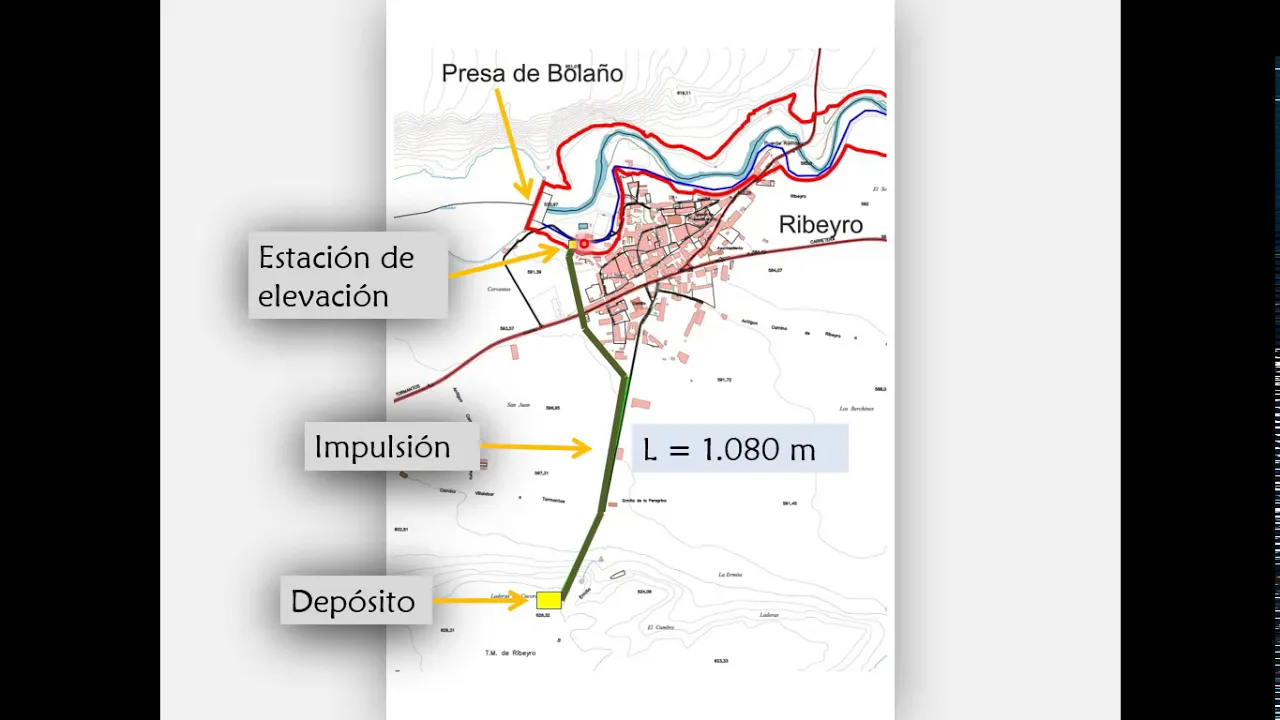
I3 Caudal y desnivel
New Section
In this section, the speaker discusses different strategies for approaching a project involving various phases.
Strategies for Project Approach
- One strategy involves creating a station tailored to the initial 10 years and then expanding infrastructure after that period to meet increased demand.
- Another approach is to design and construct all necessary infrastructure at the beginning, leaving room for future expansion without requiring additional major adjustments later on.
- Opting to complete all necessary construction upfront can prevent duplicating costs in the future and allow for gradual expansions as needed over the project's lifespan.
New Section
This part delves into the decision-making process regarding infrastructure development and pump installation strategies over a 30-year project duration.
Infrastructure Development Strategy
- The chosen strategy involves completing all required infrastructure initially to support operations over 30 years, with pump installations gradually increasing as demand grows.
- While this strategy offers financial benefits by avoiding deferred costs, further economic analysis may be warranted to assess its long-term viability.
New Section
The discussion shifts towards estimating daily water volume requirements based on projected population growth and designing pumping systems accordingly.
Estimating Water Volume Requirements
- Calculations are made based on an estimated daily water demand per capita to determine the total volume that needs to be pumped each day.
- Considering a portion of this volume must be pumped during peak hours, calculations yield a required pumping flow rate of 17.4 liters per second.
New Section
This segment focuses on analyzing the origin, destination, and elevation differences within the pumping station setup.
Pumping Station Configuration Analysis
- The pumping station originates from a main conduit and extends towards a reservoir with specific lengths and elevation changes outlined in the scenario.
Losses in Hydraulic Systems
In this section, the speaker discusses the concept of losses in hydraulic systems, focusing on the loss of geometric head and continuous losses along with localized losses.
Loss of Geometric Head
- The height associated with the loss of geometric head is gradually diminished over continuous losses in the system.
Total Head Loss Calculation
- Total head loss includes losses in both the delivery and suction conduits, which need to be overcome.
System Configuration
- The system configuration involves a conduit where the geometric elevation varies, impacting energy levels.
System Components and Energy Levels
This section delves into specific components within the hydraulic system and how energy levels are determined based on these components.
Station Components
- The station comprises pumps, trenches for pipelines, and connections leading downstream.
Connection Points
- Highlighting the connection point between pipelines heading towards other areas and branches leading to reservoirs.
Energy Considerations for Pump Operation
This part emphasizes energy considerations crucial for pump operation efficiency and safety.
Energy Reference Point
- Establishing an energetic reference point aids in determining pump placement relative to energy levels.
Pump Priming Importance
- Ensuring pumps are primed above certain energy levels prevents cavitation issues during operation.