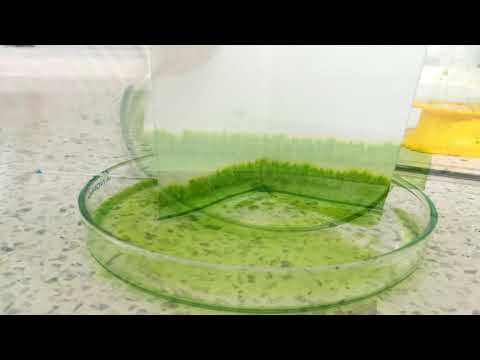
Separación de pigmentos vegetales por cromatografía en papel
Photosynthetic Pigments and Paper Chromatography
Introduction to Photosynthetic Pigments
- The practice focuses on separating and identifying photosynthetic pigments from various plant species using paper chromatography.
- Chloroplasts contain chlorophyll, which gives them a green color, but they also include other pigments like carotenes and xanthophyll.
Types of Plant Pigments
- Different pigments are identified:
- Intense green chlorophyll
- Green chlorophyll
- Light yellow carotenes
- Orange-yellow xanthophyll
- Each pigment has a unique chemical structure that influences its absorption of specific wavelengths of light.
Technique Overview: Paper Chromatography
- Paper chromatography is a technique that allows for the separation and detection of reaction products, revolutionizing compound identification since 1944.
- The method relies on the varying solubility of plant pigments in organic solvents versus water, facilitating their separation as they move through filter paper.
Materials Required for Experimentation
- Essential materials include:
- Fresh leaves (e.g., calla, spinach)
- Mortar and pestle
- Glass funnel, beaker, capillary tube, pipette
- Solvents such as acetone or ethyl alcohol
Experimental Procedure Steps
- Clean fresh leaves with distilled water before cutting them into small pieces for extraction.
- Combine leaf pieces with sand and acetone in a mortar to create a homogeneous mixture.
- Filter the mixture through prepared filter paper to obtain vegetable pigment solutions.
Observations and Conclusions from Chromatography Results
- After applying the solution onto filter paper, distinct bands representing different pigments are observed based on their mobility.