Протоколы, интерфейсы и сервисы. Примеры | Курс "Компьютерные сети"
New Section
Introduction to basic concepts of computer network organization, services, interfaces, and protocols focusing on the transport layer of the TCP-IP protocol stack.
Basic Concepts of Computer Network Organization
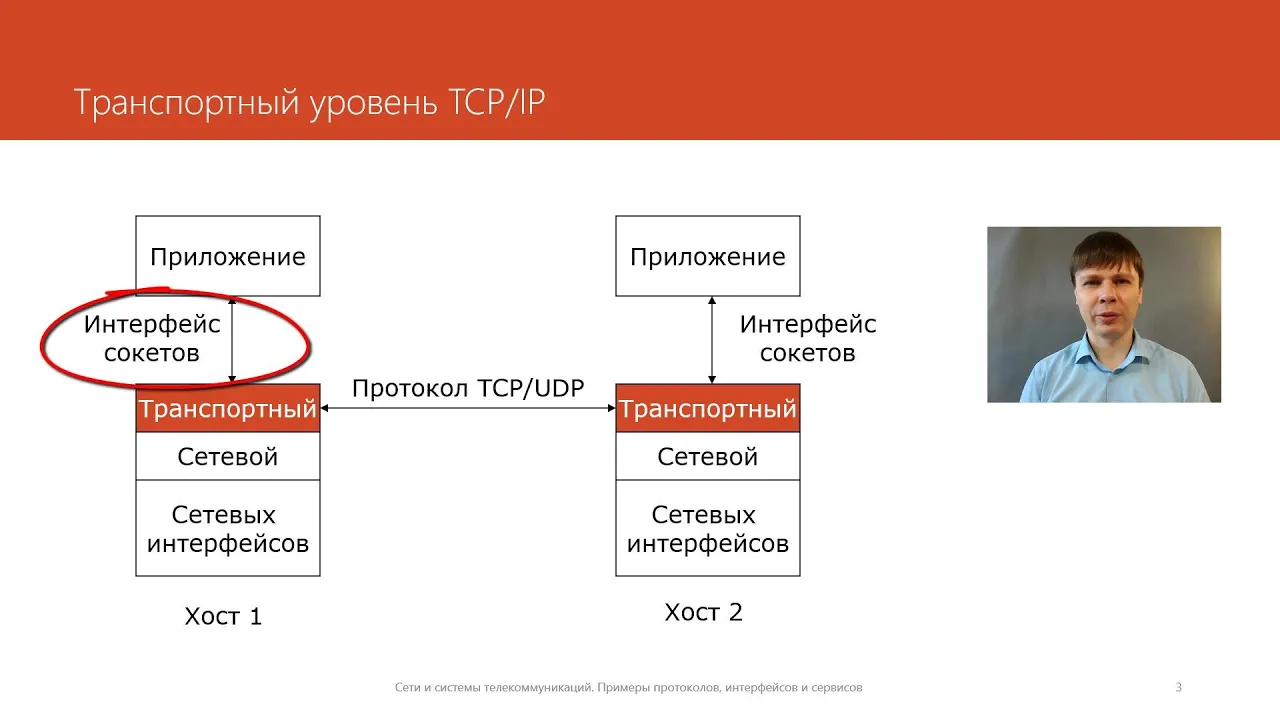
- Computer networks are structured in layers where each layer provides a service to the layer above it. Services describe what each layer does, interfaces define operations within a single computer for upper layers to utilize services.
Transport Layer Protocols in TCP-IP Stack
- Protocols are sets of rules and agreements used by different host layers to interact over a network. In the TCP-IP protocol stack's transport layer, two key protocols are TCP and UDP facilitating interaction between transport layers of different hosts.
Separation of Protocol and Interface
- Separating protocol and interface is common practice in IT to distinguish description from implementation. This separation allows for solutions isolation within a single computer or between computers interacting over a network.
New Section
Exploring the importance of separating concepts like service and interface in computer networks for effective design and communication.
Isolation Solutions in Computer Networks
- Two types of isolation solutions exist: within one computer using interfaces like sockets at the transport layer, and between computers interacting over a network where protocols are hidden from external devices.
Interplay Between Different Operating Systems
- Despite internal differences, operating systems like Windows and Linux effectively communicate due to utilizing the same set of DCPIP protocols. Separating interface and protocol aids in cross-device interaction with varied OS.
New Section
Distinguishing between service and interface concepts crucial for designing networks efficiently with technology and protocols.
Significance of Service Description
- Understanding service as an abstract description enables formulating desired actions without being tied to specific implementation details, aiding in proper network design.
Service Types at Transport Layer
- The TCP/IP protocol stack offers reliable byte stream transmission through DCP protocol for reliable delivery while UDP handles unreliable short messages. Interfaces at this level use sockets for access to both services.
New Section
Delving into potential services at the transport layer beyond current implementations for enhanced functionality.
Expanding Service Offerings
- Considering additional services at the transport layer involves ensuring reliability or lack thereof along with determining data type transmission (byte stream or short messages).
Potential Service Combinations
- While current combinations include reliable byte stream delivery and unreliable short message transmission, exploring other combinations can lead to innovative service offerings enhancing network capabilities.
New Section
Discussing practical applications of abstract networking principles for efficient network development.
Practical Application Scenarios
- Implementing specialized services directly within the DCPIP protocol stack can streamline processes such as retransmission handling without burdening applications unnecessarily.
Development Opportunities Through Understanding Principles