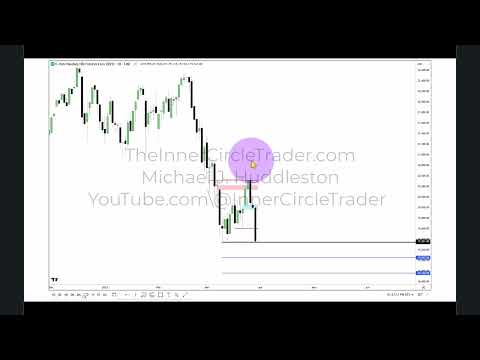
2025 Lecture Series - Weekly Option Strategy Intro \ 03/28/2025
Weekly Summary for March 28th, 2025
Overview of NASDAQ Futures
- The summary focuses on the week ending March 28th, 2025, specifically analyzing the NASDAQ futures market.
- Viewers are encouraged to watch the previous week's summary for context before diving into this analysis.
Market Analysis and Predictions
- The speaker discusses a predicted price movement where they expected a rise followed by a rejection and subsequent drop towards lower levels.
- Emphasis is placed on observing long-legged shadows or tails in candlestick patterns to gauge market sentiment and potential movements.
- A concept called "consequent encroachment" is introduced, which involves analyzing the range from open to low within candlestick formations.
Volume Imbalance Insights
- The discussion includes how volume imbalances can affect trading behavior, particularly when markets trade through these areas.
- The term "premium wick consequent encroachment" is used to describe market behavior as it approaches certain price levels before potentially reversing.
Options Market Discussion
- A brief transition into options trading is noted, with an acknowledgment that this will be a shorter segment compared to past discussions.
- The speaker reflects on their experience with weekly option plays and how predicting high and low points can create trading opportunities.
Personal Trading Experience
- An anecdote about early trading experiences highlights the challenges faced when buying undervalued options and learning from losses.
- The speaker shares a personal story of losing money on an option trade, emphasizing the importance of understanding who benefits from such transactions (option writers).
Strategic Trading Approaches
- A strategy involving selling call options above anticipated resistance levels is suggested as a way to capitalize on bearish trends in the market.
Trading Strategies for Nasdaq Futures Options
Introduction to Trading Options
- The speaker discusses the potential of trading Nasdaq futures options, emphasizing that it's not suitable for everyone and will only be explored briefly.
- A small account can be gradually increased over time by focusing on one good trade setup per week, rather than attempting to make large profits from every trade.
Risk Management in Options Trading
- The goal is to double or triple investments occasionally; even a single successful trade can yield more than typical job earnings.
- Emphasizes the risk involved in being an option writer compared to the purchaser, highlighting the importance of understanding market movements.
Understanding Call Options
- Discusses selling call options as a strategy when anticipating market downturns, explaining how this involves selecting a strike price above expected market highs.
- Introduces tools like put/call ratios that help identify overvalued or undervalued options, which will be elaborated on in future discussions.
Market Dynamics and Timing
- Clarifies that while buyers of call options have limited risk (the premium paid), sellers face greater risks without similar protections.
- Highlights how purchasers of call options may feel anxious as their investments lose value due to time decay and unfavorable market conditions.
Higher Time Frame Trading Approach
- Encourages analyzing weekly and daily charts for better trading setups, particularly beneficial for those with full-time jobs who cannot engage in intraday trading.
- Shares personal experiences of struggling with short-term trades while managing other responsibilities, leading to a preference for higher time frame strategies.
Learning from Influences and Experiences
- Reflecting on early influences in trading, such as Larry Williams, who inspired the speaker's initial interest in short-term trading despite facing challenges.
- Mentions learning from various resources about options trading but acknowledges past mistakes in chasing ineffective strategies.
Weekly Trading Opportunities
- Discusses recognizing opportunities based on weekly chart movements and making informed decisions about market direction throughout the week.
Understanding Options Trading: Key Concepts and Strategies
The Role of Option Writers
- The speaker emphasizes that they are not speculating but rather sharing insights based on previous experiences with options trading.
- An option writer takes the option to the market, indicating their willingness to take the opposite side of a trade when a buyer enters at a specific strike price.
- Using SPX options as an example, the speaker discusses how options can be valued based on market highs and potential strike prices.
Basics of Options Pricing
- The speaker provides a hypothetical value for an option, illustrating how traders might perceive its worth in relation to market movements.
- New traders are introduced to the concept of collecting premiums from buyers who expect upward movement in stock prices by purchasing call options.
- Strike prices are explained, highlighting how they are set at intervals (e.g., every five handles in SPX), which is crucial for understanding options trading.
Selling Options: Risks and Rewards
- By writing options, traders act as underwriters; they receive immediate premium payments but face risks if their predictions about market movements are incorrect.
- The importance of starting small is emphasized; new traders should focus on selling one option at a time to manage risk effectively.
- Call options allow buyers the right (but not obligation) to purchase underlying assets, limiting their maximum loss to what they paid for the option plus commissions.
Market Dynamics and Timing
- A put option is defined as profiting from downward market movements, contrasting with call options. A mnemonic "call up, put down" helps remember this distinction.
- Retail investors often buy call options during bullish trends influenced by media narratives while smart money investors may look for opportunities to sell into these trends instead.
Strategy Development in Options Trading
- The speaker notes that public sentiment can drive retail buying behavior; thus, timing becomes critical for more experienced traders looking to capitalize on overzealous buying.
- As retail interest peaks in buying call options, seasoned investors may choose to write those calls instead, aiming to collect premiums before potential downturns occur.
Understanding Options Trading and Market Dynamics
Introduction to Options Trading Concepts
- The speaker discusses the complexity of options trading, mentioning various Greeks (e.g., gamma, theta, delta) that influence option pricing and valuation.
- Emphasizes that while these concepts are important for astute traders, the focus here is on introducing a strategy rather than delving deeply into academic details.
Strategy Presentation
- The speaker presents a loosely defined trading strategy without pushing it aggressively onto the audience, acknowledging that it may not fit everyone’s style.
- Plans to share viable resources for learning about options trading in future discussions, emphasizing that he does not benefit from any recommendations made.
Community Engagement
- Encourages community members to share their own experiences and strategies regarding options trading to foster discussion and learning among peers.
Market Analysis Overview
- Analyzes recent market movements, noting how prices traded higher before breaking lower due to bearish market predispositions.
- Highlights the significance of candle patterns in indicating market strength or weakness; rapid price movement away from certain levels suggests extreme weakness.
Positioning and Expectations
- Shares personal trading positions and expectations for future market behavior based on recent trends; anticipates potential gaps lower in prices.
- Discusses risk management strategies when holding positions over weekends amidst volatile market conditions.
Technical Analysis Insights
- Explains technical analysis using Fibonacci projections to identify potential price targets; emphasizes caution due to current market volatility.
- Describes specific price levels as balanced ranges where further downward movement is expected rather than retracement back up.
Conclusion on Market Sentiment
- Concludes with insights on ideal swing trading scenarios based on projected price movements; expresses discomfort with holding long-term positions given external economic factors.
Market Analysis and Trading Strategies
Understanding Volume Imbalances
- The daily chart indicates a sell high below the volume imbalance, with a clear representation on the hourly chart. The current active trade is highlighted, showing how it retraced to this imbalance.
Price Action and Inefficiencies
- The market traded back into an inefficiency area, demonstrating price action that oscillates between highs and lows before reversing direction.
Market Dynamics Below Midpoint
- Once the market dropped below the midpoint of a specific area, it struggled to rise again, indicating bearish sentiment as it broke lower towards sell-side imbalances.
Daily Low Targets
- After breaking previous lows, there was significant downward pressure suggesting further declines rather than retracement. The focus shifted towards old daily lows as potential targets.
Trading Models and Timeframes
- A market maker's sell model was identified through consolidation phases leading to aggressive downside movements. This analysis utilized various timeframes for clarity in trading decisions.
Fair Value Gaps Explained
- A blue volume imbalance was noted on the 15-minute timeframe; once prices moved below this level, they aimed for relative equal lows on the daily chart while establishing fair value gaps.
Closing Outside Fair Value Ranges
- When prices close outside established ranges (referred to as "coloring outside the lines"), it's crucial to monitor if they return within those bounds or maintain their position outside them.
Inversion Fair Value Gap Application
- The first fair value gap formed after validating an inversion fair value gap serves as a critical entry point for traders looking to manage risk effectively.
Micro Contracts vs. Mini Contracts Debate
- There’s a misconception that using micro contracts signifies being less professional compared to mini contracts; however, effective risk management can be achieved with micros without compromising trading success.
Positioning After Validation of Gaps
- Traders should initiate positions following validation of fair value gaps and look for opportunities to add onto their trades as market conditions evolve.
Post-Market Movements and Timing Considerations
Market Movements and Predictions
Understanding Market Behavior Before Close
- The market often experiences a "Judas swing" before the 4:00 PM hour, where it may initially move lower but then accelerates towards a target price.
- During this time, many traders are inactive, leading to quiet market conditions. Day traders typically exit positions due to fear of holding overnight, resulting in limited price movement.
Anticipating Market Trends on Fridays
- In a bearish market context, there is an expectation for potential upward movement as the day progresses. The speaker shares personal experience of aiming for low points on Fridays.
- The speaker discusses Fibonacci levels as indicators for potential opening prices on Sunday, suggesting that the market might open at or below certain key levels based on historical data.
Personal Insights and Cautions
Turn any video into a summary like this
YouTube links, meetings, lectures. With transcripts, search, and chat.