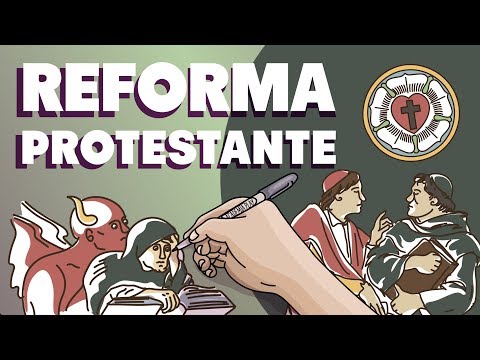
La Reforma protestante y Lutero
Reformation and Martin Luther
This section introduces the Protestant Reformation initiated by Martin Luther in the 16th century, highlighting its impact on European history and the formation of Protestantism.
Martin Luther's Critique of Indulgences
- Martin Luther, a German Augustinian monk, sparked the Reformation by criticizing the Catholic Church's sale of indulgences.
- In 1517, Luther nailed his 95 Theses to the church door in Wittenberg, aiming to reform questionable practices within the Church.
Doctrine of Indulgences
- The concept of indulgences allowed Catholics to reduce time in purgatory through monetary contributions.
- Purgatory served as a transitional state for souls before entering heaven, prompting concerns among believers about prolonged purification.
Criticism and Impact
- Luther's 95 Theses strongly criticized indulgence sales, leading to his excommunication by the Pope in 1521.
- Luther advocated "sola scriptura," emphasizing Scripture as the sole authority and challenging non-biblical doctrines like purgatory.
Luther's Influence and Opposition
This section delves into Martin Luther's influence on religious authority and his confrontation with both ecclesiastical and secular powers.
Challenge to Papal Authority
- Luther's emphasis on Scripture as divine authority challenged traditional Catholic teachings not rooted in biblical texts.
Excommunication and Resistance
- Despite being excommunicated by the Pope in 1521, Luther continued spreading his ideas with support from Johannes Gutenberg's printing press.
Political Ramifications
- The conflict between Luther and Emperor Charles V escalated tensions within Germany, reflecting broader power struggles among German princes.
Wartburg Castle and Translation of Bible
This segment explores Luther's refuge at Wartburg Castle after capture by Frederick III of Saxony, enabling him to translate the Bible into German.
Protective Custody at Wartburg
- Frederick III sheltered Luther at Wartburg Castle to safeguard him during a period when he translated the Bible into German.
Strategic Importance
El Tratado de Augsburgo y la Contrarreforma Católica
This section discusses the Peace of Augsburg in 1555, which divided the Holy Roman Empire into Lutheran and Catholic factions. It explores how German princes could choose the religion for their states, leading to religious intolerance within Protestant territories.
The Peace of Augsburg and Religious Division
- In 1555, the Peace of Augsburg was signed, dividing the Holy Roman Empire into two Christian confessions: Lutherans and Catholics.
- German princes gained the right to select the religion practiced within their states, with subjects obligated to follow their ruler's chosen faith.
- Despite this apparent religious freedom, there was significant religious intolerance within Protestant states.
La Contrarreforma Católica y el Estancamiento del Sacro Imperio
This part delves into the Catholic Counter-Reformation following the Protestant Reformation. It highlights how the Catholic Church responded to these changes and its impact on the Holy Roman Empire.
The Catholic Counter-Reformation
- The Catholic response to the Protestant Reformation was known as the Catholic Counter-Reformation.
- The Counter-Reformation aimed to address challenges posed by Protestantism but will be discussed further in subsequent videos.
Membership Benefits and Support for Channel
This segment outlines benefits for channel members and ways viewers can support content creators financially.
Channel Membership Details
- Viewers can become channel members by clicking "Join" next to the subscription button.
- Channel members receive custom badges and emojis, access exclusive live streams, early video previews, and have a say in future video topics.