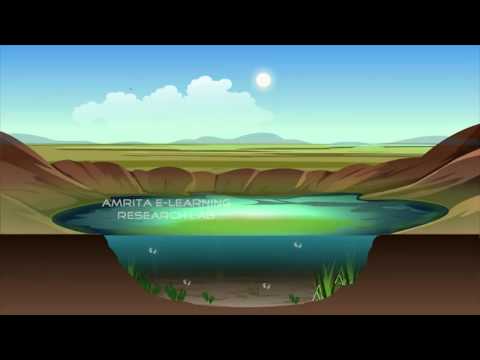
Pond Succession
Ecological Succession in Aquatic Ecosystems
Types of Succession
- Various types of ecological succession are influenced by terrain, climate, and biotic factors. For instance, the succession on barren rock differs from that on sandy soil or saline water ecosystems.
Initial Stages of Aquatic Succession
- In a simple pond ecosystem, phytoplankton such as blue-green algae and green algae (e.g., Spirogyra) serve as pioneer communities. These organisms are consumed by zooplankton and small fish like bluegill and sunfish. Their remains contribute organic matter to the pond over time.
Nutrient Enrichment
- As organic matter accumulates, microorganisms break down decaying material, releasing essential nutrients (nitrogen, phosphorus, potassium) into the ecosystem. This nutrient-rich environment supports rooted hydrophytes like Hydrilla and Vallisneria. The decomposition of these plants further enriches the pond's nutrient content.
Development of Food Webs
- The shallow water region is characterized by submerged vegetation stages where various invertebrates (dragonflies, mayflies) join the ecosystem. Soil and debris brought by rain and wind lead to silting, decreasing the pond's depth over time.
Transition to Terrestrial Community
- The next stage features rooted floating vegetation (e.g., Lotus), which supports diverse animal life including frogs, salamanders, snails, turtles, and insects inhabiting hydrophyte leaves. Free-floating hydrophytes like Azolla also contribute to organic matter accumulation as the pond becomes swampy—this stage is known as the Reed Swamp Stage inhabited by species such as Typha and Carex.
Climax Community Formation