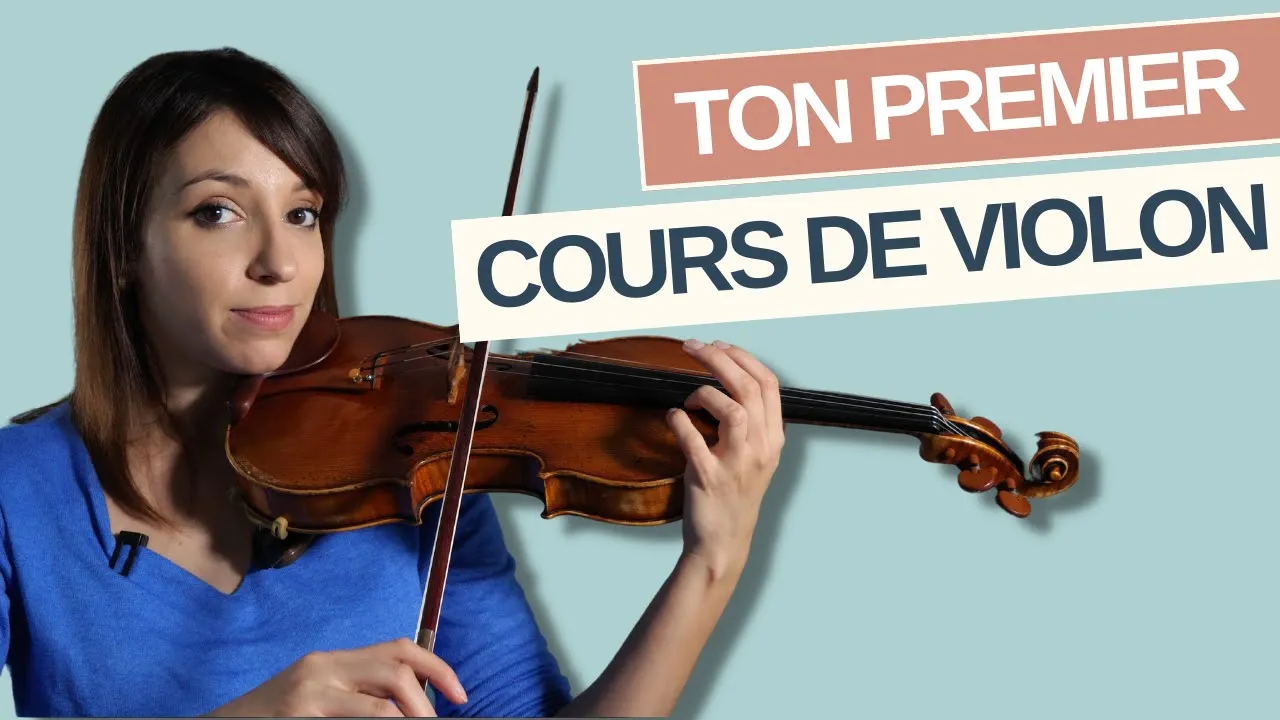
Ton premier cours de violon - Débute facilement
Introduction to Violin Basics
Getting Started with Your First Violin Lesson
- Marie introduces herself and the purpose of the video, which is to guide beginners through their first steps in learning the violin.
- Viewers are encouraged to download a free beginner's guide from her blog, which contains essential information for starting out on the violin.
Tuning Your Violin
- The first step is tuning the violin; Marie suggests not worrying too much about technique at this stage.
- She explains how to use an electronic tuner or simply pinch the strings to help with tuning.
- Viewers are advised to pause the video and tune their violins before proceeding.
Preparing Your Bow
- Marie discusses applying rosin (colophane) on the bow, emphasizing that a new bow may require significant application for optimal sound production.
- She highlights that a fine white powder should appear on the bow hair after sufficient rosin application for effective sound generation.
Holding and Posture
Comfort While Playing
- It’s recommended to use a shoulder rest or cushion for improved comfort while playing, as it can vary based on individual body types.
Choosing Between Left-Handed and Right-Handed Violins
- Marie advises trying both left-handed and right-handed violins if possible, but generally recommends right-handed violins for ease of learning.
Proper Technique
Holding the Violin and Bow Correctly
- Viewers are directed to additional resources regarding proper posture and holding techniques for both violin and bow.
- Basic positioning involves placing the end of the violin in the crook of your neck while supporting it with your head.
Focusing on Sound Production
- Beginners are encouraged not to use their left hand initially; instead, they should focus solely on producing sound with their bows.
Developing Skills Gradually
Importance of Mastering Basics Before Adding Complexity
- Emphasizing gradual skill development, Marie compares learning violin techniques to driving—it's crucial not to overwhelm oneself by trying to manage everything at once.
- She encourages practicing open strings (playing without pressing fingers down), allowing players to concentrate on sound quality before introducing finger placement.
Playing Techniques
Producing Quality Sound
- To produce sound effectively, place the bow between the fingerboard (the black part at one end of the instrument) and bridge (the piece holding up strings).
How to Play the Violin: Basic Techniques
Positioning and Bow Technique
- Begin by positioning yourself in the middle for ease of play. Ensure that the bow remains parallel to the bridge, with the hair flat against the strings to produce a pleasant sound.
- To change strings, perform a slight rotation of your elbow. This subtle movement is crucial for transitioning smoothly between notes.
Understanding String Sensations
- The height of your elbow will determine which note you are playing. Different strings will yield varying sensations; experiment with these differences to find what feels right.
- Gradually increase the length of your bow strokes while practicing. At this stage, it's recommended to start learning how to read music, focusing on recognizing the four open strings.
Practicing Techniques
- Incorporate different techniques such as "pizzicato," where you pluck the strings with your right-hand fingers instead of using the bow.