La dièresi en català: quan s’escriu… i quan no | OK CATALÀ
Understanding the Dièresi in Catalan
What is Dièresi and Its Usage
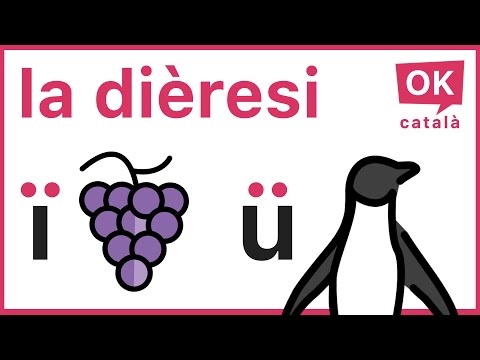
- The dièresi is a sign consisting of two dots that can be placed over the letters 'i' and 'u' in Catalan. It serves two primary functions.
- The first function is to indicate the pronunciation of 'u' in combinations such as güe, güi, qüe, and qüi. For example, "pingüí" shows that the 'u' must be pronounced.
Examples of Dièresi Application
- Other examples include words like "aigües," "piragüisme," "qüestió," and "aqüífer." In contrast, no dièresi is used with combinations like gua, guo, qua, and quo since the 'u' is always pronounced.
Second Function: Separating Diphthongs
- The second function of dièresi is to indicate that vowels 'i' and 'u' do not form a diphthong with another vowel. For instance, without dièresi in "raïm," it would incorrectly suggest a single syllable pronunciation (raim).
- More examples include "cafeïna" (which would be mispronounced as cafeina without dièresi) and "peücs" (which would become peucs).
Exceptions to Dièresi Rules
- There are exceptions to the rules regarding dièresis:
- No dièresis when 'i' or 'u' requires an accent according to accentuation rules.
- No dièresis in suffixes like -isme or -ista (e.g., egoisme or egoista).
- Additionally, it’s not used for infinitive forms, gerunds, futures, or conditionals of third conjugation verbs (like produir or conduir), but participles may contain it.
- Generally avoid using dièresis after prefixes ending in vowels and also do not use it with Latin endings like -um and -us.