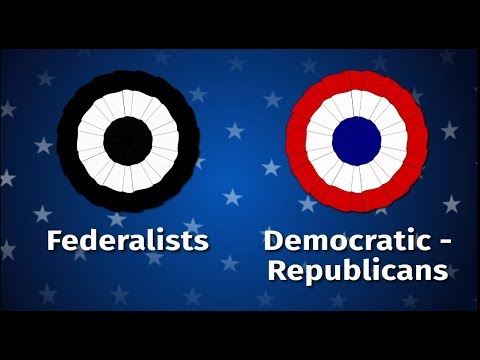
The First Political Parties of the US: Federalist vs Democratic Republicans | History with Ms. H
Emergence of the First Political Parties
Introduction to Political Parties
- The video introduces the topic of the emergence of the first two political parties in the United States: the Federalists and the Democratic-Republicans.
- By the end, viewers should be able to answer three key questions regarding why political parties emerged, what Federalists believed, and what Democratic-Republicans believed.
Reasons for Emergence of Political Parties
- Political parties form when groups with opposing views seek power; this is a fundamental aspect of their emergence in U.S. history.
- Washington's presidency is highlighted as a pivotal moment that set the stage for party formation due to differing opinions within his cabinet.
Key Figures and Their Disagreements
- Thomas Jefferson (Secretary of State) and Alexander Hamilton (Secretary of Treasury) were prominent figures whose disagreements laid the groundwork for party ideologies.
- Washington warned against political parties, fearing they would create divisions, animosity, riots, insurrection, and open doors to foreign influence.
Founding Ideologies of Federalists
- Despite warnings from Washington, Federalist and Democratic-Republican parties emerged from cabinet debates.
- Alexander Hamilton founded the Federalist Party; he advocated for a strong federal government with a loose interpretation of the Constitution.
- They believed in broad constitutional interpretation allowing more governmental actions beyond written limits.
- Hamilton defended creating a national bank using this argument.
Policies Supported by Federalists
- The Federalists supported business growth through protective tariffs that made foreign goods more expensive than American products.
- They favored alliances with Great Britain and policies that generally benefited wealthier citizens while finding support primarily in northern states.
Founding Ideologies of Democratic-Republicans
- Thomas Jefferson founded the Democratic-Republican Party alongside James Madison; they preferred strong state governments over a powerful national government.
- They adhered to strict constructionism—limiting federal powers strictly to those stated in the Constitution.
Policies Supported by Democratic-Republicans
- The Democratic-Republicans promoted local governance as more effective for addressing state concerns and supported state banks instead of a national bank.