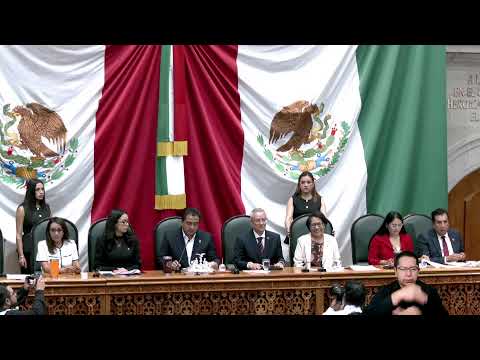
15/10/2026: Comparecencia de Finanzas, Óscar Flores Jiménez
Introduction to the Third Government Report
Context and Purpose
- The speaker emphasizes the importance of clarification and context, indicating that the third government report serves as a starting point for discussions.
- The "glosa" (analysis) opens a conversation in Congress to examine issues affecting the citizens of Mexico State.
- A call is made for accountability between legislative and executive powers, highlighting the need for transparency.
Welcome and Session Opening
Legislative Proceedings
- The speaker welcomes public servants and guests, acknowledging their presence at this special session.
- The session officially begins after confirming quorum, marking an organized legislative process.
Analysis of Financial Management
Key Presentations
- The analysis includes presentations from key officials like Óscar Flores Jiménez (Secretary of Finance).
- These presentations adhere to constitutional norms and parliamentary practices, ensuring legal compliance.
Importance of Financial Accountability
Financial Overview
- Secretary Flores Jiménez highlights the significance of financial accountability in managing public resources effectively.
- He notes that understanding finances is crucial for addressing social welfare in a state with over 17 million residents.
Fiscal Responsibility Initiatives
Strategies Implemented
- Emphasis on maintaining healthy finances through rational austerity measures aligned with national transformation principles.
- The report outlines efforts towards transparent fiscal policies aimed at sustainable economic growth.
Structure of the Comparecencia
Procedural Guidelines
- Details are provided regarding how the comparecencia will proceed, including time allocations for speeches and questions from legislators.
Presentation by Secretary Flores Jiménez
Key Messages Delivered
- Secretary Flores expresses gratitude while presenting an overview of public finance status during his administration's three years.
Transformation in Public Finances
Goals Achieved
- He discusses improvements in revenue collection without imposing new taxes while enhancing spending efficiency.
Revenue Growth Statistics
Financial Performance Metrics
- Total revenues reached approximately 362 billion pesos, reflecting significant growth compared to previous years.
Incentives for Economic Development
Tax Relief Measures
- Implementation of 28 tax incentives resulted in savings for families and businesses amounting to around 9 billion pesos.
Debt Management Practices
Responsible Governance
- No new debt was contracted during three years; existing debt was reduced significantly by about 2.5 billion pesos.
Budget Allocation Insights
Social Program Funding
- In 2026, budget allocation reached 410 billion pesos with substantial funds directed toward social programs benefiting vulnerable populations.
Transparency in Resource Utilization
Accountability Measures
- Rendir cuentas involves not just reporting expenditures but also explaining resource allocation outcomes to citizens.
Infrastructure Investment Focus
Community Needs Addressed
- Significant investments were made into public works projects aimed at improving community infrastructure across various municipalities.
Economic Concerns in the State of Mexico
Overview of Financial Trends
- The economy of the State of Mexico has grown, yet public revenues have not increased at a similar pace, with ordinary income from the federation constituting 75% and representing only 11.78% of the state’s GDP compared to 14.65% in 2016.
- Adjusting for inflation, ordinary revenues remain below levels seen in 2016, indicating that reported growth is largely due to price effects rather than genuine financial achievements.
Budgetary Oversight Issues
- Concerns were raised regarding budget under-execution by various secretariats; last year, assurances were given about weekly monitoring to address this issue.
- Despite these assurances, fiscal year-end reports show continued budget under-execution across all 17 secretariats, raising alarms about the ongoing crisis within ICEMIN.
Financial Pressures and Solutions
- Acknowledgment of significant financial pressure exceeding 23 billion pesos alongside a budget reduction of 7 billion pesos for health services due to transitions related to IMSS Bienestar.
- This situation jeopardizes medical care and threatens pension payments and salaries for thousands; thus, an integrated solution is deemed essential for long-term financial viability.
Legislative Proposals on Retirement Age
- Proposed gradual increases in retirement age raise concerns among workers; any changes must be approached with caution and transparency as they directly affect public service employees' lives.
Local Government Resource Management
- Various municipalities report delays and insufficiencies in managing essential resources like Fortamón despite government claims of prosperity during this transformation period.
Accountability Questions Raised
Inquiry into Budget Execution
- Questions posed regarding the definitive percentage of budget under-execution at year-end; inquiries about whether weekly supervision strategies failed or if secretariats lack capacity to utilize funds effectively.
Observations from Audits
- Reports from OSPEN and the Superior Audit Office highlight issues with spending verification delays despite having ample resources available.
Persistent Under-execution Issues
Historical Context
- The recurring theme of budget under-execution over three years raises skepticism about secretariats’ capabilities; calls for clarity on how government converts budgets into tangible support for citizens are emphasized.
Financial Health vs. Public Perception
Debt Management Insights
- While acknowledging healthy finances without debt accumulation over three years, there remains a critical need for greater financial autonomy as reliance on federal income exceeds 70%.
Recommendations for Immediate Action
Urgent Administrative Measures
- Suggestions made for immediate action protocols akin to those used in public safety programs to address pressing needs effectively within state governance structures.
Community Health Concerns
Healthcare Equipment Shortages
- Highlighted instances where local healthcare facilities face equipment shortages impacting patient care; calls made for administrative intervention despite it being outside direct execution responsibilities.
Development Projects Discussion
Eastern Zone Project Progress
- Inquiry into progress on development projects in eastern municipalities housing a significant portion (36.58%) of the state's population emphasizes their economic importance.
Transparency and Accountability
Review of Government Actions
- Emphasis placed on reviewing not just objectives but also measurable outcomes resulting from governmental actions affecting daily life quality among families in the region.
Debt Obligations Scrutiny
Fiscal Responsibility Calls
- Calls made to scrutinize debt obligations exceeding 60 billion pesos while ensuring that interest payments do not detract from necessary social investments crucial for community welfare.
Addressing Regional Vehicle Registration Issues
Vehicle Registration Concerns
- The speaker emphasizes the need to resolve regional vehicle registration issues, noting that many cars from the State of Mexico are registered in Morelos.
- It is highlighted that Morelos has more vehicles than registered inhabitants, indicating a significant problem with vehicle registration that needs urgent attention.
Social Programs and Historical Debt
- The speaker raises concerns about funding for social programs and mentions the historical debt of CUSAEM, which requires substantial annual financial support.
- A call to action is made to confront historical challenges and fulfill pending obligations for the betterment of the State of Mexico.
Infrastructure and Health Services Challenges
Infrastructure Deterioration
- Alejandro Castro Hernández addresses the poor state of roadways in the State of Mexico, highlighting risks posed by deteriorating infrastructure.
- The impact on mobility, economic activity, and safety due to bad roads is discussed, stressing the urgency for improvements.
Health Service Provision
- Questions are raised regarding investments made in health services over recent years amidst ongoing protests demanding better healthcare access.
- Statistics reveal that 40.2% of Mexicans still lack adequate access to health services three years after joining Bienestar.
Financial Accountability in Public Spending
Budget Allocation Queries
- The speaker questions how effectively allocated budgets for health services will meet growing demands during transitions between federal and state responsibilities.
- Emphasis is placed on local public policies as crucial for transforming lives through improved infrastructure and public services.
Investment Transparency
- Discussion centers around GIDEM's role in financing municipal projects while stressing accountability regarding how funds translate into tangible benefits.
Legislative Oversight on Financial Management
Inquiry into Municipal Funding
- Questions are posed about total amounts allocated to municipalities under KIDEM during government reports, seeking clarity on financial progress and beneficiary municipalities.
Importance of Financial Management
Budget Distribution Challenges
- The complexity involved in managing a budget exceeding 410 billion pesos for 2026 is acknowledged as a significant responsibility requiring careful oversight.
Debt Management Strategies
- Current debt levels are reported at approximately 58 billion pesos despite efforts to reduce this figure through responsible fiscal strategies.
Infrastructure Development Goals
Public Investment Significance
- Public investment is deemed essential for addressing community needs through improved infrastructure such as roads, water supply systems, educational facilities, and healthcare installations.
Project Execution Accountability
- There’s an emphasis on ensuring timely execution of projects funded by municipal resources while maintaining transparency throughout the process.
Future Planning Initiatives
Eastern Region Development Plans
- Inquiries focus on specific projects planned under initiatives aimed at benefiting ten municipalities within eastern regions while assessing state participation alongside federal contributions.
Commitment to Social Welfare Programs
Focus on Community Well-being
- The importance of translating government revenue into tangible benefits for citizens is reiterated as a core objective driving current governance strategies.
Achievements Under Current Leadership
- Recognition is given to improvements in efficiency rankings among states concerning financial management under Governor Delfina Gómez's leadership.
Overview of Fideicomiso Compliance and Resource Allocation
Compliance with Fideicomiso Objectives
- The discussion focuses on reviewing the compliance of the fideicomiso's objectives, ensuring it meets its intended purpose and reallocating any remaining resources for more relevant public agenda items.
Legislative Considerations in Health Sector
- Various topics were considered by deputies, including health sector issues, INS Bienestar, and federal matters. The aim is to organize these discussions based on how they were presented by the deputies.
Investment in Public Works
- Approximately 3,089 million pesos have been injected into investment spending this year, which is about 1,200 million pesos more than in 2025. This funding aims to ensure all 125 municipalities receive public works support.
- The investment has increased nearly by 1 billion pesos compared to 2025, representing a 37% increase and a significant advancement in resource allocation for municipalities.
Infrastructure Projects and APPs
- A total of around 20 billion pesos has been allocated for infrastructure projects. There are seven ongoing contracts involving six PPS (Public Private Partnerships) and one APP (Alternative Public Procurement), totaling approximately 51 billion pesos.
- Current contracts report an outstanding investment balance of about 5.8 billion pesos with an annual budget close to that amount; however, no new projects will be contracted under these schemes as per the governor's instructions.
Challenges with Existing Contracts
- Existing APP and PPS contracts contain clauses that pose significant disadvantages for the State of Mexico. These make it challenging to terminate or rescind contracts without incurring losses.
- Legal counsel is actively engaging with companies to negotiate better terms that protect public interests while addressing existing contractual challenges.
Fiscal Responsibility and Tax Policy
- The state has improved its tax efficiency ranking from 32nd to 3rd place due to responsible spending strategies without increasing taxes or creating new burdens on citizens.
- Maintaining current tax rates allows stability but could potentially lead to higher rankings if taxes were raised; however, this contradicts the administration's policy aimed at protecting citizen interests.
Investment in Road Maintenance
- An allocation of 6 billion pesos has been made this year specifically for road maintenance, including additional funds for cold patching potholes.
- Over three years, approximately 21 billion pesos have been invested in road repairs as part of a broader agenda prioritized by the governor.
Health Sector Transition Issues
- Transitioning IS Bienestar involves national coordination efforts amid challenges like insufficient hemodialysis treatment availability due to contract issues with providers.
- Resources are being mobilized at state levels while negotiating responsibilities with federal entities regarding healthcare services.
Budget Management and Transparency
- Historical pressures on healthcare spending are being managed effectively; expectations are set at around 7.5 billion pesos next year while maintaining transparency in budget utilization.
Commitment to Accountability
- Emphasizing accountability through dialogue strengthens relationships between government officials and legislators while ensuring responsible financial management aligns with community needs.
Conclusion: Commitment to Responsible Governance
Principles Guiding Financial Management
- The importance of healthy public finances extends beyond numbers; it reflects commitments towards improving lives through responsible governance focused on social welfare.
Acknowledgment of Contributions
Recognition of Institutional Dialogue
- Gratitude expressed towards participants enhances informed analysis within legislative processes benefiting constituents across the State of Mexico.
Turn any video into a summary like this
YouTube links, meetings, lectures. With transcripts, search, and chat.