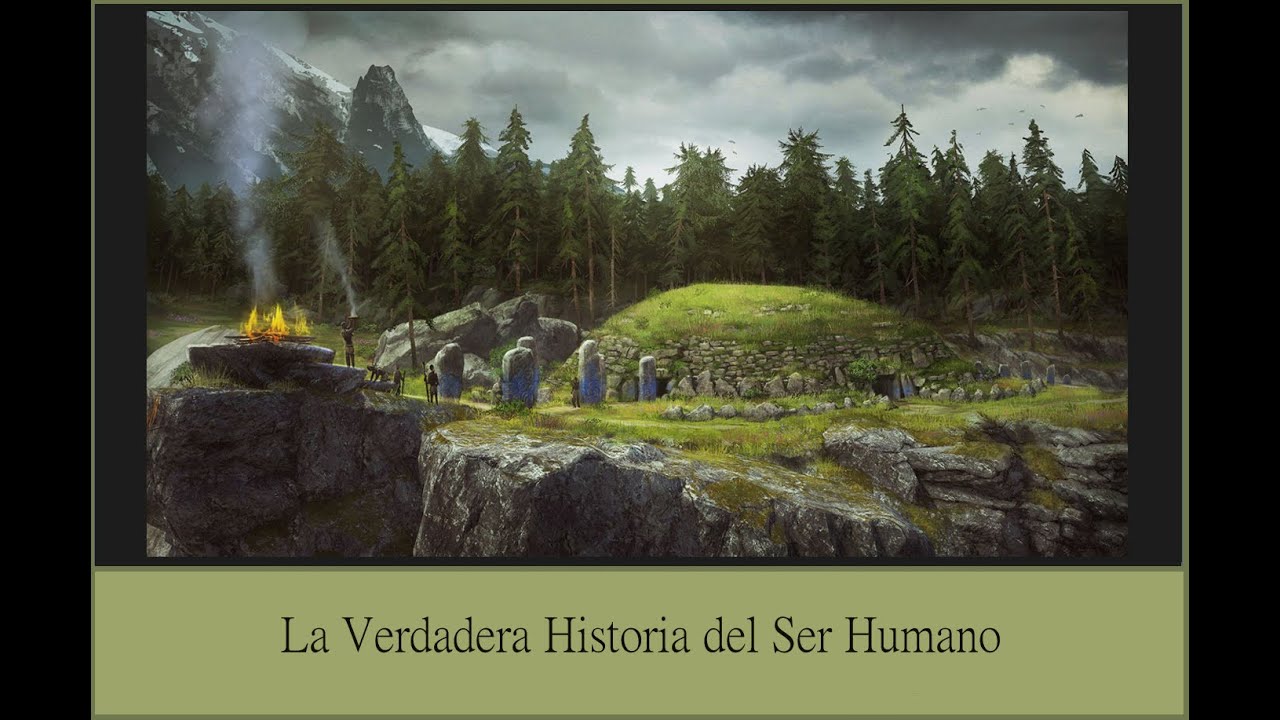
La Verdadera Historia del Ser humano
Cosmovisión Prehistórica
The speaker discusses the prehistoric worldview and the importance of studying history from a different perspective.
Prehistoric Worldview
- History is often studied from a patriarchal, materialistic viewpoint focusing on power, race, and wealth.
- Observers influenced by this patriarchal view struggle to understand essential human principles from the past.
- Viewing history esoterically reveals that ancestral openness to full experiences of being enhances life quality beyond mere societal norms.
- True human history involves immersion in understanding rather than detached observation.
Arte Rupestre y Cosmovisión
Delving into prehistoric art and its significance in understanding ancient cultures.
Prehistoric Art Significance
- Prehistoric cave paintings exhibit sophistication and lack crude or violent themes found in modern depictions.
- Absence of violent scenes in ancient art suggests a higher consciousness and peaceful existence among early humans.
- Archaic humans depicted intricate naturalistic art reflecting deep connection with cycles of life, death, and renewal.
Origen de la Cultura Humana
Exploring how prehistoric art served as the foundation for subsequent human culture.
Foundation of Human Culture
- Prehistory symbolized an idyllic era akin to Eden, fostering harmony, peace, and unity through artistic expressions.
New Section
This section delves into the ancient times when humans were in direct connection with nature and the divine, speaking the language of the gods.
The Era of Silent Knowledge
- Humans in ancient times had a deep connection to nature and truth, speaking the primordial language of the gods.
- Communication was natural, stemming from sounds of nature, reflected in art, customs, and beliefs harmoniously linked to nature's elements like the Three Marias.
- The era marked by a universal flood initiated a new age - Neolithic era post-glaciation leading to early civilizations like Sumeria, Egypt, Mycenae, Greece.
The Shift in Consciousness
Discusses the transition from a direct connection with nature to a modern era where such connections are lost or forgotten.
Loss of Direct Connection
- Emphasizes that true connection with nature is beyond superficial activities; it involves being one with nature as only humans can.
- Religion emerges as people start relying on others' beliefs without personal verification, leading to potential errors due to lack of direct experience.
- Humans understand themselves through fusion with nature; this unity explains consistency in ancient art expressions across cultures over millennia.
Evolution of Consciousness
Explores how human consciousness has evolved over time based on myths and cosmogonies depicting shifts towards rationality and separation.
Evolutionary Shift
- Various creation myths worldwide suggest a transition from an original state to one dominated by reason and separation led by male figures like "father" cutting chaos.
- New consciousness driven by reason initiates separation and two paths: accentuating differences or returning to unity - representing patriarchal dominance versus liberating masculinity.
Impact on Society
Examines how these shifts influenced societal structures and belief systems shaping human history.
Societal Consequences
- Dichotomy between those breaking primordial unity (Payos) and those restoring it (Ver es), symbolizing rational conflicts manifesting as slavery versus freedom.