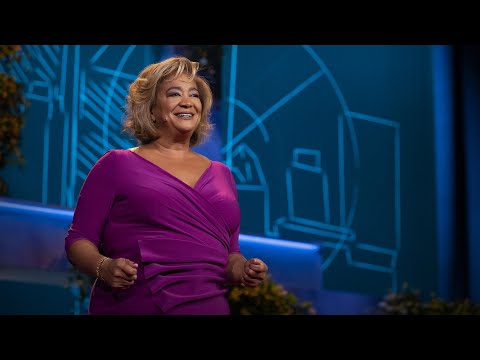
Detroit's Climate Crisis — and How to Build a Resilient Future Everywhere | Anika Goss | TED
Introduction and Family Background
The speaker introduces herself as a third-generation Detroiter and shares her family's history in Detroit, including her grandmother's move during the Great Migration.
Family History in Detroit
- The speaker's grandmother moved to Detroit in 1936 during the Great Migration.
- She brought her Southern ways with her and had an abundant garden with flowers.
- She preferred taking the bus to Eastern Market for fresh meat.
- Home ownership was important for her family's wealth and opportunity.
Changes in Detroit
The speaker discusses how Detroit has changed over time, particularly in terms of demographics and sustainability.
Demographic Changes
- Currently, 84% of Detroiters identify as Black or Latino, with 5% being foreign-born.
- This demographic makeup makes climate and economic issues also equity issues.
- The speaker has focused on the intersection between race and poverty throughout her career.
Sustainability Challenges
- The speaker's work focuses on how climate impacts isolated communities lacking economic prosperity.
- Financial security and climate resilience should be top priorities for all communities.
Climate Impact on Detroit
Contrary to popular belief, the speaker explains that Detroit is at risk for climate impact. Resilience is defined as meeting residents' needs without chronic stress.
Resilience Definition
- Resilience means meeting residents' needs without long-term chronic stress.
- Financial stability helps withstand acute shocks caused by climate change.
Historical Context
- Over 100 years ago, Detroit experienced economic inequity and vulnerability due to innovation.
- Manufacturing played a significant role in the city's economy, but racial disparities existed.
Population Decline and Vacant Land
The speaker highlights the decline in Detroit's population and the resulting vacant land due to economic changes.
Population Decline
- In 75 years, Detroit's population decreased from 1.8 million to 620,000 in 2022.
Vacant Industrial Sites
- Many industrial sites that contributed to Detroit's economic boom now stand vacant and abandoned.
- Approximately 19 square miles of land in Detroit are vacant.
- These sites have led to dangerous contamination of land, water, and air.
Flooding and Economic Inequity
The speaker discusses a severe rain event that caused flooding in Detroit, exacerbating economic inequity.
Severe Rain Event
- Two years ago, eight inches of rain fell over three days in southeast Michigan.
- This was described as a more-than-500-year rain event.
- Flooding resulted in insurmountable repair costs for many families and increased homelessness.
Climate Change Impact
- Climate change worsens economic inequity in the city.
Creating a Resilient Future for Detroit
The speaker proposes three actions to change the resilient future of Detroit: creating an inclusive economic environment, proactive investment in green infrastructure, and prioritizing community engagement.
Inclusive Economic Environment
- Advanced technology and tech-based businesses can contribute to solving climate issues while generating wealth.
- Including Black and brown Detroiters as workers and investors is crucial for an equitable future.
Proactive Investment in Green Infrastructure
- Instead of only responding during crises like flooding or air quality control, focus on green stormwater infrastructure and renewable energy proactively.
Community Engagement
- Engage communities through education, awareness campaigns, and involving residents in decision-making processes.
- Prioritize long-term planning and collaboration to build a resilient future for Detroit.
The transcript is already in English, so there is no need to translate the content.
Making Decisions for the Future
In this section, the speaker emphasizes the need to make decisions differently in order to improve the quality of life for Detroiters and enhance the neighborhoods.
Focusing on Quality of Life and Neighborhoods
- We can no longer only make crisis-driven decisions; we must make decisions differently to improve the quality of life for Detroiters and enhance the neighborhoods.
Investing in Neighborhoods
- It is crucial to invest in neighborhoods to free them from blight and deterioration.
Imagining a Better City
- As an urbanist and futurist, the speaker aims to help Detroiters envision the city they deserve to live in.
- The goal is for residents not to have to live in suburbs to enjoy beautiful gardens, parks, and trees.
Creating Urban Forests and Sustainable Gardens
- Urban forests can be planted in Detroit to reduce urban heat-island impacts and improve air quality.
- Sustainable gardens and food gardens can be established throughout Detroit, contributing positively to both social programs and climate equity.
Climate Equity Requires Investment
- Investing in neighborhoods is essential because climate equity and climate economics necessitate investment for tangible results.
- This holds true not only for Detroit but also for any city experiencing rising inequality where climate equity will inevitably follow suit.
Prosperous Neighborhoods for the Future
In this section, the speaker reflects on the importance of creating prosperous neighborhoods that can thrive economically while maintaining their cultural identity.
Long-Term Prosperity
- The speaker's grandmother's house still stands as a testament to her expectation that Black families, like hers who migrated north 90 years ago, will continue to prosper economically in the future.
Parks, Gardens, and Community Spaces
- Thriving neighborhoods should have parks, gardens, trees, and community spaces.
- It is crucial to ensure that these neighborhoods maintain their cultural identity.
- The goal is for prosperous neighborhoods to remain diverse and inclusive.
Timestamps are provided in the format hh:mm:ss, where XXX represents seconds.
Turn any video into a summary like this
YouTube links, meetings, lectures. With transcripts, search, and chat.