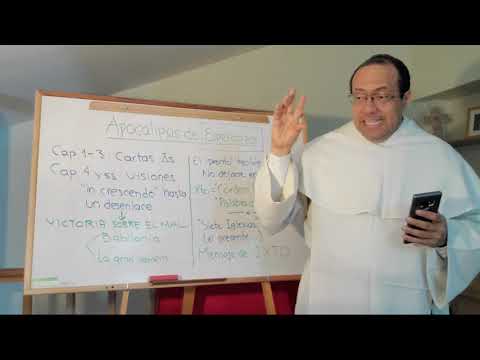
Apocalipsis de Esperanza, capitulo 4 de 12
Introduction to the Apocalypse
Overview of the Class Structure
- The session marks the beginning of the second block of classes on the Apocalypse, following three introductory lessons from last week.
- The focus will be on a direct examination of the text, emphasizing its temporal and spatial context.
Central Theme: Christ as Protagonist
- Jesus Christ is identified as the central figure in the Apocalypse, overshadowing other elements such as John, evil forces, or even martyrs.
- The discussion aims to highlight that many symbolic interpretations (like 666 or battles against evil) are secondary to understanding Christ's role.
Practical Recommendations for Participants
Accessing Course Materials
- Important links have been included in emails sent to participants; one link reviews previously covered videos while another provides images of class notes.
- A technical issue during a previous class led to two video segments being combined into one comprehensive video now available in a shared playlist.
Importance of Communication
- Participants are encouraged to check their emails for updates and resources related to class materials, ensuring they stay informed about content availability.
Class Preparation and Engagement
Setting Up for Learning
- Preparations are underway for optimal audio quality during live sessions; participants should ensure they can hear clearly.
- Acknowledgment of participant attendance is made with nearly 800 individuals connected at this point in time.
Opening Prayer and Intentions
- An opening prayer is conducted asking for intercession from Saint Gabriel and Mary, aiming for smooth transmission and comprehension of God's word.
Structure of the Book of Revelation
Breakdown of Content
- The Book of Revelation consists primarily of letters (chapters 1–3), followed by visions (starting chapter 4).
Themes within Revelation
- Visions depict a journey towards multiple outcomes including judgment against Babylon, destruction of pagan nations, and portrayal of a future holy Jerusalem.
Key Imagery
- Two significant symbols emerge: Babylon and "the great prostitute," representing victory over various evils like death and sin.
Summary Insights
Understanding the Theological Concept of "Pronto" in Revelation
The Nature of "Pronto"
- The term "pronto" should be understood theologically rather than chronologically, emphasizing a detachment from worldly concerns, whether they are positive (pleasures and comforts) or negative (discomforts and conflicts).
Focus on Essential Christian Mandates
- A true Christian remains focused on essential matters, adhering to the fundamental commandment from Deuteronomy: not to deviate from the path set by God.
Structure of Revelation
- The Book of Revelation is divided into two parts: a present diagnosis for seven churches and a series of escalating visions leading to a climactic conclusion where good triumphs over evil through God's sovereign action.
Triumph Through Christ
- Jesus Christ, referred to as the "Lamb slain" and "Word of God," is central to this victory narrative. Following His triumph, the celestial Jerusalem is revealed.
Messages to the Seven Churches
- The letters address seven churches: Ephesus, Smyrna, Pergamum, Thyatira, Sardis, Philadelphia, and Laodicea. These communities are significant in early Christianity and have historical ties with figures like St. Paul and St. Ignatius.
Christ's Ongoing Presence
- In these letters, Christ's message reflects His continuous presence with believers; He does not abandon them during their struggles but remains actively involved in their journey.
Union Between Christ and Believers
- There exists an indissoluble union between Christ as head and His members (the Church), meaning that believers' struggles are intimately connected with Him.
Complexity of Christ's Reality
- Jesus embodies both glorified majesty and shared suffering; He experiences persecution alongside His followers while also being recognized as triumphant in heaven.
Timelessness of Christ
- Descriptions such as “the one who was, who is, and who is to come” highlight Jesus’ transcendence over time—He exists beyond chronological constraints.
Distinction Between Types of Time
Understanding Time in the Context of Christ
The Concept of Chronos vs. Kairos
- The distinction between quantitative (chronos) and qualitative (kairos) time is introduced, emphasizing that kairos reflects significant moments rather than mere hours or months.
- Kairos is associated with opportunities and growth, suggesting a transformative experience marked by events rather than just the passage of time.
Christ as the Harbinger of New Time
- The discussion highlights that Christ embodies a new understanding of time, not merely waiting for it but actively bringing it with His presence.
- Emphasizes that Christ does not look at a clock; instead, He defines time through His coming, marking significant changes in human history.
Revelation's Unique Perspective on Time
- The notion of time in Revelation differs from Greek concepts; it's not about waiting for specific moments but about God creating future realities.
- This perspective elevates the majesty of Christ beyond temporal constraints, indicating His eternal nature as "the first and the last."
Christian Hope vs. Resignation
- Christian hope is framed as an active certainty in divine intervention rather than passive resignation to fate dictated by time.
- Believers are encouraged to focus on their anticipation of Christ’s return rather than being fixated on specific dates or times.
Historical Context of Early Christian Communities
- Introduction to the seven churches mentioned in Revelation, highlighting their significance and established existence around 35–40 years after their founding.
- These communities likely represent a second generation of Christians who had less direct contact with apostolic teachings due to the passage of time since initial evangelization efforts by Paul.
Challenges in Understanding Authorship
Message for Colombia
Simón Bolívar's Influence
- The speaker expresses a desire to write a message for Colombia, signing it as Simón Bolívar, similar to how Chávez communicates. This act is not meant to impersonate Bolívar but rather to honor and renew his thoughts.
The Book of Revelation and Its Context
- The discussion shifts to the authorship of the Book of Revelation, suggesting it may belong to "circles juaneos," or disciples influenced by St. John, dedicating the book in tribute to him.
Historical Parallels
- A historical analogy is drawn with Spartacus during the Roman legions' attempts to capture him; many slaves claimed they were Spartacus as an act of solidarity and protection for their leader. This reflects on identity and representation within communities.
Spiritual Experience Reflection
- It is proposed that a disciple from St. John's community adopted the name "John" to express his spiritual experiences, which explains why there are no direct references made to St. John in letters addressed to Christians in Ephesus and Laodicea.
Symbolism of Number Seven
- The author identifies himself as John while addressing seven churches, where the number seven symbolizes perfection and completeness—highlighting its significance across cultures, including its absence in Chinese tradition regarding weeks and rest periods.
Letters Addressed Beyond Their Recipients
Universal Messages
- The letters sent to the seven churches are interpreted not just as messages for those specific communities but also as universal communications intended for all believers, akin to St. Francis’ letters meant for humanity at large.
Contrast with Other Writings
- In contrast with other religious figures like Santo Domingo who wrote limited correspondence (e.g., only addressing nuns), St. Francis’ writings reflect a broader outreach aimed at all people, emphasizing inclusivity in communication about faith.
Theological Insights on Grace
Divine Greetings
- The text conveys greetings from God through Jesus Christ, highlighting His eternal nature ("who is, who was, and who is coming") along with references to "the seven spirits" before God's throne—suggesting completeness in spiritual matters through this symbolism of seven spirits representing fullness or divine gifts from Isaiah 11:2.
Characteristics of Christ
- Jesus is depicted as one who purifies believers from sin through His blood—a reference that encapsulates key theological themes such as redemption and establishing a kingdom of priests among followers while affirming His glory forevermore.
Apocalyptic Imagery
Old Testament Connections
- The passage emphasizes Jesus' role using imagery derived from the Old Testament; particularly referencing Isaiah’s description of the Messiah filled with God's spirit—indicating continuity between prophetic texts and New Testament revelations about Christ's mission and identity as redeemer through sacrificial love represented by His blood purification theme throughout scripture.
The Significance of Christ as the Alpha and Omega
The New Covenant and Priesthood
- The concept of Christ as the "Lamb of the New Covenant" establishes believers as a kingdom of priests to God, echoing themes found in 1 Peter 2.
The Return of Christ in Glory
- References to clouds signify Christ's return with power and majesty, reminiscent of His ascension where He will come back in glory.
Symbolism of Clouds in Scripture
- Various biblical instances highlight clouds representing God's glory, such as during Israel's exodus, Isaiah's vision, and the Transfiguration.
Judgment and Recognition
- Zechariah’s prophecy indicates that all nations will witness Christ’s return, leading to a universal acknowledgment of His sacrifice.
Alpha and Omega: Definitive Nature of Christ
- The terms "Alpha" and "Omega" denote that Christ is both the beginning and end; nothing can be added or changed after Him.
The Finality of Christ's Sacrifice
Eternal Covenant through Blood
- Jesus' blood signifies an eternal covenant for forgiveness, contrasting with previous covenants which lacked completeness.
Definitive Authority of Christ
- Declaring Himself as the last means no further revelations or changes can occur post-Christ; He sets definitive boundaries on faith.
Fulfillment at the Cross
- Jesus’ declaration “It is finished” marks a limit on sin, death, and opposition against Him—signifying completion in salvation history.
Participation in Suffering and Glory
Shared Experience with Jesus
- John identifies himself as a participant in tribulation due to his union with Jesus; persecution stems from this relationship.
Co-heirs with Christ
- Believers are described as co-heirs with Christ; their experiences mirror those faced by Him—highlighting deep spiritual unity.
Mystical Experiences: Ecstasy
Definition and Context
- Ecstasy refers to profound spiritual experiences where one feels detached from physical reality—a state often associated with deep contemplation.
Historical Precedents
Understanding the Spiritual Perception and Practices in Biblical Context
The Gap Between Divine Holiness and Human Condition
- The vast distance between God's holiness and human sinfulness creates a barrier to perceiving divine matters.
- Saint Paul mentions in his first letter to the Corinthians that a spiritual person can perceive and judge all things, highlighting a unique capacity for understanding through revelation.
Overcoming Human Limitations
- The challenge lies in bridging the gap of creaturely limitations and moral imperfection, as God is eternal, infinite, and holy while humans are finite and sinful.
- To claim possession of "the mind of Christ," one must experience a form of ecstasy or heightened awareness.
Prophetic Practices for Inspiration
- Prophets during Elisha's time employed various methods, including dance, which was believed to have effects on consciousness. This raises questions about modern practices without such elements.
- Some prophets resorted to bloodletting to induce weakness or confusion, allowing them to experience altered states of reality. Other religions also use substances for similar purposes.
Seeking Altered States of Consciousness
- Many artists reportedly use drugs to inspire creativity; this practice reflects a broader search for inspiration through altered states of consciousness.
- Inspiration is defined as being "in spirit" or filled with enthusiasm—often sought through various means across cultures but approached differently in biblical contexts.
Distinction Between Biblical Practices and Other Religions
- Unlike other religious practices that may endorse destructive behaviors (e.g., sexual excess), biblical teachings do not support systematic use of anything that harms consciousness or leads to enervation.
- The Bible does not approve seeking ecstasy through artificial means; true experiences should come from divine action rather than human manipulation or imposition on God’s will.
Experiences within Charismatic Renewal
- Personal accounts reveal intense spiritual experiences where individuals may lose consciousness during prayer—these moments can be profound yet are sometimes mismanaged by attempts at artificially inducing such states.
- There is caution against trying to produce mystical experiences artificially; genuine encounters should arise naturally from sincere openness to God’s presence rather than forced actions like physical manipulation during prayer sessions.
Authenticity in Spiritual Experience
- True spiritual engagement involves purification of the heart rather than imposing expectations on God; it emphasizes receptivity over control in experiencing divine gifts like ecstasy or prophecy.
Understanding Prophecy and Consciousness
The Nature of Prophetic Experiences
- The speaker describes a profound experience involving visions, likening it to seeing a lightning bolt within a whirlwind, suggesting the complexity and strangeness of prophetic encounters.
- There is mention of prophets who communicate in straightforward, relatable language, contrasting with the expectation that prophecy must be grand or mystical.
Consciousness in Prophecy
- It is emphasized that prophetic messages can occur at normal levels of consciousness, challenging the notion that altered states are necessary for divine communication.
- The speaker critiques fervent beliefs among some Catholics who think ecstasy is required for receiving messages from God or the Virgin Mary.
Misunderstandings About Ecstatic States
- The importance lies not in the state of consciousness but in the presence of God during prophecy; physical manifestations like falling or eye movements do not define true prophecy.
- While ecstatic language is common in apocalyptic literature, it does not imply that the prophet's identity disappears; they remain active participants.
Human Element in Divine Messages
- A metaphor comparing prophets to telephone lines illustrates that while they convey messages from God, their personal agency remains intact.
- Citing Joseph Ratzinger’s interpretation of Fatima's third secret reinforces that human authorship persists even when divine inspiration is involved.
Symbolism and Contextual Understanding
- Apocalyptic texts utilize symbolic language reflective of their time; this context shapes how divine experiences are articulated without negating human involvement.
- The speaker argues against viewing divine communication as separate from human experience; rather, both elements coexist harmoniously.
Clarifying Misconceptions About Instruments
- The term "instrument" often misleads people into thinking prophets act merely as passive conduits for God's messages without personal input or influence.
- Emphasizing humanity within prophecy counters views that diminish individual contributions to divine revelations.
Summary Insights on Prophecy
Understanding Prophecy and Apocalyptic Visions
Types of Prophets and Their Experiences
- The speaker discusses different types of prophets, highlighting that some prophesy in a straightforward manner while others, like Ezekiel and Daniel, experience visions that convey deeper messages.
- It is noted that prophetic experiences vary in consciousness levels; apocalyptic prophecies often involve altered states or ecstasies, but the essence remains focused on conveying God's message.
Responsibility of Prophets
- The speaker emphasizes that all prophets are legitimate authors of their messages. They reference St. Paul’s assertion that "the spirits of the prophets obey the prophets," indicating accountability for what they communicate.
- A warning is issued against disconnecting from the responsibility associated with prophetic words; claiming ignorance about theological training does not absolve one from this duty.
The Nature of Ecstasy in Prophecy
- Ecstasy is described not as an escape from reality but as a deep immersion into its mysteries. This understanding reframes how we perceive ecstatic experiences within Christian faith.
- The speaker argues that Christian ecstasies lead to profound insights rather than detachment from reality, emphasizing their significance in understanding divine truths.
Understanding Apocalypse
- The apocalypse should be viewed as a convergence between worldly interests and divine intentions rather than a distant fantasy. This perspective invites deeper engagement with its themes.
- Symbols and images used by visionaries serve to illustrate real-world intersections between human concerns and God’s plans, reinforcing the relevance of apocalyptic literature today.
Conclusion and Invitation for Further Engagement
- The session concludes with an invitation to explore these themes further through upcoming discussions, stressing the importance of delving into complex spiritual realities.