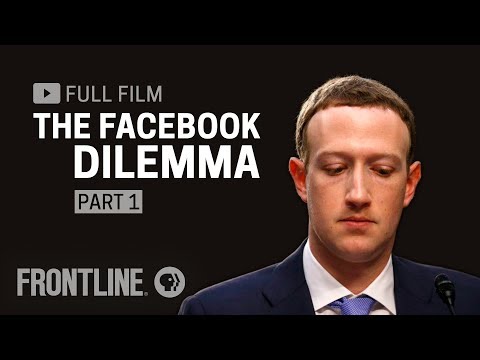
The Facebook Dilemma, Part One (full documentary) | FRONTLINE
The Facebook Dilemma
This two-night special investigates the impact of Facebook on privacy, safety, and democracy. It features interviews with company insiders and former employees who discuss the platform's role in disrupting democracy globally.
The Responsibility of Facebook
- Mark Zuckerberg admits that they didn't take a broad enough view of their responsibility.
- Former employees express concern about the slow response to issues during the election.
- Facebook's influence on democracy around the world was underestimated.
Mark Zuckerberg's Vision
- Correspondent James Jacoby questions whether Mark Zuckerberg recognizes the importance of his platform.
- There is a systemic issue with Facebook algorithms that contribute to polarization.
- The documentary explores whether Zuckerberg is accountable for dividing society.
Early Days of Facebook
- Mark Zuckerberg explains that Facebook started as an online directory for colleges.
- The platform gained popularity at Harvard and expanded rapidly.
- A tour of the office showcases the company's culture and growth.
Connecting People Worldwide
- Mark Zuckerberg had a vision to connect people worldwide through Facebook.
- Technology optimism in Silicon Valley masked potential dangers in culture and privacy.
Historic Change and Consequences
- Investigating warning signs before problems became public reveals historic change brought by Facebook.
- The intoxicating vision turned into a lucrative business plan, but mistakes were made along the way.
Timestamps are approximate and may vary slightly.
The Mission and Belief in Connecting the World
In this section, the former Facebook employees discuss their belief in the mission of connecting the world and creating a better place. They also talk about the sense of excitement and optimism that surrounded this mission.
Belief in the Mission
- Mark Zuckerberg's mission to connect the world was not just a slogan but something they genuinely believed in.
- They would express their belief even when Mark wasn't around, showing their dedication to the mission.
- The idea of connecting the world and making it a better place was exciting and something they couldn't help but believe in.
Naive Optimism
- There were internal questions about whether this mission was naive optimism.
- Despite these doubts, many employees loved the mission because it pushed boundaries and had a vision for making an impact on a global scale.
- Crossing a billion monthly active users reinforced their belief that they were building something significant.
Creating a Digital Nation-State
- Some employees recognized that they were creating a digital nation-state with Facebook.
- They saw it as an experiment in free speech on an unprecedented scale.
- There was a strong focus on youth being seen as positive, although diversity within the workforce was lacking.
Company Culture and Vision
- The company culture at that time consisted mainly of young individuals from prestigious universities like Harvard and Stanford.
- There was a shared belief that Facebook would be paradigm-shifting and have a profound impact on society.
- The workplace environment had slogans, posters, and attire promoting unity, innovation, and fearlessness.
Speaking Out About Facebook's Business Practices
In this section, Antonio Garcia Martinez discusses breaking the code of silence in Silicon Valley by speaking out about Facebook's business practices. He emphasizes the need for transparency regarding how Facebook operates as it has become such an influential platform.
Breaking the Code of Silence
- In Silicon Valley, there is an unwritten rule to only speak positively about businesses.
- Antonio believes that Facebook has reached a point where it needs to be more transparent about its operations.
- He challenges the notion of constant disruption and improvement, highlighting that Facebook is ultimately a business like any other.
Worldwide Expansion and Growth Team
This section focuses on Mark Zuckerberg's goal of worldwide expansion for Facebook and the role of the growth team in making this happen. Naomi Gleit, a member of the growth team, shares her experiences and highlights the exponential growth challenges faced by Facebook.
Worldwide Expansion
- Mark Zuckerberg aimed for worldwide expansion beyond college students in the United States.
- The growth team played a crucial role in making Facebook accessible to people who wanted it but couldn't have access.
- Efforts were made to expand Facebook to high school students and translate it into multiple languages.
Exponential Growth Challenges
- The rapid growth experienced by Facebook led to difficulties in understanding how the platform could be misused.
- The company was primarily focused on the positive aspects while being slow to recognize potential negative consequences.
- The emphasis was on continuous growth, with engineers working on improving user experience and increasing sign-ups.
News Feed: Personalized Content Consumption
This section explores the significance of News Feed as a key feature of Facebook. It discusses how News Feed uses algorithms to provide personalized content and keep users engaged.
Importance of News Feed
- News Feed is designed as a personalized newspaper, providing users with customized content based on their interests.
- It aims to make users want to keep scrolling, looking, and liking, thereby maximizing engagement on the platform.
Algorithm-driven Content Ranking
- Stories in News Feed are ranked based on their perceived importance using algorithms developed by Facebook.
- These algorithms analyze user information to determine the most interesting content for each individual.
- The goal is to provide users with the content they are most likely to engage with and find relevant.
The Power of "Like" Button and User Data
This section highlights the significance of the "like" button in collecting vast amounts of personal data from users. It emphasizes how this data became invaluable for Facebook's growth and success.
Collection of Personal Data
- The introduction of the "like" button allowed News Feed to collect extensive personal data from users.
- This data proved crucial for Facebook's growth and valuation as it provided insights into user preferences and behaviors.
Timestamps have been associated with bullet points where available.
Understanding User Interests on Facebook
This section discusses the importance of user engagement and understanding their interests on the Facebook platform.
Importance of User Engagement
- User engagement, such as liking and sharing content, became a driving force for the product.
- It allowed Facebook to understand which people and businesses were important to users.
- This understanding helped in tailoring the user experience and delivering relevant content.
News Feed's Growth and User Satisfaction
This section highlights the exponential growth of News Feed and how it initially faced challenges but eventually became popular among users.
Exponential Growth of News Feed
- News Feed experienced exponential growth due to existing laws that didn't hold internet companies liable for posted content.
- Section 230 of the Communications Decency Act protected internet companies like Facebook from being held responsible for user-generated content.
- The provision allowed Facebook to grow and thrive without being accountable for harmful or illegal content.
Setting Ground Rules for Content Moderation
This section explores Facebook's approach to content moderation and its decision to allow free speech while setting some ground rules.
Libertarian Perspective on Free Speech
- Facebook took a libertarian perspective by allowing people to express themselves freely.
- Inciting violence was strictly prohibited, leading to immediate removal from the platform.
- Ground rules were established, including no nudity, violent or hateful speech.
Reliance on Public's Common Sense
This section discusses how Facebook relied on users' common sense and decency to police the site.
Trusting Users' Judgment
- Facebook trusted that users would exercise common sense in distinguishing between truth and falsehoods.
- They believed that users would report inappropriate content and engage in self-regulation.
Facebook's Role in the Arab Spring
This section explores how Facebook played a role in the Arab Spring, specifically in Egypt.
Facebook's Impact on the Arab Spring
- A Facebook page protesting abuses by the regime of Hosni Mubarak helped mobilize people during the Arab Spring.
- The page gained over 100,000 followers within three days.
- Social media played a significant role in organizing protests and spreading information during this time.
Acknowledging Facebook's Influence
This section discusses how Facebook's platform was credited for its role in facilitating democratic change during the Arab Spring.
Recognizing Facebook's Contribution
- Ghonim, an activist involved in the Egyptian protests, acknowledged that social media platforms like Facebook enabled engagement and idea propagation.
- While he believed it would be arrogant for any specific technology company to claim credit for revolutions, he recognized the power of sharing ideas with others through social media.
Internal Recognition of Social Media's Impact
This section highlights how internally at Facebook, there was recognition of social media's impact on democratic change.
Internal Recognition of Social Media's Power
- Activists and civil society leaders expressed gratitude to Facebook for enabling societal changes.
- Government officials acknowledged that Facebook was changing societies but questioned if the company fully realized its influence.
Unforeseen Consequences After Revolution
This section discusses how polarization and conflicts emerged after the revolution in Egypt, impacting both society and social media platforms like Facebook.
Post-revolution Polarization
- Following the revolution, Egypt experienced polarization between different groups, including those calling for an Islamic state.
- Social media platforms like Facebook amplified this polarization and rewarded divisive content.
The Role of Facebook's News Feed Algorithm
This section explores the role of Facebook's News Feed algorithm in amplifying polarization and its unintended consequences.
Unintended Consequences of News Feed Algorithm
- While social media platforms were initially credited with bringing freedom to people during the Arab Spring, there was a twist.
- Facebook's News Feed algorithm contributed to polarization by rewarding divisive content.
- The environment on social media bred clashes and further polarized society.
The summary has been provided in English as per your request.
The Impact of Social Media on Society
This section discusses the unintended consequences of social media platforms and their impact on society.
The Role of Engagement Metrics
- Social media platforms prioritize engagement metrics over content quality.
- Ghonim became a victim of fake statements created by a page with hundreds of thousands of followers.
- Naively, he believed that these tools were liberating, but they actually facilitated the spread of misinformation and fake news.
Lack of Response from Silicon Valley
- Ghonim tried to express his concerns to people in Silicon Valley but felt unheard.
- He emphasized the serious unintended consequences that these platforms have on people's lives.
- Activists in the region were at the forefront, identifying issues that went unnoticed by company headquarters.
Understaffed and Overwhelmed
- Researchers like Zeynep Tufecki warned social media companies about being understaffed for their expanding user base.
- Facebook lacked resources to handle the scale and complexity of content moderation.
- Young employees made snap judgment calls about what speech should be allowed or removed, leading to potential biases.
Facebook's Growth and Business Model
This section explores Facebook's rapid growth and its focus on building an advertising business.
Pressure to Prove Business Value
- Facebook aimed to demonstrate its profitability before going public.
- Zuckerberg needed to show investors and advertisers the value of personal data collected from users.
Sheryl Sandberg's Influence
- Sheryl Sandberg played a crucial role in shaping Facebook's business model, leveraging her experience from Google.
- Publicly, Sandberg and Zuckerberg downplayed data collection concerns while emphasizing privacy.
Challenges in Scaling Moderation Efforts
- The company struggled with limited resources for content moderation as it expanded globally.
- An overwhelming amount of content required quick decisions from a young and inexperienced workforce.
Conclusion
The transcript highlights the unintended consequences of social media platforms, such as the spread of misinformation and the challenges of content moderation. It also sheds light on Facebook's growth trajectory and its focus on building an advertising business. The lack of resources for content moderation raises concerns about potential biases and the need for more comprehensive solutions to address these issues.
The Reality of Facebook's Revenue
This section discusses how Facebook's revenue was not growing as fast as investors expected, leading to the need for a change in strategy.
- Facebook's revenue was flattening and not growing as fast as investors anticipated.
- Sheryl Sandberg emphasized the need for action to address this issue.
- To make advertising more effective, Facebook started collecting commercially interesting data from users, such as their purchasing habits and household information.
- Facebook developed new ways to collect personal data from users both online and offline.
Data Brokers and Increased Data Collection
This section highlights how Facebook formed relationships with data broker companies to acquire additional user data.
- Prior to its IPO, Facebook announced partnerships with data broker companies.
- These data brokers collected extensive personal information about individuals without their knowledge or consent.
- This acquired data was then shared with Facebook for targeted advertising purposes.
- Facebook became a surveillance machine by profiling users' activities on and off the platform.
Impact on Ad Revenue
This section explores how the changes in data collection led to a significant increase in ad revenue for Facebook.
- The changes made by Facebook resulted in a spike in ad revenue.
- This increase marked a significant shift in the company's outlook and direction.
Concerns and Departure
In this section, concerns regarding privacy issues at Facebook are raised, leading some individuals to leave the company.
- Chris Sparapani left Facebook due to discomfort with its direction regarding user privacy.
- The extent of data collection by Facebook remained largely unknown until an encounter between an Austrian law student and a company lawyer.
- The law student requested a copy of their personal data from Facebook and discovered sensitive information, including private messages that were thought to be deleted.
- Facebook's continuous data collection and tracking practices raised concerns about user privacy.
Complaints and Lack of Enforcement
This section focuses on Max Schrems' complaints against Facebook for violating European privacy laws and the lack of enforcement.
- Max Schrems filed 22 complaints with the Data Protection Commission in Ireland, where Facebook has its international headquarters.
- Schrems claimed that Facebook was collecting personal data in violation of European privacy laws without informing users.
- Despite filing the complaints, there was limited response from both Facebook and the data protection authority.
- The lack of enforcement allowed Facebook to continue its practices without significant consequences.
Privacy Concerns and Policy Changes
This section highlights how privacy concerns led to discussions with Mark Zuckerberg and policy changes at Facebook.
- Journalists expressed concerns about privacy violations by Facebook and wanted to discuss these issues with Mark Zuckerberg.
- Questions were raised regarding whether there should be a universal level of privacy for all users.
- Facebook claimed to take European privacy laws seriously but agreed to make policies clearer and limit certain types of user data storage.
Interview with Mark Zuckerberg Privacy Concerns and Backlash
In this section, the interviewer questions Mark Zuckerberg about privacy concerns and the backlash faced by Facebook after changing its default privacy settings.
Privacy Concerns and Backlash
- The interviewer asks if changing default privacy settings is a violation of people's privacy.
- Mark Zuckerberg becomes increasingly uncomfortable as the questions continue.
- The interviewer notices Mark sweating profusely during the interview.
- Mark admits that a lot has changed since starting Facebook in a dorm room.
- The interviewer expresses concern for Mark's well-being, thinking he might faint.
- It is revealed that Mark had a panic attack during the interview.
- The conversation shifts to discussing the mission statement printed on Facebook's hoodie.
- The interviewer reflects on Mark's view of privacy, suggesting that Facebook has loose standards regarding user data protection.
Facebook and Privacy Laws
This section explores the lack of overarching privacy laws in the United States and how it allowed Facebook to set its own privacy standards. It also highlights concerns raised by authorities at the Federal Trade Commission (FTC).
Lack of Privacy Laws in the U.S.
- In most other parts of the world, privacy is considered a right, but not exactly in the United States.
- The FTC investigates whether Facebook deceived its users by sharing personal data with third-party developers without consent.
FTC Investigation and Consent Order
- The FTC finds that sharing user data with third parties without consent is a violation.
- The FTC raises concerns about Facebook's lack of control over third-party app developers and the potential misuse of data.
- The interviewee suggests that anyone, including foreign adversaries, could have accessed user data through third-party apps.
- Facebook settles with the FTC without admitting guilt and agrees to fix privacy issues.
Facebook's Privacy Challenges
This section focuses on the challenges faced by Facebook in maintaining user privacy while monetizing personal information. It also highlights the lack of expertise and resources dedicated to privacy issues within the company.
Privacy Challenges at Facebook
- Despite being a large and important company, Facebook lacked a dedicated team to address privacy issues.
- The interviewee expresses being horrified when put in charge of privacy issues due to lack of qualifications.
- Concerns arise regarding potential misuse of user data shared with third-party developers.
Conclusion
The transcript highlights the concerns surrounding privacy on Facebook, including changes in default settings, sharing user data with third parties without consent, and inadequate control over third-party app developers. It also sheds light on Mark Zuckerberg's discomfort during an interview discussing these issues. The lack of comprehensive privacy laws in the United States allowed Facebook to set its own standards but raised concerns among authorities like the FTC. Additionally, it reveals challenges faced by Facebook in balancing monetization efforts with protecting user privacy.
New Section
This section discusses the concerns of senior executives at Facebook regarding revenue and user growth, rather than the vulnerabilities the company was creating. The lack of response from executives indicated a focus on short-term goals.
Concerns about Revenue and User Growth
- Senior executives at Facebook were primarily concerned about revenue growth and user growth.
- The lack of concern for vulnerabilities within the company's practices was evident.
- These concerns were expressed to the interviewee, or deduced from their interactions.
New Section
This section highlights that the senior executives at Facebook who had these concerns were among the top five in the company. Despite claims by Facebook that they took privacy seriously, Parakilas and others felt that revenue-driven decision-making continued to overshadow privacy concerns.
Senior Executives' Level of Seniority
- The senior executives who expressed concerns about revenue and user growth were among the top five in the company.
- Despite claims by Facebook that they took privacy seriously, Parakilas and others felt that revenue-driven decision-making persisted.
New Section
In this section, Parakilas expresses his frustration with what he perceives as arrogance within Facebook's decision-making process. He believes that long-term ramifications were not adequately considered, leading to negative consequences for users' privacy.
Frustration with Decision-Making
- Parakilas left Facebook in 2012 due to frustration with what he perceived as arrogance within decision-making processes.
- He believes that long-term consequences of decisions were not properly thought through.
- This has contributed to the current state of affairs regarding privacy issues.
New Section
This section discusses Facebook's initial public offering (IPO) in 2012, which raised over $18 billion and solidified the company's position as one of the most valuable technology companies.
Facebook's IPO
- In May 2012, Facebook went public with its IPO.
- The IPO raised over $18 billion, making it the largest technology IPO in U.S. history.
- Mark Zuckerberg, Facebook's founder, became worth an estimated $15 billion.
New Section
This section highlights the significance of Facebook's IPO and its impact on the company's mission to make the world more open and connected.
Impact of Going Public
- Going public was an important milestone for Facebook.
- However, their mission remained focused on making the world more open and connected rather than solely being a public company.
- The IPO marked a significant moment in Facebook's history.
New Section
This section discusses how Facebook continued to grow by acquiring Instagram and WhatsApp, becoming one of the most valuable companies globally. The focus remained on user data collection to drive their business model.
Acquisition and Business Model
- Following the IPO, Facebook acquired Instagram and WhatsApp.
- These acquisitions contributed to making Facebook one of the most valuable companies worldwide.
- The business model still heavily relied on collecting users' personal data.
New Section
This section explores concerns raised by researchers working for the Department of Defense regarding social media platforms like Facebook being used for nefarious purposes such as disinformation campaigns.
Concerns about Social Media Misuse
- Researchers working for the Department of Defense expressed concerns about social media platforms being used for disinformation and deception.
- They believed that social media provided opportunities for manipulation at an unprecedented scale.
- There were worries about people willingly giving up their data and becoming targets for manipulation.
New Section
This section delves into the potential threat of people giving up their data and becoming susceptible to manipulation. The ease with which individuals can be misled through targeted messaging is highlighted.
Threat of Data Sharing
- Giving up personal data makes individuals vulnerable to manipulation.
- Manipulation can take various forms, such as influencing purchasing decisions or swaying political opinions.
- Targeted messaging tailored to specific communities can exploit filter bubbles and amplify manipulation.
New Section
This section discusses the research conducted by Waltzman and his colleagues on the threats posed by social media. They discovered that disinformation could be turned into a powerful weapon, capable of mass manipulation.
Research on Social Media Threats
- Waltzman's research revealed that social media enabled disinformation to become a serious weapon.
- The opportunities for mass manipulation were significant.
- People are easily misled when disinformation is crafted to resonate with specific communities.
New Section
This section highlights how Russian operatives at the Internet Research Agency used social media platforms like Facebook to spread propaganda and influence public opinion during the conflict in Ukraine.
Russian Propaganda Factory
- The Internet Research Agency in St. Petersburg, Russia, created a fake perception of Russia using illustrations, pictures, and other means to influence people's minds.
- The main intention was to portray the Ukrainian government negatively.
- Fake news stories were disseminated, causing fear and sowing distrust among people.
New Section
This section emphasizes how Russian propaganda on Facebook played a significant role in spreading misinformation during the conflict in Ukraine.
Impact of Russian Propaganda
- Russian propaganda had a massive presence on social media platforms like Facebook.
- False stories, such as Ukrainian nationalists torturing people who spoke Russian, were spread to scare and manipulate the public.
- Despite being proven false, these stories gained traction on Facebook.
New Section
This section highlights how Facebook was weaponized by allowing the spread of fake news and propaganda during the conflict in Ukraine.
Facebook as a Weapon
- The manipulation of information on Facebook allowed for the dissemination of propaganda at an enormous scale.
- The vast reach and influence of Facebook made it an effective tool for spreading misinformation.
- The platform became instrumental in amplifying divisive narratives and influencing public opinion.
Understanding the Influence of Propaganda
The speaker discusses how people start believing in nonsensical information and how it can influence their behavior. They mention the use of propaganda to provoke certain actions in individuals.
The Power of Belief
- People start believing in nonsensical information.
- Testing different types of nonsense helps identify what people believe and what they don't.
- Propaganda plays a role in influencing people's behavior.
Facebook's Response to Ukrainian Misinformation
Dmytro Shymkiv, an adviser to Ukraine's president, recounts his meeting with Facebook representatives regarding misinformation on the platform. He expresses frustration with Facebook's response and lack of action.
Request for Intervention
- Shymkiv asked Facebook to intervene regarding fake accounts spreading misinformation.
- Facebook responded by stating they are an open platform and anyone can say anything within their policy.
- Shymkiv emphasized the presence of trolls factories and fake news promoted by fake accounts.
Lack of Action from Facebook
Despite raising concerns about Russian interference through misinformation on Facebook, Shymkiv states that no action was taken by the company at that time. He highlights Facebook's focus on freedom of speech rather than addressing the issue.
Ineffective Response from Facebook
- Shymkiv explicitly mentioned trolls factories, fake news, and lying posts on the platform.
- He requested investigation or verification but received no response or action from Facebook.
- At that time, addressing Russian interference was not considered a priority for Facebook.
Awareness of Disinformation Campaigns on Facebook
It is revealed that there were disinformation campaigns from various countries on Facebook, including Russia. However, it remains unclear whether Facebook learned from these experiences.
Known Disinformation Campaigns
- Facebook acknowledges the presence of disinformation campaigns on their platform.
- The extent to which they learned from these campaigns is uncertain.
Addressing Threats and Risks on Facebook
Facebook acknowledges the challenges posed by threats such as scams, bullying, harassment, and nudity. They emphasize that addressing these issues is an ongoing effort for the company.
Ongoing Challenges
- Facebook actively addresses various threats and problems on its platform.
- Scams, bullying, harassment, and nudity have been areas of focus.
- The evolving nature of threats requires continuous efforts to mitigate risks.
Mark Zuckerberg's Vision and Concerns
Mark Zuckerberg expresses his concern about the growing division and polarization in society. He believes that the work being done by Facebook is more important than ever before.
Concern for a Connected World
- Zuckerberg observes a trend of people turning inward and building walls instead of embracing a connected world.
- He sees his work at Facebook as part of the solution to counteract this trend.
The Impact of Facebook on Information Consumption
The influence of Facebook on information consumption is highlighted, with concerns raised about its potential negative effects on democracy.
Influence Over Information
- Facebook has had significant influence over the information consumed by Americans.
- Polarization is seen as a key aspect of Facebook's model.
- The information ecosystem created by platforms like Facebook can disrupt democracy.
Denials and Questions Surrounding Election Influence
The 2016 election saw Russia using social media as a weapon. There are questions surrounding the impact of fake news on Facebook during this time.
Election Influence Controversy
- Russia utilized social media as a weapon during the 2016 election.
- Facebook denies that fake news on their platform influenced the election.
- Questions remain regarding Facebook's readiness for future elections.
The Dilemma of Facebook's Business Model
The dilemma faced by Facebook is whether they can address serious problems without completely revamping their business model.
Balancing Problems and Business Model
- Facebook needs to solve serious problems while maintaining their existing business model.
- The challenge lies in finding a balance between addressing issues and sustaining growth.
This summary covers the main points from the transcript, organized chronologically.
"Frontline" Programs
This section provides information about accessing more "Frontline" programs on the website pbs.org/frontline and ordering "The Facebook Dilemma" on DVD from ShopPBS or through Amazon Prime video.
Accessing "Frontline" Programs
- To access more "Frontline" programs, visit the website pbs.org/frontline.
Ordering "The Facebook Dilemma"
- To order the documentary "The Facebook Dilemma" on DVD, you can visit ShopPBS.
- Link: ShopPBS
- Alternatively, you can also watch this program on Amazon Prime video.
Timestamps are not available for this section.