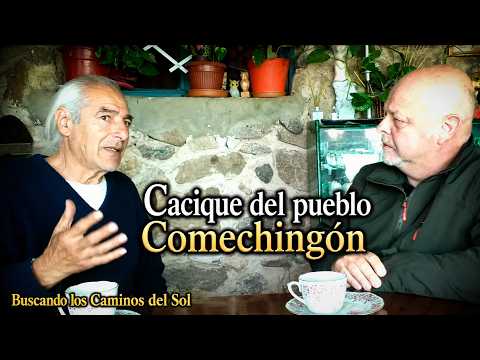
REVELANDO la COSMOVISIÓN INDÍGENA: El Cacique Aldo Gomez ☀️ Nahuan de los Comechingones
Introduction to Aldo Gómez and Pachamama Celebration
Overview of the Discussion
- The conversation begins informally, highlighting a recent celebration of "Pachamama" with Aldo Gómez, who is referred to as a "Cacique" (leader).
- The term "authorities" is discussed in relation to indigenous governance structures, emphasizing that these roles differ from Western interpretations.
- Leadership within the community was shared among several individuals, each representing different family groups and responsibilities.
- These leaders were responsible for summarizing knowledge and organizing community needs effectively.
- There is a distinction made between authority as privilege in Western contexts versus responsibility in indigenous cultures.
Historical Context of the Komichingon People
Struggles and Recognition
- Aldo discusses the historical oppression faced by his people due to Spanish colonization, leading many to believe they no longer existed.
- He emphasizes that the Komichingon are one of the oldest peoples on the American continent, facing erasure through colonial policies.
- Córdoba's ideological alignment with decrees declaring it free from indigenous populations contributed to their invisibility.
- Personal efforts began with Aldo and his late wife researching their ancestry and cultural practices despite societal shame associated with being identified as indigenous.
- Conversations with elders revealed a reluctance among many to openly identify as indigenous due to historical trauma.
Identity and Cultural Recovery
Challenges in Self-identification
- Many elders expressed feelings of survival through adopting alternative identities rather than embracing their indigenous heritage.
- There is an ongoing struggle for recognition from national institutions regarding their identity as living communities.
- Oral traditions have preserved knowledge about their identity despite official narratives denying their existence until genetic studies emerged around 2000.
- Positive results from genetic studies helped validate claims of existence against historical denialism by authorities.
- A significant number of families self-reported belonging to the Komichingon during national census efforts.
Legal Recognition and Community Validation
Steps Toward Official Acknowledgment
- Following data collection, social scientists validated community claims through fieldwork in Córdoba, recognizing them legally as a living community.
- This acknowledgment marked a turning point for the Komichingon people after years of struggle since formal processes began around 1991 or 1992 but culminated in recognition only by 2006.
- Aldo expresses pride that even those without direct indigenous lineage recognize their history and presence.
- He reflects on how history has attempted to erase them but acknowledges that awareness persists among those connected culturally.
- The importance of having someone like him articulate these experiences today highlights ongoing struggles for visibility.
Indigenous Knowledge Systems
Perspectives on Writing and Communication
- Aldo discusses whether writing existed historically among his people, suggesting alternative forms such as textiles carried symbolic meanings akin to written language.
- He mentions "kipu," colorful knot systems used for record keeping which also conveyed temporal information beyond mere numbers.
- Despite destruction over time, remnants remain indicating sophisticated communication methods existed prior to European contact.
- He asserts that while traditional writing may not have been present, other forms served similar purposes reflecting complex ideas through symbols.
- This perspective challenges conventional definitions surrounding literacy by expanding understanding beyond alphabetic systems.
Relationship Between Land and Life
Spiritual Connection with Nature
- For Aldo’s people, land embodies life itself—encompassing all beings including humans, animals, plants—and represents identity formation within ecosystems.
- The interconnectedness extends beyond human relationships; it includes elements like air and water forming holistic views on existence rooted deeply within nature's cycles.
- He argues against viewing spirituality merely through religious lenses; instead focusing on building connections across all entities inhabiting territories together harmoniously reflects true essence lived out daily by his culture.
- Historical narratives often prioritize monumental architecture over communal bonds; however he posits deeper wisdom lies within nurturing relationships rather than constructing grand edifices alone .
- Current technological advancements prompt reflection about humanity’s evolution—questioning if progress equates development when fundamental values shift away from communal ties towards mechanistic interactions .
Cosmological Views Among Indigenous Peoples
Understanding Universe Connections
- Discussing cosmology reveals how ancestral beliefs integrate earthly realms alongside celestial bodies shaping worldviews held collectively throughout generations .
- Language barriers complicate conveying these concepts accurately ; thus revitalizing lost linguistic elements becomes crucial for preserving cultural heritage amidst globalization pressures .
- Their understanding encompasses multiple dimensions including spiritual realms influencing everyday lives , reinforcing notions about unity existing between earth , sky , stars etc., forming cohesive frameworks guiding actions taken daily .
-. They perceive themselves intrinsically linked not just physically but energetically connecting back into larger cosmic fabric encompassing everything known .
-. This relationship fosters respect towards environment encouraging sustainable practices ensuring future generations inherit balanced ecosystems vital sustaining life itself .
. Naming Conventions Within Indigenous Communities
Terminology Usage & Identity Formation
-. Various terms exist describing native peoples ; however clarity arises when identifying preferred nomenclature aligning closely with legal definitions recognized globally .
-. Discussions reveal complexities surrounding labels assigned historically versus contemporary understandings impacting self-identification processes undertaken today .
-. Emphasis placed upon reclaiming rightful titles asserting agency over narratives constructed externally reinforces dignity inherent within identities shaped locally .
-. Ultimately striving towards collective acknowledgment serves purpose unifying diverse voices advocating rights while fostering solidarity amongst marginalized groups seeking justice .
-. Engaging dialogues highlight necessity addressing misconceptions perpetuated throughout history aiming rectify imbalances created via colonial legacies still felt presently across societies worldwide .
Turn any video into a summary like this
YouTube links, meetings, lectures. With transcripts, search, and chat.