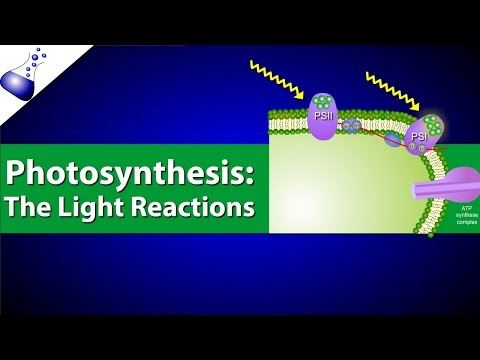
The Light Reactions of Photosynthesis
Overview of Photosynthesis and the Light Reactions
This section provides an introduction to photosynthesis and focuses on the light reactions.
The Process of Photosynthesis
- Photosynthesis is a process carried out by plant cells that involves two primary steps: the light reactions and the Calvin cycle reactions.
- In this tutorial, we will specifically focus on the light reactions.
The Role of Chloroplasts in Photosynthesis
- Chloroplasts are organelles within plant cells where photosynthesis takes place.
- Within chloroplasts, there are special pigments called chlorophyll that absorb light energy for photosynthesis.
The Thylakoid and ATP Production
- The light reactions occur within the thylakoid membrane of the chloroplast.
- Special pigments in the thylakoid absorb light energy and transfer it to high-energy electrons, leading to ATP production.
- ATP is created through a process involving two photosystems: photosystem I and photosystem II.
Photosystem II and Electron Transfer
- Photosystem II is where the light reactions begin.
- When photons (light energy) are received by photosystem II, electrons in its reaction center become energized.
- These energized electrons escape from photosystem II and move to an electron acceptor molecule in the electron transport chain.
Water Splitting and Energy Release
- To replace the electrons leaving photosystem II, water molecules are split, releasing oxygen, hydrogen ions (H+), and additional electrons.
- The released electrons continue moving down the electron transport chain, releasing stored energy as they go.
- This energy is used to create a hydrogen ion gradient across the thylakoid membrane.
ATP Synthase and ATP Production
- A protein in the electron transport chain pumps hydrogen ions from the stroma into the thylakoid space, creating a high concentration of ions in the thylakoid space.
- This ion gradient contains potential energy, which is utilized by an enzyme called ATP synthase.
- Hydrogen ions flow down their concentration gradient through ATP synthase, releasing energy that is used to convert ADP to ATP.
Production of NADPH in Photosynthesis
This section focuses on the production of NADPH during photosynthesis.
Photosystem I and Electron Transfer
- Electrons that escaped from photosystem II are transferred to photosystem I.
- As photosystem I absorbs additional light energy, the electrons become energized again and move down the second electron transport chain.
Water Splitting for Electron Replacement
- Electrons from the adjacent electron transport chain replace those from photosystem I.
- Water molecules are split again to provide replacement electrons for photosystem II.
NADPH Production
- At the end of this electron transport chain, energized electrons and a hydrogen molecule are used to reduce NADP+ to NADPH.
Summary and Conclusion
This section provides a summary of the light reactions in photosynthesis and their role in producing ATP and NADPH.
The Role of Light Reactions
- The light reactions use light energy and water to produce ATP and NADPH.
- Oxygen gas is released as a byproduct during water splitting.
- Both ATP and NADPH are essential for the Calvin cycle reactions, which will be discussed separately.
For more detailed information on the Calvin cycle reactions, refer to a separate tutorial.