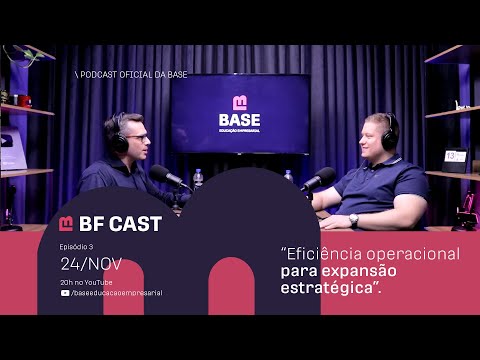
BFCAST EP. 3 - GIOVANI PRASS - FUNDADOR DA HORA DO PASTEL
Introduction to BFcast
Host and Guest Introduction
- Ney Aloy introduces himself as the co-founder and CEO of Base Educação, hosting the podcast.
- Giovanni Praz is introduced as a special guest, founder and CEO of Hora do Pastel, and author of "Plant Ideias, Colha Soluções."
- Giovanni has transformed a local operation into a national franchise ecosystem and hosts another podcast called "Bastidores do Lucro."
Giovanni Praz's Evolution
Personal Growth Journey
- Giovanni reflects on his evolution over time, emphasizing that he is constantly changing and growing.
- He shares how he has become more passionate about business while also prioritizing family and personal well-being.
- Giovanni discusses the importance of managing time effectively to enhance both personal life and business success.
Understanding Profit
Tangible vs. Intangible Profits
- Giovanni explains that profit has both tangible (financial gains) and intangible (personal satisfaction, health benefits) roots.
- He highlights how maintaining a disciplined workout routine contributes to his productivity in business and personal life.
Early Life Experiences
Lessons from Childhood
- Giovanni recounts his early experiences working on a farm from ages 11 to 14, learning the value of hard work.
- He describes an entrepreneurial moment where he sold salvaged fruits for profit, illustrating early lessons in salesmanship.
The Value of Work
Insights Gained from Early Jobs
- Giovanni emphasizes the disparity between earning through labor versus selling products; selling fruit was significantly more profitable than hourly work.
- He recalls making 2 reais for a pot of fruit that took only minutes to sell compared to hours spent working for minimal pay.
Awareness of Opportunities
Recognizing Market Gaps
- Giovanni reflects on witnessing wastefulness in food production during his youth, which sparked his entrepreneurial spirit.
- He questions what motivated him to see opportunity in discarded goods rather than simply accepting waste as normal.
Influences on Entrepreneurial Mindset
Media Influence on Business Thinking
- Giovanni mentions watching educational programs like "Pequenas Empresas & Grandes Negócios" during childhood that shaped his understanding of entrepreneurship.
Entrepreneurial Journey and Early Experiences
Initial Interest in Business
- The speaker expresses a long-standing interest in business from an early age, despite lacking knowledge at the time. Observing others selling fruit sparked this interest.
Resilience and Learning from Rejection
- The speaker emphasizes their ability to handle rejection positively, stating that hearing "no" motivated them rather than discouraged them. This mindset contributed to their eventual success.
First Earnings and Financial Management
- After a week of selling fruit, the speaker realized they could earn more than traditional work. They began saving money, which led to purchasing their first computer at 14 years old.
Accessing New Knowledge through Technology
- Buying a computer opened up new avenues for learning. The speaker explored platforms like YouTube and Yahoo, marking the beginning of their journey into technology.
Curiosity and Hands-On Learning
- From a young age, the speaker demonstrated curiosity by disassembling household appliances (like a refrigerator), showcasing an inclination towards hands-on learning and problem-solving.
Career Development in Construction Sales
Entry into the Workforce
- The speaker transitioned into construction work during their teenage years, eventually being invited to join one of Brazil's largest construction companies as a sales assistant.
Early Challenges in Sales Performance
- Despite being successful in sales with good numbers, the speaker faced challenges achieving top rankings among older colleagues who had more experience and education.
Innovative Marketing Approach
- To improve performance, the speaker utilized technology by sending mass emails to architects and engineers but faced backlash due to perceived credibility issues stemming from errors in communication.
Lessons Learned from Setbacks
Educational Background Impact on Career Progression
- The director questioned the speaker's lack of formal education (having stopped studying after eighth grade), highlighting how educational qualifications were crucial for employment opportunities at that time.
Consequences of Bold Actions
- Following the email campaign's mixed reception, the company decided to let go of the speaker due to concerns about professionalism despite some positive responses received later on.
Reflection on Experience
- Although initially upset about being dismissed, the experience taught valuable lessons about resilience and adaptability within competitive environments dominated by more experienced peers.
Adapting to Technological Changes
Embracing New Tools for Efficiency
- The introduction of GPS technology was met with skepticism by older colleagues; however, the speaker recognized it as a tool for enhancing efficiency rather than replacing traditional skills like map reading.
Entrepreneurial Strategies and Insights
Early Sales Techniques
- The speaker reflects on their early sales strategies, emphasizing the importance of being proactive in lead generation rather than relying solely on traditional advertising methods like TV or newspapers.
- They describe how they utilized GPS and printed maps to systematically visit potential clients, demonstrating a hands-on approach to prospecting.
- The speaker categorized leads based on project stages: 'A' for high-priority projects ready for sale, 'B' for those needing nurturing, and 'C' for future opportunities requiring regular follow-ups.
- This methodical categorization allowed them to optimize their time and efforts effectively, focusing on immediate sales while planting seeds for future business.
- They highlight the significance of using data-driven insights to enhance productivity instead of aimlessly covering ground.
Work Ethic and Smart Labor
- The speaker shares personal anecdotes about working hard from a young age but stresses the need for intelligent work over mere physical labor.
- They note that many people work tirelessly without achieving wealth, underscoring that value comes not just from hard work but also from smart strategies.
- Emphasizing efficiency, they express a preference for optimizing tasks to avoid unnecessary effort while still valuing hard work when applied intelligently.
- The speaker mentions their disdain for redundant tasks and highlights the importance of using tools to streamline processes in any job setting.
- They advocate visiting clients as a more productive use of time compared to physically demanding jobs that yield less direct results.
Transitioning into Franchising
- As they transition into discussing franchising, the speaker reflects on how their past experiences shaped their understanding of replicable business models.
- They introduce "Hora do Pastel," explaining it was conceived as a replicable business model rather than just another food outlet; this foresight set it apart from typical ventures in the industry.
- The concept was born out of previous experiences in food service, aiming to create a system that could function independently of individual human input while still recognizing its necessity.
- Unlike many entrepreneurs who stumble upon success through trial and error, they approached "Hora do Pastel" with an intention to build something scalable from the outset.
- Initial operations involved creating manuals and guidelines even at small scales, ensuring consistency across multiple locations right from inception.
Business Lessons from Experience
Importance of Monitoring Inventory
- The speaker emphasizes the need to weigh and document meat deliveries, highlighting that they learned this after eight months of operation due to discrepancies in expected versus actual yield.
- They discovered that the final monthly yield did not match their initial calculations, prompting concerns about potential losses in their business operations.
- Initially, they were responsible for purchasing and receiving goods but realized that the delivered quantity often fell short of what was documented on invoices.
Process Improvement Over Time
- After identifying issues with inventory control, they established a systematic process for checking deliveries, which became crucial as their business scaled up significantly over three years.
- The speaker mentions developing additional processes related to product preparation and market positioning, indicating a structured approach to business planning through tools like a business canvas.
Marketing Strategies and Product Testing
- In the early stages, they distributed samples of their pastries to gauge quality and customer response, demonstrating an effective grassroots marketing strategy.
- The speaker notes that marketing was not a challenge; instead, refining management practices became essential as demand increased.
Learning from Past Failures
- Reflecting on previous experiences with failed businesses reveals insights into the importance of having clear processes and data interpretation skills for successful management.
- The speaker discusses how formal education versus experiential learning shaped their understanding of running a business effectively.
Personal Growth Through Adversity
- After facing significant setbacks in previous ventures, including financial loss and operational challenges, the speaker emphasizes resilience and learning from mistakes as key takeaways.
- They highlight personal accountability in managing all aspects of past businesses while recognizing that success requires systems that operate independently of any single individual’s presence.
Commitment to Continuous Learning
- The speaker expresses a commitment to self-improvement by promising themselves to master Portuguese language skills through extensive reading and study.
- This dedication reflects an overarching theme: continuous personal development is vital for overcoming challenges in entrepreneurship.
Overcoming Financial Challenges and Entrepreneurial Insights
Personal Reflection on Financial Struggles
- The speaker reflects on a challenging six-month period where they lost everything and incurred significant debt, ultimately negotiating to pay off 200,000 reais in two years instead of five.
Lessons Learned from Sales Experience
- Upon returning to sales, the speaker emphasizes the importance of volume in generating income and shares advice received from a friend about effective delegation rather than doing everything personally.
The Burden of Responsibility in Business
- The speaker discusses the common mindset among entrepreneurs who take pride in being the sole problem solvers but often end up feeling overwhelmed by their responsibilities.
Embracing Opportunities for Growth
- At 22, the speaker views taking on a large financial commitment as an opportunity for personal growth and learning, leading them back into the workforce focused on sales.
Gaining Industry Knowledge through Practical Experience
- Working primarily in food service, the speaker gained insights into business operations such as inventory management and cost control while helping restaurants improve their sales strategies.
Innovative Solutions to Inventory Issues
- The speaker recounts successfully convincing a client with over 3 million reais worth of stagnant inventory to open an outlet store, which helped generate profit and stabilize finances within two years.
Transitioning Towards Entrepreneurship
- After moving to Sapeirã with his wife, the speaker began planning a scalable food business model that would not rely solely on traditional offerings like pastries or pizzas.
Defining Business Models for Success
- The discussion highlights key entrepreneurial principles: focusing on speed, volume, and replicability as essential components for successful business management.
Understanding Product Value Beyond Appearance
- The speaker notes that success is less about individual products (like sushi or hamburgers) but more about how effectively they are delivered to customers through operational excellence.
Identifying Market Gaps Through Research
- By analyzing local businesses, particularly pastelerias (pastry shops), the speaker identified a lack of fast-food options specifically dedicated to pastries despite high demand.
Learning from Competitors' Mistakes
- Visiting over 100 pastry shops revealed that many failed due to poor business practices; this insight reinforced the importance of viewing pastry-making as a structured business rather than just culinary art.
Shifting Perspective Towards Business Operations
- A pivotal realization was treating pastries as products requiring systematic processes and qualified personnel rather than merely focusing on making good pastries.
This structured approach encapsulates key themes from overcoming adversity in personal finance to strategic insights into entrepreneurship.
Starting a Business: The Journey of Giovanni
Early Aspirations and Financial Challenges
- Giovanni reflects on his life at 24, feeling comfortable with his salary but lacking the funds to start a business. He had recently purchased land but was still renting.
- Despite having some savings for furniture, he faced skepticism from family about his idea of selling pastéis (a type of pastry), as they referenced others who failed in the food business.
Testing the Waters
- Giovanni organized a gathering where he made various flavors of pastéis without revealing his intention to sell them, aiming to gauge interest.
- After receiving positive feedback from friends enjoying the pastéis, he asked if selling them would be successful; however, they remained doubtful despite their enjoyment.
Emotional Intelligence and Market Understanding
- Giovanni mentions that through personal development and emotional intelligence training, he learned to consider different perspectives while making decisions based on context.
- Frustrated by the lack of appreciation for pastéis, he decided to create an event called "Hora do Pastel" (Pastry Hour), intending to educate people about enjoying this dish.
Branding and Support System
- With support from his wife, who designed a logo for "Hora do Pastel," they began branding their venture together.
- Although she lacked business knowledge, her belief in him was crucial. She contributed creatively while he handled operational aspects.
Growth and Development
- Giovanni emphasizes the importance of having supportive partners in entrepreneurship. His wife's initial lack of understanding did not hinder their progress; instead, it motivated them both to learn together.
- As challenges arose during their first year due to her worker mentality versus entrepreneurial mindset, Giovanni worked with her to shift perspectives on profits and reinvestment strategies.
Transformation Over Time
- Through mutual growth and learning experiences over two years, his wife evolved into a capable marketing director within their company as they focused more on business than personal investments.
- Today, she leads initiatives in another tech company related to paid traffic and data intelligence—showing significant personal transformation since those early days.
The Dynamics of Gender in Business
Gender Roles and Resilience
- The speaker discusses the inherent differences between men and women in business, noting that women often seek security while men are driven by courage and challenges. This dynamic requires significant resilience from women.
Early Challenges in Business
- A personal anecdote illustrates a critical moment during the first week of business when overwhelming demand led to a shortage of supplies. The speaker reflects on their frustration but acknowledges the importance of adaptability.
Problem-Solving Mindset
- The speaker recounts how a calm approach from a partner helped resolve an immediate supply issue, emphasizing the need for composure and resourcefulness in business operations.
Investment vs. Frugality
- Discussion about initial investments reveals that despite having limited funds, they chose not to overspend on furnishings, focusing instead on essential equipment for their food business.
Agricultural Metaphor for Growth
- The speaker uses agricultural metaphors to explain business growth, highlighting that just like planting crops, success takes time and consistent effort before yielding results.
Expectations of New Generations in Business
Immediate Gratification vs. Long-Term Success
- There is a concern regarding younger generations wanting quick returns on investment without understanding the necessary groundwork required for sustainable success.
Rigorous Selection Process for Franchisees
- To address this mindset, the speaker mentions implementing a more stringent selection process for potential franchisees to ensure they understand the commitment involved.
Financial Considerations
- Details about financial requirements reveal varying investment levels based on city size, indicating that prospective franchisees must be prepared financially beyond just product sales.
Mentorship Role as a Franchise Owner
Importance of Mental Preparedness
- Emphasizing that running a successful franchise goes beyond operational training; it requires mental readiness and understanding of deeper business principles.
Training Beyond Basics
- While basic operational skills can be taught quickly, true success hinges on developing the right mindset and rituals necessary for effective management.
Franchise Success: Key Mindsets and Processes
Importance of Consistent Training and Adaptation
- The speaker emphasizes the need for ongoing training with franchisees, highlighting that even those with years of experience require regular check-ins to ensure adherence to processes.
- Acknowledges that transitioning from established businesses in other sectors can lead to a narrow focus, often neglecting essential aspects like team management.
- Successful franchises thrive when individuals are willing to follow a proven model rather than reinventing it, indicating the importance of structured guidance.
Essential Qualities of a Franchisee
- The first key quality is the desire to be a "pilot" who follows established procedures while being open to improvements; this sets the foundation for effective operation.
- Continuous improvement is valued within the franchise network, encouraging franchisees to contribute positively after they have mastered initial processes.
- New franchisees enter a "bercário" phase for three months focused on training and implementation before they can suggest changes or improvements.
Transitioning from Training to Contribution
- After completing the initial training period, franchisees gain credibility and experience necessary for providing constructive feedback based on evidence rather than assumptions.
- Emphasizes that while initially following set processes is crucial, there’s room for adjustments as franchisees become more experienced and knowledgeable about their operations.
Relationship Building and Team Dynamics
- Franchisees must genuinely enjoy working with people; this interpersonal skill is vital even in food service contexts where product focus might dominate discussions.
- The speaker introduces concepts from an upcoming book on positive relationships, stressing collaboration as essential for success within teams.
Financial Considerations in Franchising
- Capital availability is highlighted as a critical requirement; without sufficient funds, potential franchisees may struggle to meet operational demands effectively.
- The challenge arises when new franchise owners attempt to modify products or processes prematurely instead of adhering strictly to established guidelines during their initial phase.
Understanding the Franchise Model and Culture
The Importance of a Unified Network Perspective
- The speaker emphasizes that as a franchisor, one must consider the entire network rather than just individual franchises. Changes or incentives approved for one franchise must be applicable across the board.
- There is a need to maintain consistency in offerings, such as local ingredients, while ensuring that all franchises adhere to the overarching brand standards.
Data-Driven Decision Making
- Decisions within the franchise are now based on market data and organizational insights rather than personal opinions. This shift towards evidence-based decision-making has become crucial for operational success.
- The speaker references a maturity model (M1 to M4) for employees, indicating that growth involves moving from dependency (M1) to leadership roles (M4), highlighting the importance of structured development.
Employee Development Stages
- Employees progress through stages: from being cared for like infants (M1), gaining independence as children (M2), expressing individuality during adolescence (M3), to becoming leaders who can mentor others (M4).
- Each stage requires different levels of supervision and support, with an emphasis on nurturing autonomy while maintaining alignment with company culture.
The Secret Ingredient Behind Success
Core Values and Mission
- The speaker identifies "loving people" as the secret ingredient behind their business's success. This focus on relationships is fundamental to their mission of creating positive experiences and transforming lives.
Business Growth Metrics
- Current operations include nearly 20 stores, with significant sales figures—averaging 8,000 pastries sold daily and approaching 10 million total pastries sold since inception.
Financial Projections
- Future revenue projections indicate potential earnings between 32 to 40 million in upcoming years, showcasing substantial growth over eight years of operation.
Reflections on Past Experiences
Advice for Future Franchisees
- If addressing his past self as a potential franchisee today, the speaker would advise focusing on understanding business metrics while also considering personal circumstances when evaluating franchise opportunities.
Business Readiness and Franchise Success
Understanding Business Context and Readiness
- The speaker emphasizes that sometimes a great business opportunity may not align with an individual's readiness or the current context, highlighting the importance of timing in business ventures.
- They mention that while their average payback period is eighteen months, they prepare clients for potential longer durations to ensure sustainable growth during initial phases.
Importance of Commitment in Franchising
- The speaker notes that independent restaurants face a high closure rate (50% within two years), whereas franchises have a significantly lower mortality rate of about 5%, indicating greater stability in franchising.
- They stress the necessity for franchisees to approach their investment with an open heart and a willingness to learn, as acquiring know-how is crucial for success.
Franchisee Retention and Growth
- Discussion on maintaining franchise relationships reveals that long-term contracts (five years with renewals) are common, showcasing commitment from both parties.
- The speaker highlights how some franchisees have transformed their lives through this venture, suggesting that purpose-driven work leads to better outcomes.
Future Vision and Market Expansion
- Looking ahead, the speaker outlines ambitions to become the largest fast-food pastel franchise globally by 2028, demonstrating strategic long-term planning.
- They acknowledge challenges in expanding internationally due to cultural differences regarding food preferences but see opportunities in untapped markets ("blue ocean").
Marketing Challenges and Consumer Education
- The conversation shifts towards marketing strategies needed to introduce new products like pastéis to unfamiliar markets, emphasizing the need for effective consumer education.
- Anecdotes about international customers' reactions highlight the novelty of pastéis outside Brazil, underscoring the importance of creating awareness around unique offerings.
Long-Term Planning Amidst Current Realities
- The speaker reflects on balancing immediate operational realities with long-term goals while nurturing future leadership within the company.
- They conclude by reiterating their focus on solid growth metrics rather than rapid expansion without quality control.
Insights from Giovanni's Journey
Overview of Giovanni's Trajectory
- Giovanni reflects on his journey from humble beginnings in agriculture to becoming a generator of opportunities for others, emphasizing the importance of recognizing and seizing opportunities.
Key Takeaway: Learning and Sharing
- He encapsulates his life philosophy in the phrase "aprender, compreender e compartilhar" (learn, understand, and share), highlighting that true understanding comes through sharing knowledge with others.
The Importance of Gratitude
- Giovanni shares a Nietzsche quote about ending each day with gratitude. He stresses the significance of maintaining a positive outlook despite challenges and encourages others to appreciate their lives.
Time Management as a Catalyst for Change
- He discusses the transition from being an employee (CLT) to an entrepreneur, emphasizing that how one values their time is crucial for personal growth and business success.
Embracing Positivity and Continuous Learning
- Giovanni advocates for surrounding oneself with motivational content rather than negative news. He believes that cultivating a positive mindset is essential for achieving happiness and success.
Final Thoughts on Education and Mindset
- Concluding his insights, he emphasizes the need for more education in entrepreneurship, focusing on changing mindsets rather than just financial aspects.
Insights from Giovanni Praz
Personal Branding and Resources
- Giovanni Praz shares his Instagram handle, emphasizing the importance of personal branding in today's digital age. He encourages followers to connect with him for insights.
- He mentions his book titled "Plant Ideias e Coalha Soluções," available on Amazon, which expands on topics discussed in the conversation. The book is particularly appealing to younger audiences aged 18-22.
Relating to Younger Generations
- Giovanni reflects on his experiences at 18 years old, aiming to relate his insights to the current generation's context. This connection helps bridge generational gaps in understanding entrepreneurship and purpose.
- He expresses gratitude for the opportunity to share powerful insights about entrepreneurship and purpose, highlighting the value of learning from those who have navigated similar paths.