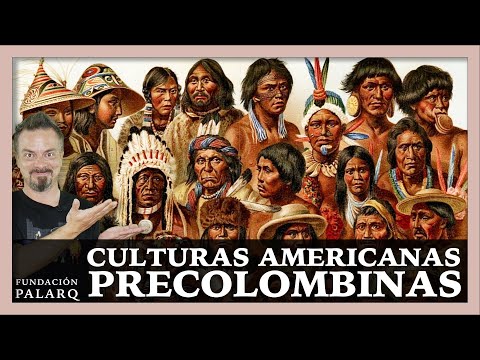
¿Cuáles fueron las CULTURAS PRECOLOMBINAS y sus características?
Pre-Columbian Cultures of America
Understanding Pre-Columbian America
- The term "pre-Columbian" refers to the indigenous cultures in the Americas before European dominance, particularly before Christopher Columbus's arrival in 1492.
- This era spans thousands of years, beginning with early human migrations from Asia through the Bering Strait and includes significant events like the Neolithic Revolution.
Cultural Diversity Before European Influence
- Pre-Columbian America encompasses a vast history of native societies that developed independently over centuries, long after Columbus's first landing.
- Numerous cultures emerged across the continent, notably high pre-Columbian civilizations in Mesoamerica and the Andes, including Anasazi, Mexica, Maya, and Inca.
Characteristics of Indigenous Societies
- While some groups were highly advanced civilizations with complex political systems and artistic traditions, others were more nomadic with less cultural manifestation due to lower population densities.
- Examples of semi-nomadic cultures include Apaches and Sioux; they relied on hunting rather than agriculture.
Advanced Achievements of Civilizations
- Major pre-Columbian cultures exhibited remarkable advancements such as calendars, agricultural innovations (e.g., corn and potatoes), earthquake-resistant construction techniques, stonework mastery, writing systems, and textile production.
Architectural Marvels
- Significant architectural achievements included grand temples and stepped pyramids found in archaeological sites like Machu Picchu and Tenochtitlán.