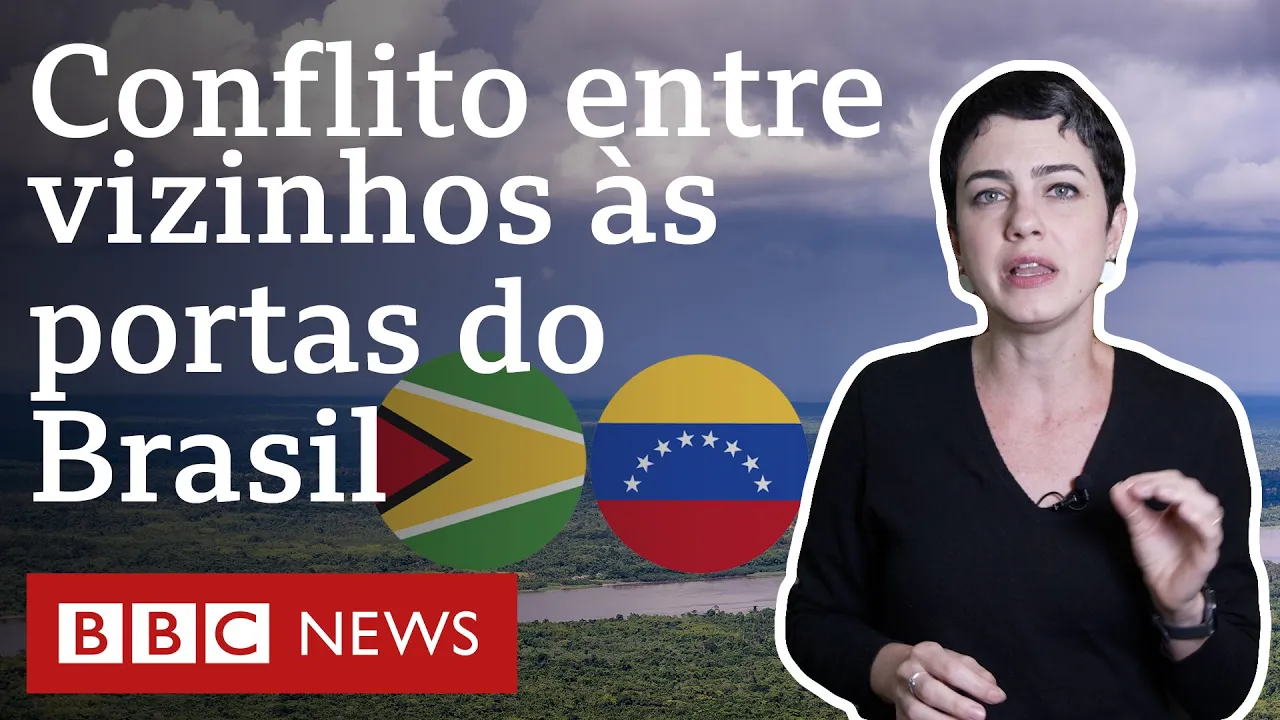
Essequibo: por que a Venezuela disputa área com a Guiana e que papel o Brasil tem na crise
Detailed Overview of the Venezuela-Guyana Border Dispute
This section provides insights into the escalating tensions between Venezuela and Guyana over the disputed territory of Essequibo, shedding light on historical context, economic interests, and geopolitical implications.
Historical Background
- The dispute between Venezuela and Guyana revolves around Essequibo, a region comprising 70% of Guyana's territory that was part of Spanish colonization and later incorporated into Venezuela after its independence in 1811.
- In the late 19th century, a territorial arbitration favored the British control over Essequibo, leading to tensions with Venezuela.
Economic Significance
- Recent oil discoveries by ExxonMobil in Essequibo have significantly boosted Guyana's oil reserves, positioning it as a key player in global oil production.
- Guyana's economic growth has surged due to these discoveries, with projections indicating substantial increases in GDP per capita.
Current Tensions and Political Dynamics
- Recent events include a Venezuelan referendum supporting annexation of Essequibo and statements from both countries asserting their claims over the disputed region.
- Analysis suggests that Venezuelan President Maduro may be leveraging this issue for political gain amidst upcoming elections, drawing parallels to past geopolitical maneuvers.
Brazil's Role and Response
New Section
In this section, Lula emphasizes the importance of peace over conflict in South America and discusses the need for peaceful resolutions to avoid war.
Lula's Message on Peace and Development
- Lula expresses a strong stance against war in South America, highlighting the region's desire for peace and stability.
- The Brazilian government remains concerned about potential conflicts in the region despite reassurances from Venezuelan President Maduro to Brazilian officials.
- The current Venezuelan migration crisis could worsen if a war erupts, impacting Brazil through increased refugee flows and security challenges.
- Experts suggest that the likelihood of a military confrontation is low due to operational difficulties, involvement of other powers, and economic implications for Venezuela's recovery and Maduro's reelection prospects.