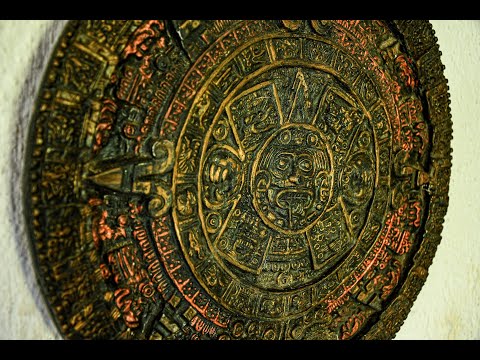
PBS Nova - History Documentary - Lost ancient civilisations - Cracking the Maya Code
Cracking the Maya Code: An Ancient Mystery
The Enigma of Maya Hieroglyphs
- The video opens with a thought-provoking scenario where explorers find deserted cities, leaving only stone carvings as remnants of civilization.
- It highlights the loss of books and knowledge due to an unknown catastrophe, emphasizing the importance of written words in understanding history.
- The script left behind is mysterious; it raises questions about whether future travelers could comprehend who the Maya were through their writings.
Discovering Ancient Achievements
- The ancient ruins of the Maya in southern Mexico and Central America reveal a civilization that thrived independently from Europe and Asia.
- For centuries, hieroglyphs puzzled explorers—debates ensued over whether they were mere pictures or true writing systems expressing language.
- A breakthrough in deciphering these hieroglyphs has begun to unveil a darker narrative about the Maya's history, revealing their complex stories.
Historical Context and Destruction
- In the 16th century, Diego de Landa led efforts to eradicate Maya culture during the Spanish Inquisition, viewing their writings as tools of devil worship.
- Landa's actions included torturing thousands for alleged crimes against Catholicism and orchestrating mass book burnings that destroyed much of Maya literature.
- Only four books or fragments survived this cultural destruction, leading to a significant loss of historical knowledge.
Resilience and Cultural Continuity
- Despite attempts at erasure, modern-day Maya villagers continue to honor ancient traditions while being disconnected from their ancestral writings.
- Recent decipherment efforts are reviving historical narratives that showcase 1500 years of rich history documented by the ancestors themselves.
Insights into Civilization
- The heartland of ancient Maya civilization spanned from southern Mexico through Central America, marked by monumental architecture like pyramids and temples around AD 200.
- These structures served as centers for public ceremonies and displays of power, illustrating how deeply intertwined religion and governance were within society.
The Rise and Fall of Maya Civilization
The Glory of the Maya Civilization
- The Maya civilization showcased unparalleled graphic imagination and expertise, reaching its peak during the Dark Ages in Europe.
- These city-states supported hundreds of thousands of people, marking them as the greatest New World civilizations and the only fully literate society in that region.
- Mysteriously, many cities were abandoned by the 9th century, leading to their eventual obscurity.
Rediscovery of Maya Cities
- In 1832, Spanish explorer Jose Calderon discovered Palenque, a jungle city with foreign temples and stone tablets inscribed with hieroglyphics.
- Calderon and his men struggled to comprehend these alien texts, questioning whether they represented picture writing or something more complex.
Artistic Interpretations and Misunderstandings
- French artist John Frederick Valdek visited Palenque to sketch hieroglyphs but misinterpreted them as resembling Indian elephants due to a lack of understanding.
- This theme persisted among artists attempting to record Maya inscriptions until the 20th century when more accurate representations began emerging.
Advancements in Photography
- Alfred Modley revolutionized documentation in the 1880s using glass plate cameras to capture detailed photographs of hieroglyphics at various sites.
- His efforts included clearing areas for better photographic conditions, resulting in exquisite records crucial for deciphering unknown scripts.
The Rediscovery of Ancient Manuscripts
- Scholars had begun deciphering Maya glyphs before Modley's photos became widely known; three surviving books from the Spanish Conquest were rediscovered: one being The Dresden Codex.
- Constantine Rafinesque made early attempts at decoding hieroglyphics by analyzing dot-and-bar numbers within these manuscripts around 1810.
Key Discoveries from The Dresden Codex
- Ernst Förstemann rediscovered The Dresden Codex after it had been overlooked for decades; this manuscript revealed significant insights into Maya astronomy and calendrical systems.
- He identified precise predictions for lunar and solar eclipses along with Venus cycles linked to warfare within its pages.
J Eric Thompson's Contributions
- J Eric Thompson dominated studies on Maya glyphs from the 1930s through the 1960s, creating a classification system (Thompson or T numbers) for over 800 signs based on his experiences living among the Maya people.
- He portrayed the Maya as peaceful astronomers focused on timekeeping rather than complex narratives within their glyphic writings, which he believed were primarily mystical exercises related to celestial events.
Challenges Against Established Views
- Many scholars accepted Thompson's theories that beyond dates, glyph meanings remained inscrutable; however, this perspective was challenged by Tatiana Proskurikov who entered Maya studies unexpectedly amidst economic hardship post-graduation in 1930.
The Journey of Maya Archaeology: Tanya Proskouriakoff's Breakthrough
Early Work and Skills
- Tanya Proskouriakoff began her archaeological work at Piedras Negras, a significant Classic Maya site, where she created detailed drawings and reconstructions of the ruins.
- Her architectural precision in reconstruction was notable; she had an almost intuitive ability to visualize the original structures from their remnants, likened to having "x-ray vision."
- In 1958, she transitioned from fieldwork to working at Harvard's Peabody Museum, focusing on cataloging and reconstructing shattered jade artifacts.
Discoveries in Maya History
- While analyzing photographs of stelae (stone slabs), Proskouriakoff identified a pattern related to dedication dates that suggested a historical narrative behind the monuments.
- Each stela in a series depicted a seated figure with sacrificial imagery below, leading her to hypothesize about royal lineage and historical events tied to these figures.
- She discovered glyph patterns indicating birth dates followed by accession dates for rulers, suggesting that these inscriptions documented dynastic histories.
Transformative Insights
- Proskouriakoff's insights revealed that the figures on stelae were not deities but actual kings and queens, marking a significant shift in understanding Maya history as recorded through art.
- Her analysis traced the reign of seven kings over time, detailing their ascensions and key life events through dated sequences on the monuments.
- Despite initial skepticism from Eric Thompson regarding historical interpretations of inscriptions, he later acknowledged her findings as groundbreaking.
The Role of Yuri Knorosov
- In May 1945, Yuri Knorosov emerged as another pivotal figure in deciphering Maya glyphs after discovering surviving texts amidst post-war ruins in Berlin.
- His interest grew when he encountered articles claiming Maya glyphs were undecipherable; this motivated him to pursue linguistics and challenge prevailing theories dominated by Thompson.
Analyzing Writing Systems
- Knorosov recognized that writing systems vary significantly based on their structure; he categorized scripts into alphabetic or logographic systems based on sign counts.
- He concluded that the Maya script was logographic but also mixed with phonetic elements—an insight crucial for further decipherment efforts.
- Focusing on specific glyph combinations within known codices allowed him to explore syllabic representations further.
The Debate on Maya Hieroglyphs
The Phonetic vs. Ideographic Interpretation of Glyphs
- Eric Thompson believed that Maya glyphs represented ideas rather than sounds, asserting they could not be phonetic.
- Konorasov challenged this view, suggesting that the glyph for "West" (chicken) and "sun" (keen) indicated a phonetic connection, proposing the hand sign should represent the syllable "Chi."
- Soviet propaganda praised Konorasov's findings as groundbreaking compared to Western scholars, while Thompson dismissed them as fraudulent due to his anti-communist stance.
- Despite some questionable readings from Konorasov, Thompson discredited his entire methodology, leading to a lack of recognition for Konorasov's insights in the West.
Collaborative Research at Palenque
- Merle Green Robertson documented Palenque's art for future generations and collaborated with Linda Sheely, who sought to understand the culture behind it.
- In 1973, during a conference hosted by Robertson at Palenque, Peter Matthews analyzed glyph books and compiled extensive transcriptions of inscriptions.
- Matthews and Sheely worked together to reconstruct Palenque’s dynastic history by identifying royal names associated with specific titles and events.
Discoveries Related to Lord Shield
- They identified over 40 royal names linked with dates and significant events like births or deaths depicted through specific glyph representations.
- Their research led them to focus on Lord Shield, whose name glyph featured a warrior's shield and was connected to key events in his life through hieroglyphic tablets in the Temple of Inscriptions.
The Connection Between Glyphs and Rulers
- A hidden staircase discovered in 1948 within the temple led to a crypt containing a skeleton masked in jade, believed to be Lord Shield himself.
- This marked the first time hieroglyphics were directly linked to remains of a Maya ruler, providing crucial evidence for their studies.
Advancements in Deciphering Maya Hieroglyphics
- Sheely and Matthews announced they had effectively cracked Palenque’s dynasty code by identifying rulers' names along with their reign periods using phonetically confirmed Mayan words.
- Local guide Moises Morales pointed out that important discoveries often used English or Spanish names instead of original Mayan terms; this highlighted cultural misrepresentation in historical narratives.
The Ongoing Challenge of Phonetic Decipherment
- Although significant progress was made towards understanding Maya hieroglyphics, challenges remained regarding reading them aloud accurately in their original language.
- David Stewart began his journey into Mesoamerican studies early on through field trips with his father George; these experiences fueled his passion for drawing hieroglyphics.
Maya Glyphs and the Journey of Discovery
Introduction to David's Journey
- George suggested that David could study with him, leading to an invitation for David to spend a summer in Palenque, which became a transformative experience.
- During this time, Linda encouraged David to learn Maya glyphs independently by providing him with a tablet and challenging him to explore its meanings.
Early Achievements
- At just 12 years old, David presented his first scholarly paper on Maya hieroglyphs, showcasing an understanding that surpassed many in the audience.
- After high school, he received a MacArthur Fellowship at age 18, becoming the youngest recipient of this prestigious award.
Major Discoveries in Glyph Decipherment
- Stewart focused on two signs believed deciphered; one indicated counting forward while the other counted backward. Both shared a common sign related to counting.
- He discovered multiple signs substituting for "shark," including human heads and monkeys, leading him to realize these represented phonetic sounds rather than just numerical values.
Understanding Phonetic Substitutions
- Stewart demonstrated that various signs could phonetically represent the same word or syllable (e.g., "ooh"), revealing deeper complexities within Maya writing systems.
- The realization that glyph sequences told stories rather than merely representing dates transformed how scholars viewed these inscriptions.
Implications of Glyph Complexity
- The discovery that one sound could have numerous representations highlighted the intricate nature of Maya writing and its preference for substitutions.
- This complexity allowed scribes flexibility in expression; they could combine different signs creatively while maintaining meaning.
Artistic Expression in Writing
- The graphic component of Maya writing was not only functional but also artistic; it included overlapping figures and abstract representations.
- The artistry inherent in glyph combinations revealed both language recording and visual creativity as essential aspects of Maya culture.
Insights into Maya Civilization
- Reading ancient texts provided insights into personal possessions and social bonds within royal courts, akin to having a time machine into their lives.
- More esoteric ideas emerged from glyph readings, depicting supernatural beings alongside everyday life events—offering a richer view of Maya beliefs beyond warfare or monuments.
A Complex Civilization Revealed
- As readings progressed, a more nuanced image of the Maya emerged: they were not solely peaceful astronomers but engaged in conflict and ritual sacrifice as part of their societal practices.
A Vision of the Serpent and Its Significance
The Ritual and Conjuring of Ancestors
- A royal lady performs a ritual involving her own blood, using a stingray spine to create an incision in her tongue. This act is part of conjuring a vision of a serpent.
- From the serpent's mouth, the figure of an ancestor emerges, indicating the deep connection between rituals and ancestral spirits in Maya culture.
Understanding Conjuration Through Glyphs
- On March 28, 755, a vision was conjured featuring Yash Nochan, the serpent spirit associated with god Kawil. The glyph for "conjure" symbolizes reaching into another realm to retrieve something elusive.
- The decipherment of Maya art reveals insights into their psyche and societal practices, allowing us to understand their cultural narratives through inscriptions on artifacts.
The Mythology and Cultural Legacy
The Saga of Twin Brothers
- The Popol Vuh recounts the story of twin brothers who are summoned to the underworld for a ball game against its lords but are ultimately defeated and sacrificed.
- After their resurrection through clever tricks, they bring food back to their people and ascend as celestial bodies (the Sun and Moon), highlighting themes of sacrifice and rebirth.
Insights into Maya Society
- Deciphering glyphs sheds light on power struggles within ancient Maya city-states from the third to ninth centuries; these were not peaceful times but marked by violent sacrifices.
- Graphic depictions reveal brutal warfare tactics among defined groups battling for dominance, showcasing a society entrenched in conflict.
Political Upheaval and Cultural Resilience
Collapse of Great Cities
- A scribe notes grimly about rising death tolls during political upheaval; monuments remain unfinished as rulers could no longer sustain authority or artistic expression amidst chaos.
Modern Reflections on Ancient Heritage
- In the 1980s, Maya villages faced civil war while attempting to preserve their culture. Many identified with their glorious past despite language loss.
Rediscovery of History Through Hieroglyphics
Engaging with Ancestral Knowledge
- At a workshop in Antigua, participants express excitement upon realizing they can read hieroglyphics that connect them to their history—knowledge previously withheld from them.
Importance of Historical Awareness
- For centuries, Maya culture faced suppression; rediscovering hieroglyphics represents reclaiming identity. This history is vital for understanding cultural contributions to humanity.
The Impact of Decipherment
Unveiling Pre-Columbian Insights
- Deciphering glyphic texts offers crucial insights into what was significant for ancient Maya civilization—an essential step towards understanding their legacy.
Conclusion: Reviving Lost Narratives
- With the cracking of the Maya Code, ancient scribes' words come alive again. Their literature provides invaluable perspectives on a once-vibrant world now largely vanished.
Pacific Life and Major Funding Sources
Overview of Pacific Life's Offerings
- Pacific Life provides a range of financial products including insurance, annuities, and investment options aimed at helping individuals succeed.
Funding for Educational Programs
- The Howard Hughes Medical Institute (HHMI) plays a significant role in funding research initiatives, such as efforts to decode the Maya civilization.
- Key funding sources include the National Science Foundation, which supports foundational discoveries, and the National Endowment for the Humanities, emphasizing that democracy requires wisdom.
- Additional support comes from the Solo Art and Architecture Foundation, highlighting collaborative efforts in educational funding.
Support for Nova Programming
- Major funding for Nova is provided by The Corporation for Public Broadcasting and PBS viewers, showcasing community support for educational programming.
- Viewers are encouraged to visit Nova's website at pbs.org for more information or to access companion materials related to the program.