nausicaa partie 1 sur 2
The Ambitious Project of Europe's Largest Aquarium
Overview of the Construction Challenge
- The project aims to create the largest aquarium in Europe, featuring a giant tank with a capacity of 10 million liters, equivalent to four Olympic swimming pools.
- The size of the tank is crucial for ranking in global competitions, creating high expectations and palpable tension among construction teams.
- A unique water filtration system must be developed to support the massive tanks, which will house over 22,000 additional marine animals, including hammerhead sharks.
Technical Challenges and Timeline
- The construction teams face a two-year deadline to complete this monumental task amidst various challenges.
- Over 100 companies are involved in clearing 50,000 tons of debris and pouring 13,000 cubic meters of concrete for the new aquarium structure.
Importance of Expansion
- Doubling its size is essential for maintaining competitiveness among prestigious aquariums worldwide; innovation is necessary every five to ten years.
- This expansion will allow the aquarium to become a key center for marine life study and conservation efforts.
Architectural Vision and Design
Attracting Visitors Through Innovative Design
- The goal is to attract over one million visitors annually by raising awareness about ocean fragility through engaging exhibits.
- Architect Jacques Rougerie designed an innovative building that offers different perspectives based on viewer location, enhancing visitor experience.
Biomimicry in Architecture
- The design incorporates biomimicry principles—creating structures inspired by natural forms—to reflect marine environments effectively.
- Elements resembling shells or other marine life are integrated into the architecture as part of this approach.
Features of the Grand Basin
Specifications and Visitor Experience
- The Grand Basin will hold 10 million liters of water with dimensions designed to immerse visitors fully in an underwater experience.
- Visitors will begin their journey from a balcony simulating deep-sea diving before traversing an underwater tunnel surrounded by coral reefs.
Conservation Goals
- A large viewing area will showcase a replica of Malpelo's marine sanctuary in Colombia, aiming to educate visitors about biodiversity and conservation efforts.
- This facility intends not only to display aquatic life but also serve as a sanctuary for endangered species like hammerhead sharks.
Unique Challenges Ahead
- Recreating Malpelo's ecosystem poses significant challenges due to time constraints; such specialized aquariums are rare globally.
Aquarium Construction and Coral Breeding
Unique Challenges in Aquarium Design
- The project involves a highly complex structure where certainty is elusive; teams must embrace uncertainty while modeling the aquarium in 3D.
- The building lacks straight lines, necessitating a complete 3D digital model to accurately represent its intricate geometry, from foundations to electrical systems.
- Utilizing this advanced modeling tool has significantly expedited the project timeline, crucial for managing the complex geometries involved.
Coral Breeding at Nozika
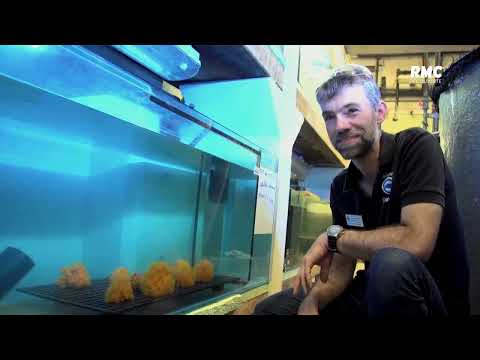
- With less than 18 months remaining until the aquarium's completion, aquarists are preparing for the new site by organizing coral breeding efforts at Nozika, Europe's largest coral breeding center.
- Nozika plays a vital role in global coral conservation as it breeds over 70 species of corals to prevent their extinction by 2050. Aquarists utilize cutting techniques for propagation.
- Corals are delicate animals that require stable environmental conditions; any disruption can be fatal, emphasizing the urgency of their breeding program.
Construction Progress and Innovations
- Teams have one year to cultivate 10,000 corals for installation in the Grand Basin while simultaneously progressing with construction on-site. The concrete structure is now visible above ground.
- A massive glass wall measuring 54 tons will be installed; it must withstand significant water pressure from the aquarium's contents, marking a world-first engineering feat.
- Only three companies globally can produce such large-scale glass structures; an Italian firm is leading this effort due to their exceptional capabilities.
Material Selection: Metacrylate vs Glass
- For constructing a basin of this size (10,000 cubic meters), traditional glass cannot be used; instead, metacrylate (plexiglass) is chosen for its flexibility and strength under pressure without compromising visibility or aesthetics.
- Metacrylate offers advantages over glass: it's lighter, can deform without breaking, and maintains excellent transparency while being resistant to scratches caused by marine life interactions like sharks' skin abrasions.
Quality Control Measures
- In Italy, inspections are underway for the aquarium's large windows; quality control is critical as defects could distort viewer experiences and hinder marine observation effectiveness. Aquarists meticulously check each window section for imperfections before installation begins.
Construction of Europe's Largest Glass Wall
Overview of the Installation Process
- The installation of the massive glass wall at the aquarium will take two full days, with concerns about visible irregularities that could affect visitor immersion. However, polishing is expected to make these imperfections unnoticeable.
- The engineers from Italy designed Europe’s largest glass wall, which consists of seven giant panels assembled in a completely airtight hangar.
- To ensure structural integrity, the panels were placed side by side with a gel-like methacrylate between them and heated for several weeks at 60°C.
- Despite technical complexities, the supplier achieved a manufacturing tolerance of one millimeter, leading to a very positive assessment for the team involved.
Challenges in Transporting the Glass Wall
- The transportation from Italy to Boulogne-sur-Mer presented significant challenges; teams had to choose between sea or road transport. Ultimately, they opted for maritime transport despite its risks.
- Contrary to expectations, road transport proved more problematic than anticipated. The journey took an entire month instead of ten days due to severe winter conditions and law enforcement delays.
- After enduring harsh weather and logistical issues over 2200 km, the precious cargo finally arrived on site amidst great emotion from the construction teams who had awaited its arrival.
Critical Installation Phase
- Following delivery, an extremely delicate operation commenced: hoisting the enormous glass wall into place. Stress levels were high as this was a critical event requiring precision.
- The installation required using Europe’s largest mobile crane capable of lifting 54 tons. Only two such cranes exist within the EU that can handle this weight safely.
- With maximum lifting capacity engaged, any slight deviation during hoisting could lead to catastrophic failure. Team members held their breath as they executed this crucial task without room for error.
Successful Installation and Future Prospects
- Every team member knew their role precisely as they worked meticulously on angles and measurements during what turned out to be a ten-hour operation filled with anxiety.
- Upon successful installation in the large basin, it marked a significant milestone—the first time such a structure has been built in Europe—leading to collective relief among all project participants.
- With water now able to fill the space behind the glass wall, preparations continue towards an upcoming inauguration scheduled ten months later due to delays caused by transportation issues.
Preparation for Aquarium's Star Species
- Years prior planning was essential for timely completion; scientists are currently raising rare species in a secure location kept secret from public view.
- Among these species is a hammerhead shark—a future star attraction—captured under strict regulations in Australia when it was still small enough for safe transport back in 2011.
- While most animals will be born in captivity at this new aquarium facility, breeding hammerhead sharks remains complex; thus capturing one was necessary given population stability at that time.
The Care and Growth of Hammerhead Sharks
Early Preparations for the Aquarium
- The team received necessary permissions before the aquarium plans were even drawn up, showcasing proactive measures in animal care.
- Anticipation and daily attention are emphasized as crucial for the well-being of the hammerhead shark, indicating a commitment to high standards in animal husbandry.
Challenges in Shark Growth
- The growth rate of sharks is notably slow, averaging only 15 cm per year, which poses challenges for their care and management.
- Contrary to their predatory reputation, hammerhead sharks have a unique feeding behavior where they consume more but assimilate food poorly, highlighting dietary considerations in their care.
- Observational periods are critical for monitoring the animals' feeding habits to ensure they are receiving adequate nutrition.