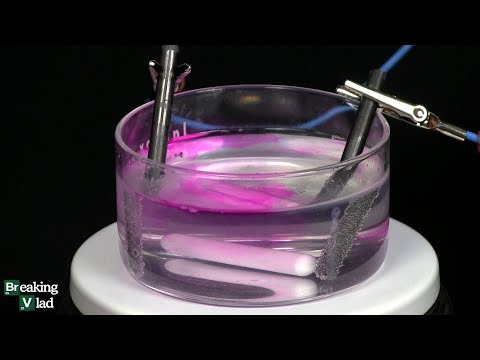
ELECTROLISIS | Experimento Químico
What is Electrolysis?
Introduction to Electrolysis
- The video introduces the concept of electrolysis, demonstrating it through experiments using a battery providing 5 volts connected to graphite electrodes.
Conductivity of Pure Water
- The experiment begins with distilled water, which does not conduct electricity as it lacks dissolved ions.
- When electrodes are placed in pure water and the power source is activated, no bubbles or reactions occur, confirming that distilled water is an insulator.
Conductivity of Saltwater
- In contrast, seawater conducts electricity due to dissolved salts. The next step involves dissolving table salt (sodium chloride) in water.
- A wider crystallizer is used for better visibility of the electrode separation during the experiment.
Understanding Electrode Functionality
- Two cables are marked: one for electrons (black) and another for positive charge (red). This setup illustrates how electrons flow through the circuit.
- The black electrode receives electrons (reduction), while the red electrode loses electrons (oxidation), defining their roles as cathode and anode respectively.
Observing Chemical Reactions
- Upon activating the battery, bubbles form at both electrodes: hydrogen at the cathode and chlorine at the anode from sodium chloride oxidation.
- This reaction demonstrates that dissolved salt allows current flow, leading to observable chemical changes.
The Role of Indicators in Electrolysis
Adding Acid-base Indicator
- An acid-base indicator (phenolphthalein) is added to observe pH changes; pink indicates alkaline conditions due to sodium hydroxide formation on one side.
Production of Bleach
- Agitation leads to color disappearance as bleach forms from this reaction. This highlights how electrolysis can produce useful chemicals like bleach.
Electrolysis for Hydrogen and Oxygen Production
Alternative Solutions for Electrolysis
- To generate hydrogen and oxygen from water via electrolysis, a different soluble compound like sodium hydroxide must be used instead of sodium chloride.
Observing Gas Formation
- With sodium hydroxide solution, gas bubbles appear again when power is applied: hydrogen at the cathode and oxygen at the anode.
Summary of Findings
Electrolysis and Its Effects on Electrodes
Influence of Electrodes in Reactions
- The type of electrodes used, such as graphite (carbon), significantly influences the electrochemical reactions occurring during electrolysis. Alternative materials can be employed to alter the reaction outcomes.
- In a sodium chloride solution, a graphite electrode serves as the cathode for reduction, while an iron electrode is used as the anode for oxidation.
Observations During Electrolysis
- Unlike previous experiments with two graphite electrodes producing chlorine gas, this setup results in a color change of the solution to green due to iron oxidizing instead of chloride.
- The reaction leads to iron being oxidized to iron(III), which contributes to the green coloration rather than producing chlorine gas.
Chemical Reactions and Products Formed
- Graphite acts as an inert electrode that typically does not react; however, metals like iron can participate actively in various reactions.
- The formation of iron chloride occurs alongside hydrogen and sodium hydroxide production. Sodium hydroxide reacts with iron chloride, leading to precipitate formation (iron hydroxide).
Versatility of Electrolysis
- This simple electrolysis experiment demonstrates how varying solutions or electrodes can yield diverse products such as hydrogen, oxygen, sodium hydroxide, chlorine, or even hydrochloric acid.
- The versatility of electrolysis highlights its potential applications across different chemical processes by simply changing conditions or materials involved.
Conclusion and Further Engagement