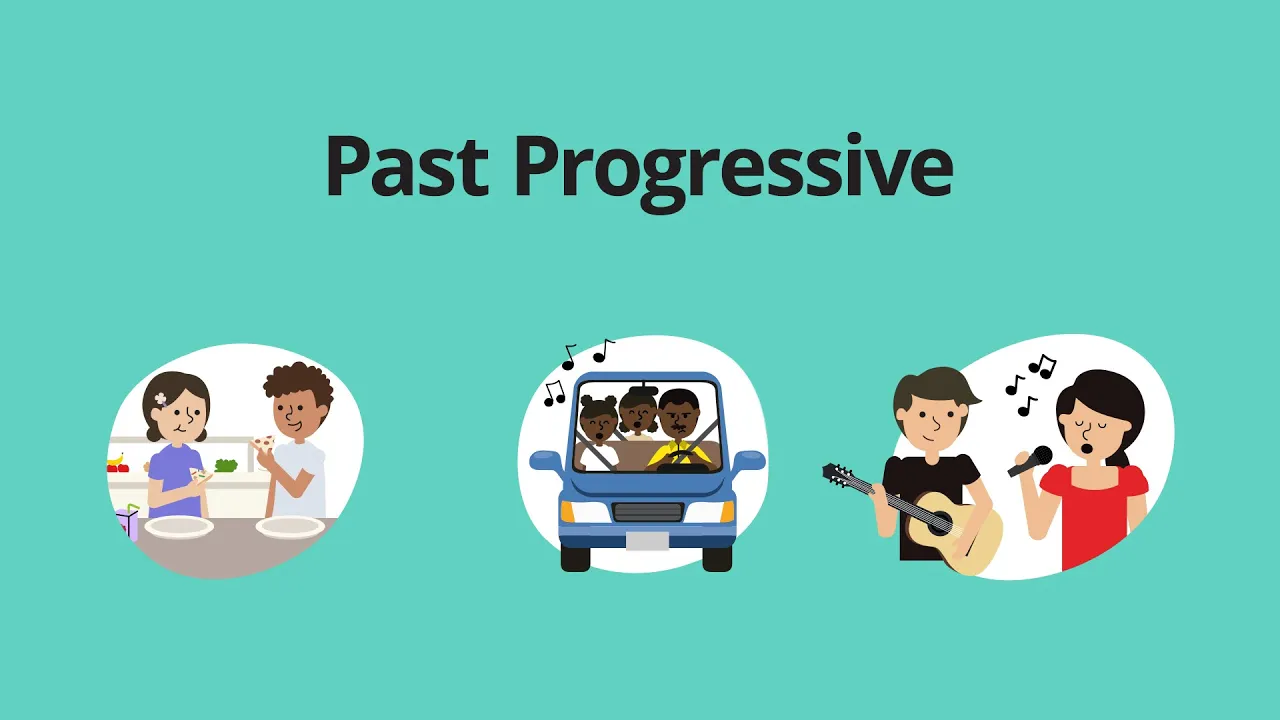
Past Progressive – Grammar & Verb Tenses
Verb Tenses: Past Progressive
This section discusses verb tenses, specifically focusing on the past progressive tense and its usage in English.
Understanding Verb Tenses
- Verb tenses indicate the time of an action. The simple past and past progressive are two types of verb tenses used based on the duration of actions.
- Simple past is for short actions, while past progressive is for long, continuing actions.
Forming Past Progressive
- Past progressive is formed using "was" or "were," which are the past forms of the Be verb, along with an -ing verb.
- Examples include: He was walking to school; They were waiting for me.
Using Past Progressive
This part explores the reasons for using the past progressive tense and provides examples to illustrate its application in different contexts.
Reasons for Using Past Progressive
- The past progressive emphasizes long actions and interruptions by short actions.
- It also shows two long actions happening simultaneously, often indicated by time markers like "when" or "while."
Examples of Usage
- Common time markers like "when" and "while" help identify when to use the past progressive tense.
Clauses and Sentence Structure
This segment delves into clauses within sentences, distinguishing between independent and dependent clauses while exploring their interchangeability.
Understanding Clauses
- A clause comprises a subject and a verb. Independent clauses can stand alone as complete sentences, whereas dependent clauses cannot.
Reversibility of Clauses
- Dependent clauses can be reversed without altering meaning. Commas are necessary when a sentence starts with a dependent clause.
Practice with Simple Past and Past Progressive Verbs
This part encourages practice with simple past and past progressive verbs through interactive exercises.
Application in Sentences