Estructura y código del ADN - Biología - Educatina
New Section
This section delves into the history of DNA, starting from its discovery by a scientist in 1869 to the elucidation of its structure by Watson and Crick in 1953.
Discovery and Naming of DNA
- In 1869, a scientist was the first to isolate the molecule that would later be known as DNA.
- In 1953, Watson and Crick constructed a model of DNA's structure, revealing how genetic information is organized.
- DNA stands for deoxyribonucleic acid, containing all genetic information within a long molecule stored in cells.
Understanding DNA Storage
This part explores where genetic information is stored within cells and how it is organized.
Location and Organization of Genetic Information
- Genetic information is stored in the nucleus of eukaryotic cells within chromosomes.
- During cell division or mitosis, chromosomes are visible as X-shaped structures under a microscope.
- Chromosomes compact to occupy less space, with DNA forming tightly wound structures for efficient storage.
DNA Structure: Double Helix Model
The discussion focuses on the double helix structure of DNA discovered by Watson and Crick in 1953.
Double Helix Structure
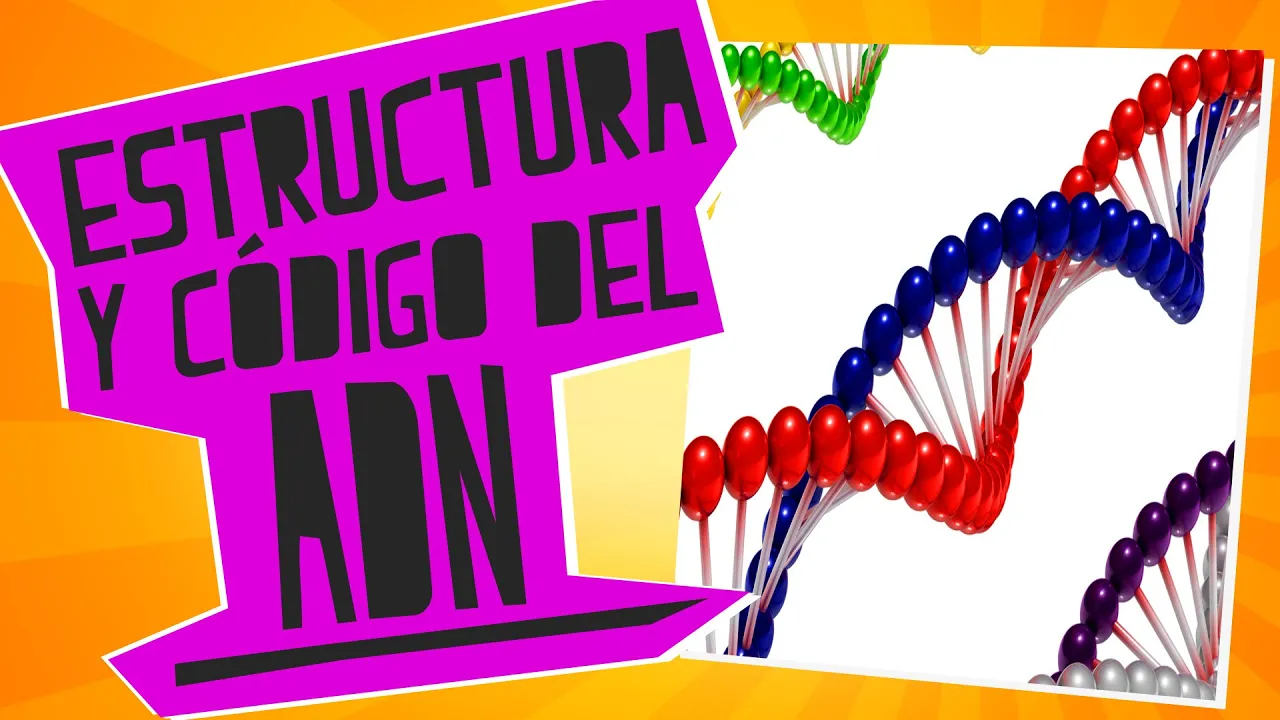
- Contrary to appearing linear, DNA consists of two intertwined strands forming a double helix.
- The helical structure allows DNA to compact or relax based on cellular needs for protein production.
New Section
In this section, the speaker discusses nucleotides, their composition, and how they form the genetic information in DNA.
Nucleotides Composition and Arrangement
- Adenine (A), thymine (T), cytosine (C), and guanine (G) are the four types of nucleotides present in DNA.
- These nucleotides combine in various sequences along the DNA molecule to create genetic information.
- The DNA molecule is composed of nucleotide codes that generate genetic information crucial for protein synthesis.
Complementary Strands and Nucleotide Affinities
- The complementary strand of DNA contains the same nucleotides as the original strand but in a specific pairing pattern.
- Adenine pairs with thymine, while cytosine pairs with guanine, ensuring the strands bond together.
- These complementary strands maintain cohesion due to specific interactions between corresponding nucleotides.
New Section
This segment delves into genes as blocks of nucleotides that produce proteins and explores how these genes determine protein generation.
Genes and Protein Production
- Genes consist of large blocks of nucleotides such as A, T, C, G that encode proteins.
- Initially thought one gene produces one protein; however, it's now known a gene can yield multiple proteins.
Gene Sequences and Protein Generation
- Genes are sequences of specific nucleotides within the long adenine molecule responsible for protein synthesis initiation and termination.
- The start codon ATG initiates protein synthesis, while the stop codon marks its completion.