Nueva esclusa fluvial de Sevilla parte1
New Lock System in Seville
Overview of the New Lock System
- The new lock system in Seville is crucial for connecting the city to the Guadalquivir River, which has historically been linked to its port.
- The river's average tidal range of 2 meters necessitates infrastructure that can adjust water levels for efficient port operations.
Challenges and Developments
- Previous limitations such as shallow river depth and inadequate lock dimensions hindered maritime activity and growth.
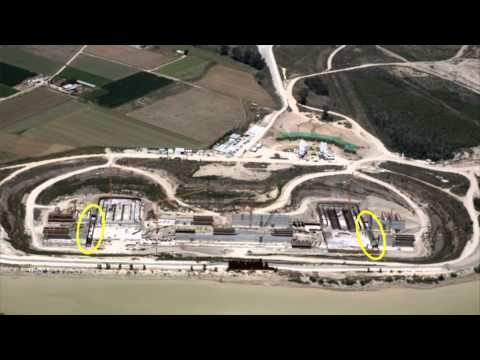
- A new lock was constructed to replace a 1949 facility, initiated by the Port Authority of Seville in July 2005 and completed in autumn 2010.
Specifications of the New Lock
- Located approximately 10 km downstream from the city, it is designed to accommodate Panamax vessels, significantly increasing cargo transport capacity from 5 million to an estimated 12 million tons annually.
- The lock operates similarly to an elevator, allowing ships to navigate between different water levels efficiently.
Flood Prevention Features
- Besides facilitating shipping, the lock also serves as a flood defense mechanism for Seville, with external gates protecting against river overflow during extreme weather events.
- The previous lock had dimensions that limited vessel size; the new structure allows ships up to 20,000 tons due to its increased width (35 m) and length (293 m).
Structural Design Elements
- The new lock measures 434 m long and features three distinct sections with bascule bridges for road and rail access.
- Hydraulic systems operate bridge mechanisms while ensuring structural integrity through reinforced supports.
Maintenance and Operational Efficiency
- Designed with maintenance in mind, compartments allow easy access for repairs without disrupting operations.
- Advanced sliding mechanisms ensure smooth operation of gates while minimizing wear on components through balanced weight distribution.
Safety Mechanisms
- Various safety installations are included within the design, such as flotation tanks that help maintain gate stability during operation.
Construction of a Lock System
Overview of the Lock Structure
- The lock system is designed to allow emergency vehicles, such as maintenance vans and ambulances, to access the central basin where boats are raised or lowered.
- Key features include a perforated base slab that is 0.5 meters thick, constructed with 20 cm diameter PVC pipes for water entry and exit, minimizing turbulence caused by boats.
Structural Design and Materials
- The structure consists of independent walls with variable heights supported by foundations; these walls reach up to 20 meters high and have a thickness of 4 meters.
- Foundations in garage areas are continuous slabs measuring 124 meters long, ensuring stability against differential settling that could affect gate operation.
Construction Phases
- The construction process involved multiple complex tasks including concrete structure assembly, installation of gates and bridges, dredging work, and formation of access roads.
- Preliminary actions included geotechnical surveys, archaeological intervention planning, environmental monitoring compliance before excavation began.
Excavation and Foundation Work
- An impermeable enclosure was created due to the excavation depth reaching 25 meters below the water table; this included ramps for machinery access.
- A bentonite-cement wall was installed at least one meter deep into impermeable strata to maintain structural integrity during excavation.
Concrete Production and Temperature Control
- Two concrete production plants were set up on-site with a capacity of 99 m³/hour each; extensive use of steel reinforcements (20,000 tons total).
- To ensure concrete durability in high temperatures during summer pouring operations, measures like shading aggregates and using ice in mixing water were implemented.
Finalization Steps
- Transitioning between sloped canal banks and vertical lock walls utilized sheet piles anchored for stability; some sections reached depths of up to 28.5 meters.
Construction of Water Gates in Sevilla
Excavation and Construction Process
- The final part of the dam that blocked water entry was excavated using a dredger, allowing for the completion of the project.
- Concurrently, large gates were constructed at the shipyards in Sevilla; these gates are significant engineering feats due to their size and weight.
- Each gate is made from heavy metal sheets reinforced with metallic profiles, showcasing advanced construction techniques.
- The weight of each gate is approximately 800 tons, indicating the scale and complexity involved in their transportation and installation.