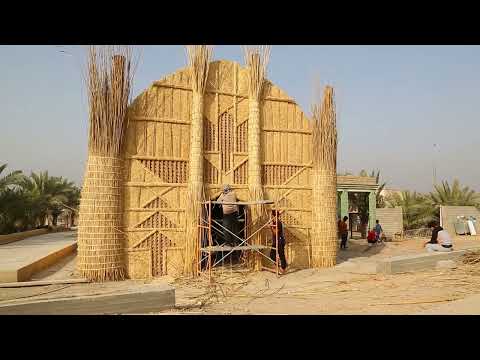
Traditional craft skills and arts of Al-Mudhif building
Alif Building: A Traditional Craft of Southern Iraq
Overview of Alif Building
- Alif building is a traditional craft skill and art form passed down through generations, primarily found in the southern provinces of Iraq, especially Qadisiyyah and Basra.
- The structure is made from reeds and papyrus, materials that grow naturally in the marshes of southern Iraq. It features geometrical shapes on its two ornamental facades.
Cultural Significance
- Alif buildings play a crucial role in social and cultural life, serving as venues for settling tribal conflicts and resolving social issues among tribes.
- They act as gathering places where tribes converse, host guests, and educate younger generations about traditions and customs.
Construction Process
- The construction begins with selecting suitable reeds based on specific criteria such as thinness, length, hardness, and curvature. This selection process is labor-intensive.
- Skilled craftsmen known as USTA supervise the building process. The initial step involves inserting bundles of reeds (shab) into holes to create the framework.
Structural Details
- Shabs are linked together to form arcs; the number varies between 7 to 27 depending on the size of the alif building. Gaps are intentionally left between shabs for structural integrity.
- Ventilation openings called "mesh" are created along both sides for airflow; these are covered during winter months for protection against rain.
Inauguration Ceremony
- Upon completion, an inauguration ceremony takes place where invitations are sent to tribe elders for a banquet celebrating the new alif building. This event includes traditional practices like slaughtering a sheep.
Turn any video into a summary like this
YouTube links, meetings, lectures — with transcripts, search, and chat.