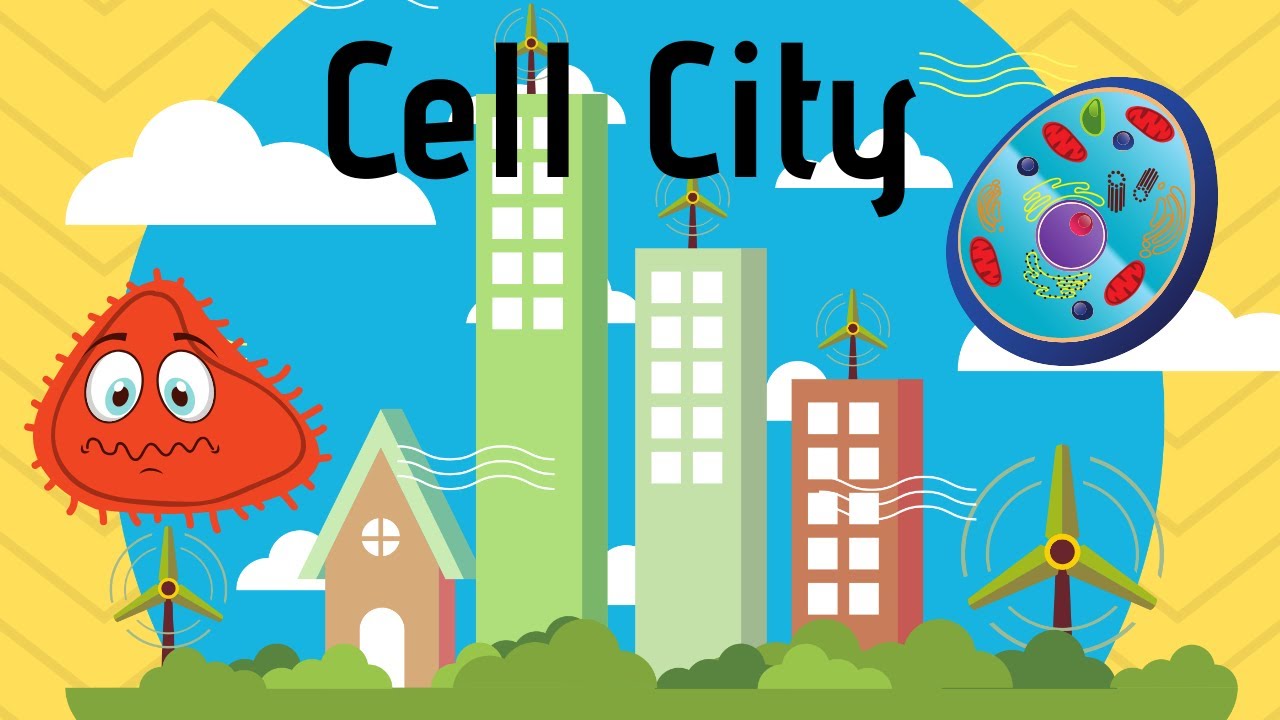
Cell City Analogy-Learn the Cell Parts
Cell City Analogy
In this section, the speaker introduces the Cell City Analogy, comparing various parts of a city to different organelles in a cell.
The Cell Wall and Cell Membrane
- The cell wall is likened to the protective barrier around a city, shielding it from external elements.
- The cell membrane functions as doors in the analogy, regulating what enters and exits the cell due to its semipermeable nature.
Cytoplasm and Nucleus
- The cytoplasm, depicted as the water within a city, serves as a gel-like substance containing essential nutrients and organelles.
- The nucleus, symbolized by City Hall, controls cellular activities and houses DNA acting as directions for the cell.
Endoplasmic Reticulum (ER) and Ribosomes
- The endoplasmic reticulum (ER) is compared to roadways facilitating material transport within the cell.
- Ribosomes are described as small factories where proteins are synthesized.
Mitochondria, Vacuoles, Lysosomes, and Chloroplasts
- The mitochondria, represented as power plants, generate energy through cellular respiration.
- Vacuoles act as storage containers for food and water within the cell.
- Lysosomes, akin to small trash cans, break down waste materials in the cell.
- Lastly, chloroplasts function as solar factories converting sunlight into energy for the cell's use.