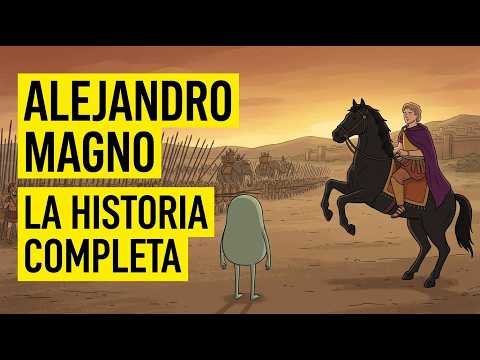
Alejandro Magno: La Historia Completa (Nunca Perdió una Batalla)
The Legacy of Alexander the Great
Early Life and Background
- At 20 years old, Alexander inherited a small kingdom; by 32, he had conquered vast territories from Greece to India without losing a battle.
- Macedonia, where Alexander was born in 356 BC, was viewed as semi-barbaric by Greeks due to their customs and dialect but had a strong leader in Philip II.
- Philip II is recognized as a significant historical figure who created the military innovations that enabled Alexander's future conquests.
Military Innovations and Early Victories
- In 338 BC, at the Battle of Chaeronea, Philip defeated Athens and Thebes with his son Alexander commanding cavalry at just 18 years old.
- A notable childhood story involves Alexander taming the wild horse Bucephalus at age 12, showcasing his early leadership qualities.
Education and Philosophical Influences
- Philip hired Aristotle to educate young Alexander in various subjects including philosophy and medicine; this education shaped his worldview.
- By age 16, tensions arose between Alexander and Philip after an incident during Philip's wedding led to familial strife.
Ascension to Power
- Following Philip's assassination under suspicious circumstances involving potential conspiracies linked to Olympias (Alexander’s mother), he became king at age 20.
- To consolidate power, he executed rivals and swiftly quelled rebellions in Greece by destroying Thebes as a warning.
Conquest of Persia
- In spring 334 BC, with limited resources but great ambition, he crossed into Asia aiming for the Persian Empire led by Darius III.
- His first major battle against Persia occurred at the Granicus River where he achieved victory despite being outnumbered.
Strategic Maneuvers
- After winning battles like those at Issus (333 BC), where Darius fled from him again, he strategically chose not to pursue Darius immediately but instead targeted Egypt next.
Siege of Tyre
- During his campaign against Tyre in 332 BC, Alejandro constructed a causeway over seven months to breach its formidable defenses successfully.
Egyptian Campaign and Cultural Integration
- Upon entering Egypt as a liberator from Persian rule, Alejandro was crowned Pharaoh and founded Alexandria which would become culturally significant for centuries.
Shift in Identity
- After consulting an oracle claiming divine parentage from Zeus Ammon in Siwa Oasis (331 BC), Alejandro began adopting Persian customs leading to tension with his Macedonian troops.
Final Conquests
- At Gaugamela (331 BC), despite facing overwhelming odds again against Darius' forces, Alejandro employed tactical brilliance leading to another decisive victory.
Personal Struggles
- As Alejandro expanded his empire further eastward into Central Asia while adopting local customs, conflicts arose within his ranks regarding loyalty and identity.
Death and Legacy
- After falling ill in Babylon following extensive campaigns across diverse terrains including deserts without water supplies (324–323 BC), Alejandro died on June 10 or 11 at age 32.
The Aftermath of His Death
Succession Crisis
- Following Alejandro's death without clear succession plans led to chaos among generals known as Diadochi fighting for control over parts of his empire.
Historical Impact
- Despite being both revered as a military genius yet criticized for brutality during conquests like Tiro or personal betrayals among friends; Alejandro left an indelible mark on history influencing cultures across continents.
Turn any video into a summary like this
YouTube links, meetings, lectures. With transcripts, search, and chat.