I4 Rango de diámetros y material
New Section
In this section, the speaker discusses the range of diameters compatible with a specific solution and the materials that can be handled in the discharge ducts. The focus is on determining economical diameters based on low aspiration velocity and selecting suitable sections to maintain desired speeds.
Range of Diameters and Material Handling
- Estimating an economical diameter is unnecessary when considering short conduits with negligible head losses. Aspiration velocity should be kept low, around one meter per second, aligning with the design flow rate.
- For discharge ducts from the pump to the destination tank, using twin pipes allows flexibility in managing varying flow rates over time. Initially working with a single conduit simplifies calculations for small-scale projects.
- Simplifying by assuming a single conduit for operation ease and cost efficiency. Determining diameter ranges involves setting a maximum speed limit of two meters per second to avoid excessive energy costs due to high head losses.
Diameter Range Selection and Material Consideration
- Setting a maximum speed limit of two meters per second for discharge ducts ensures acceptable head loss levels. Calculating future flow rates leads to a minimum interior diameter requirement of 105 millimeters to maintain optimal performance.
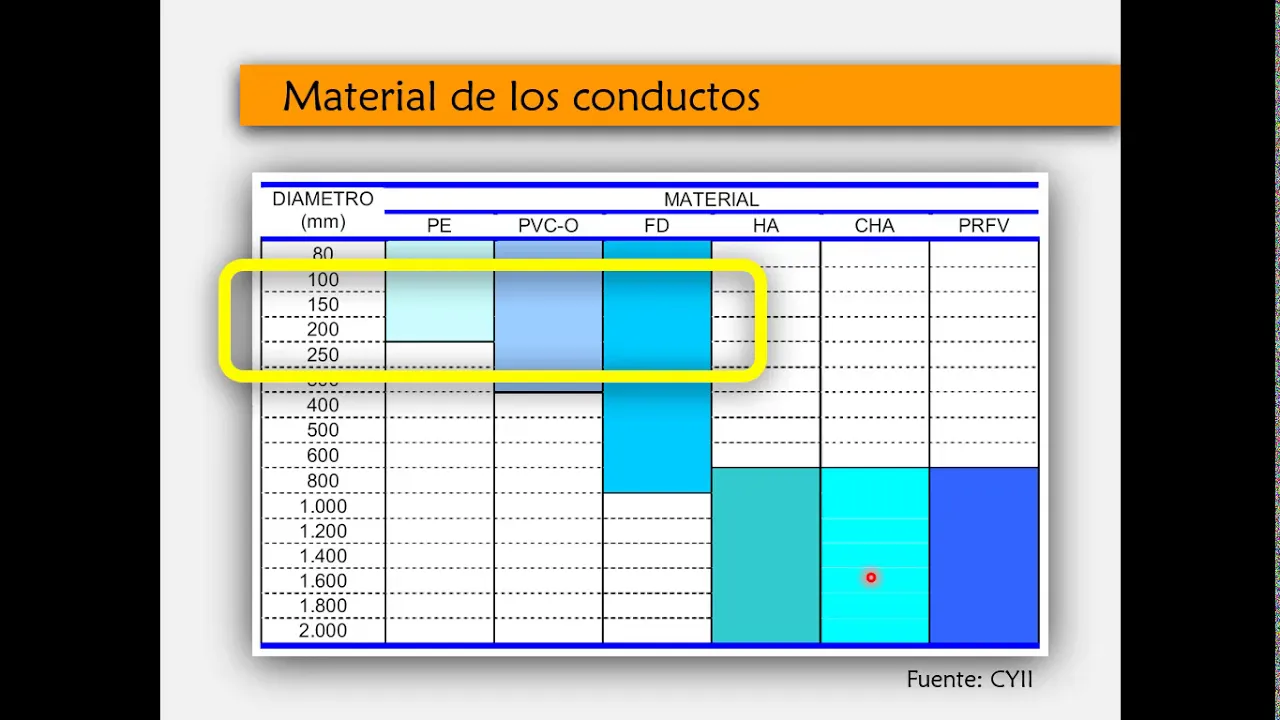
- Opting for diameters above 105 millimeters to prevent exceeding critical velocities within discharge ducts. Exploring various materials like polyethylene, PVC, ductile iron, concrete-lined steel, fiberglass-reinforced plastic (FRP), and reinforced concrete based on compatibility with different diameter ranges.
Material Selection Criteria
This section delves into material selection criteria based on diameter considerations and economic factors associated with different materials' manufacturing processes and usage conditions.
Material Characteristics and Diameter Compatibility
- Different materials such as polyethylene, PVC, ductile iron, concrete-lined steel, FRP, and reinforced concrete are suited to specific diameter ranges based on manufacturing constraints and economic viability.
- Within the explored diameter range starting from around 100 millimeters upwards, material choices like PVC are economically favorable due to their compatibility with cost-effective solutions within this range.
- Selecting PVC as it offers cost-effective solutions within the specified diameter range compared to other materials available. While initial material choice may favor PVC for economic reasons, further exploration may involve assessing alternative materials similarly.
Optimal Diameter Selection
This part focuses on determining optimal diameters beyond minimum requirements while considering practicality in handling various pipe sizes efficiently.
Diameter Nominal Considerations
- Utilizing nominal diameters above 105 millimeters for optimal performance rather than sticking solely to minimum requirements. Evaluating options ranging from 110mm up to 250mm for efficient system design.