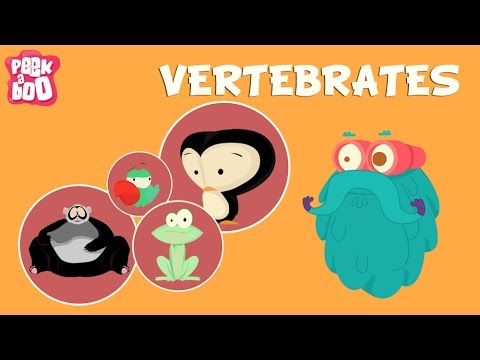
Vertebrates | The Dr. Binocs Show | Educational Videos For Kids
Exploring the Animal Kingdom
Introduction to Mr. Frog and Breathing Mechanisms
- The conversation begins with Mr. Frog, who demonstrates his ability to breathe both in water and on land, highlighting a unique adaptation.
- This adaptability is explained as a natural way of life for certain animals rather than magic.
Classification of Animals
- The Animal Kingdom is divided into two main groups: Invertebrates and Vertebrates, with a focus on Vertebrates in this discussion.
- Vertebrates are defined as animals possessing a backbone, which includes several subcategories.
Subgroups of Vertebrates
Amphibians
- Amphibians like frogs and salamanders can thrive in both aquatic and terrestrial environments.
- They are cold-blooded, lay jelly-coated eggs, possess gills for underwater breathing, and have lungs for air breathing.
Reptiles
- Examples include snakes and crocodiles; they have dry scales covering their bodies.
- Reptiles also lay eggs on land and are primarily cold-blooded creatures that occasionally bask in the sun.
Birds
- Birds such as owls, sparrows, and parrots are characterized by feathers and wings; however, not all birds are capable of flight.
- They lay hard-shelled eggs and maintain warm-blooded physiology.
Mammals
- Mammals like lions and pandas give birth to live young instead of laying eggs.
- They possess lungs for respiration, are warm-blooded, have hair or fur, and produce milk through specialized glands for their offspring.
Trivia about Animal Evolution
- A fun fact shared is that animals without backbones are termed Invertebrates; they were among the first to evolve in the animal kingdom.
- There exists an estimated 52,000 species of Vertebrates within the animal kingdom.