Why is Everyone Suddenly Going Broke (except China)?
Global Bond Market Sell-Off and China's Unique Position
Overview of the Current Bond Market Situation
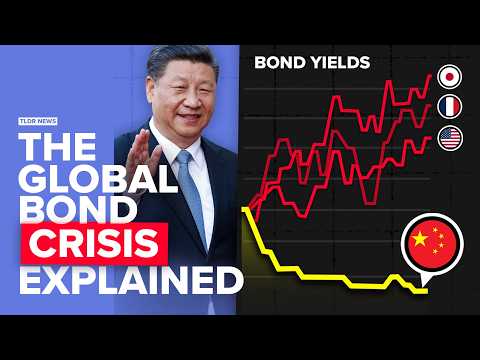
- A recent sell-off in global bond markets has led to borrowing costs reaching multi-decade highs worldwide, with China being a notable exception where borrowing costs have decreased.
- The yield on 10-year bonds serves as a key indicator of government borrowing costs, reflecting broader market trends.
Rising Yields Across Major Economies
- In the last six months, yields on US Treasuries rose from approximately 4% to nearly 5%, while French bonds increased from about 3.3% to over 4%.
- German bonds also saw an increase in yields from around 2.8% to about 3.2%, indicating widespread pressure on borrowing costs across developed economies.
Factors Contributing to Higher Borrowing Costs
- Country-specific issues include France's political deadlock due to upcoming elections, Japan's struggle with inflation, and Germany's stagnant economy.
- General factors affecting yields include aging economies with high debt burdens and ongoing geopolitical tensions, particularly the war in Iran driving up inflation globally.
Understanding Inflation's Impact on Debt
- Inflation erodes the real value of debt, prompting investors to demand higher interest rates for loans; this is illustrated by a hypothetical scenario involving borrowing $100 over ten years.
- Concerns about inflation undermining governments' abilities to repay debts contribute significantly to rising yields.
Why Is China Bucking the Trend?
China's Economic Resilience Amid Global Turmoil
- Despite being the world's largest oil importer and facing potential vulnerabilities from rising energy prices due to geopolitical conflicts, China has managed lower bond yields.
- Chinese bonds are not closely tied to US Treasuries because of capital controls imposed by the Chinese Communist Party (CCP), limiting integration into global financial markets.
Factors Supporting China's Lower Borrowing Costs
- China stockpiled significant oil reserves before the war in Iran, mitigating immediate impacts from disruptions in oil supply chains.
- The Chinese economy continues growing at a rate between 4% and 5%, driven by strong global demand for exports despite having low inflation rates averaging just above zero.
Potential Shift in Global Reserve Bonds
- There is emerging evidence that Chinese bonds may be replacing US Treasuries as preferred reserve assets amid changing perceptions of safety during crises.
- Historically viewed as safe havens during turmoil, Treasuries did not rally during recent conflicts but instead sold off like other assets, suggesting a loss of their traditional status.
Turn any video into a summary like this
YouTube links, meetings, lectures — with transcripts, search, and chat.