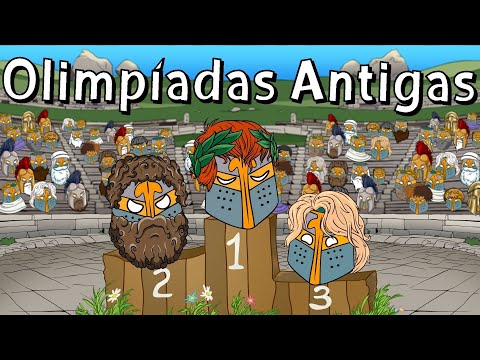
A Origem das Olimpíadas
Introduction to Greatek Gamer Headsets
Overview of Greatek Gamer Products
- The video is sponsored by Greatek Gamer, promoting their new line of gaming headsets designed for immersive gameplay and realistic sound effects.
- The headsets are ergonomic, adaptable, and made from comfortable materials to block external noise and enhance sound quality.
Olympics History and Significance
Context of the 2021 Olympics
- The speaker reflects on the 2021 Olympics, originally scheduled for 2020 but postponed due to COVID-19, expressing gratitude for viewers choosing to watch instead.
Origins of the Olympic Games
- The speaker discusses the ancient origins of the Olympics, dating back 2,800 years with competitions vastly different from today’s events.
- Ancient Greeks created the Olympics in honor of Zeus after defeating Titans; this mythological context adds a layer of cultural significance.
Development of Sports in Ancient Greece
Local Competitions and Their Evolution
- Each Greek city-state held its own competitions dedicated to various gods (e.g., Athens honored Athena), showcasing local pride.
- By the early 8th century BC, a unified event emerged—the Olympic Games—held every four years in Olympia.
Importance of Nutrition for Athletes
- Athletes required balanced diets for optimal performance; Milo de Crotona exemplified this with his extraordinary eating habits.
Notable Athletes and Events
Legendary Figures in Olympic History
- Milo was known for winning six consecutive Olympic fights; Leônidas de Rodes is highlighted as one of history's greatest athletes with numerous victories across multiple Olympiads.
Comparison with Modern Achievements
- Leônidas' record stood unbroken until Michael Phelps won his 13th gold medal in 2016, illustrating the evolution of athletic achievement over centuries.
Olympic Sports: A Closer Look
Traditional Events and Their Characteristics
- The Stádion race was a key event; athletes competed without modern gear, often running naked—a practice rooted in Greek culture.
Unique Competitions
- Other sports included Hoplitodromo (a race in armor), discus throw, boxing (with leather wraps), wrestling (with few restrictions), and Pankration—a brutal mix of boxing and wrestling.
Major Highlights
Olympic Games: A Historical Perspective
The Unfairness of Life and Competition
- The narrative highlights the unfairness in life, illustrated by an Athenian who won multiple places in a competition without ever riding a horse, emphasizing that some lives are more unjust than others.
Rewards Beyond Glory
- Contrary to popular belief, Olympic athletes received significant rewards beyond mere laurel crowns; champions could become statues, receive gold or silver prizes, and enjoy lifetime meal vouchers.
Immortality Through Achievement
- Winning at the Olympics granted athletes a form of immortality; their names would be remembered forever, which was highly valued in ancient Greek culture.
The Festive Nature of Ancient Olympics
- The ancient Olympics were grand events with over 200,000 spectators. Roads to Olympia were congested with people and animals, leading to numerous dangers during travel.
Honor to the Gods and Historical Context
- Athletes participated in these games primarily to honor the gods. The original Olympic Games lasted over a millennium until they were banned by Emperor Theodosius I in 393 AD due to their pagan roots.
Resurgence of the Modern Olympics
- After nearly 1,500 years of dormancy, the modern Olympic Games re-emerged in 1896 in Athens. They have since become an unparalleled global sporting event despite interruptions from world wars and pandemics.
Broader Implications of the Olympics Today