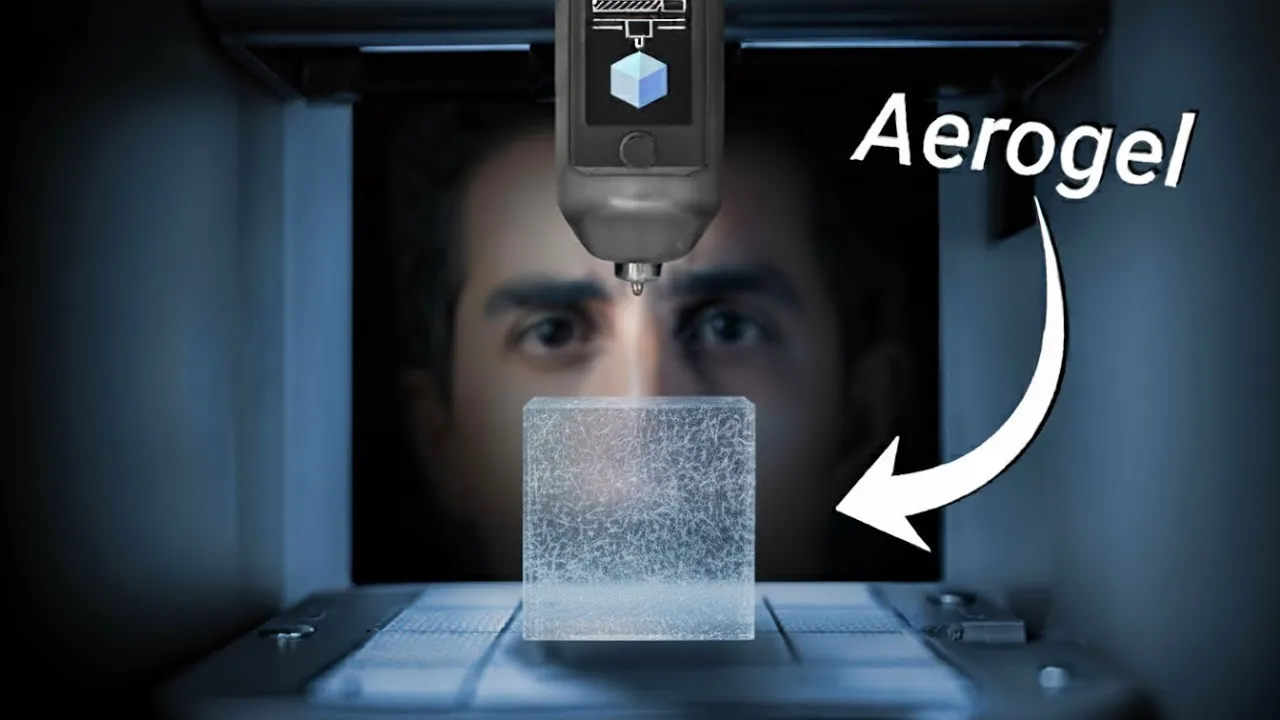
World's Lightest Solid: Aerogel
The Incredible Properties of Aerogel
What is Aerogel?
- Aerogel is described as the lightest and lowest density solid in the world, composed of 99.8% air, resembling frozen smoke.
- Despite its lightweight nature (1.74 g), aerogel can withstand extreme temperatures ranging from -275°C to 650°C, providing unparalleled heat protection.
- When pressure is applied, aerogel shatters into dust; however, this dust can create new non-brittle foam-like composites for extreme applications.
Unique Sound and Insulation Properties
- The sound produced by dropping aerogel resembles an empty can hitting a steel surface—metallic and unexpected.
- Aerogel boasts the lowest thermal conductivity of any solid material, making it the best insulation available; NASA uses it for spacecraft insulation.
Historical Context and Creation Process
- Aerogel was introduced about 100 years ago due to a bet between scientists to replace liquid in silica gel with gas without collapsing its structure.
- The creation process involves supercritical drying, which requires high heat and pressure to remove liquid while maintaining structural integrity.
Hydrophobic Characteristics
- Aerogels exhibit both hydrophilic and hydrophobic properties; they repel water effectively.
- An experiment demonstrates aerogel's hydrophobicity: when sprinkled on water, it floats without sinking or mixing with water molecules.
Practical Applications and Limitations
- Applying aerogel powder creates a waterproof barrier on skin; even submerged objects remain dry due to its properties.
- In a flame test comparing two gummy burgers—one exposed directly to flames and one protected by aerogel—the latter remains intact while the former melts significantly.
Challenges in Usage
- Despite its impressive insulation capabilities, aerogel's brittleness limits its application; it shatters easily under pressure.
Flamethrower and Aerogel Experiments
Testing the Aerogel Shield
- The flamethrower produces a flame of 5 to 6 feet, while the aerogel shield is only 1/4 inch thick, demonstrating its lightweight design.
- The team prepares to test the aerogel shield by heating it to the maximum temperature propane gas can reach.
Noise Blocking Capabilities
- Initial tests show that the average temperature of flames reaches around 1,200°C; next, they assess how well aerogel blocks noise.
- A box lined with solar core aerogel foam shows a noise reduction from about 50% in a noisy environment.
Liquid Nitrogen Safety and Effects
- Discussion on liquid nitrogen's extreme cold at -196°C; touching it without gloves could freeze skin upon contact.
- An experiment is conducted using an insulated jacket made from aerogel before applying liquid nitrogen to unprotected items for comparison.
Effects of Liquid Nitrogen on Various Materials
- Direct spraying of liquid nitrogen on parsley demonstrates its freezing effects without submersion.
- A piece of chicken is submerged in liquid nitrogen to observe its impact on meat and bone structure.
Personal Experimentation with Liquid Nitrogen
- After observing the effects on chicken bones, the speaker prepares for personal exposure to liquid nitrogen.
- Despite droplets hitting his pants, he reports not feeling any significant cold due to protective gear made from flexible and durable aerogel composite.
Aerogel Applications in Water Resistance
Submerging in Water with Aerogel Protection
- The speaker applies silica aerogel particles over his body before submerging into water, aiming to stay dry.
- Remarkably, after complete submersion, he remains dry as the particles block water contact with his skin.
Visual Effects Underwater
- In murky water conditions, air bubbles trapped by aerogel create a shiny silvery appearance on his skin when viewed underwater.
Hydrophobic Properties Demonstrated in Rain
- Even during heavy rain, he remains dry due to hydrophobic properties of applied aerogel particles that prevent water absorption.
- Observations reveal rain droplets sitting atop a layer of aerogel powder without penetrating through.
Understanding Aerogel: Properties and Light Interaction
Unique Absorption Properties of Aerogel
- Aerogel has a unique texture, likened to a small sponge, capable of absorbing 25 times its weight in moisture.
- It is utilized in museums for artifact protection and in medicine storage to prevent humidity exposure.
Nano Pores and Light Scattering
- The nano pores of aerogel range from 20 to 40 nanometers, significantly smaller than the visible light spectrum (380 to 750 nanometers).
- Shorter wavelength particles such as blue and ultraviolet light are scattered by aerogel, giving it a blue appearance due to Rayleigh scattering.
Interaction with Different Light Wavelengths
- When exposed to ultraviolet light, which has the shortest wavelengths, aerogel appears opaque due to enhanced scattering.
- In contrast, infrared light passes through aerogel without obstruction, making it appear transparent.
Color Perception Under Daylight
- Direct exposure to daylight causes aerogel to appear yellow because it allows longer wavelengths like yellow and red sunlight to pass through more easily.