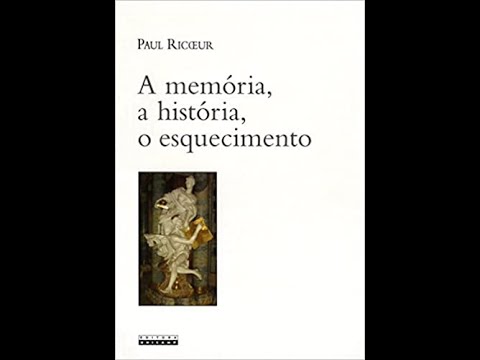
Paul Ricoeur História e Epistemologia. Aula 2, 27 de outubro de 2020
Introduction to the Conference on History Theory
Overview of the Discussion
- The conference welcomes students from UFF MS PR, focusing on Henrique's work, particularly "History, Memory, and Forgetting."
- The speaker aims to explore the structure of Henrique's thought in relation to Michel Foucault's historiographical operation.
- Emphasis is placed on how Henrique constructs a sociological reflection based on Foucault’s concepts.
Key Concepts Introduced
- The text is divided into three parts: documentary phase, memory activation, and forgetting.
- Important categories discussed include inhabited space, historical time, testimony, archive, and documentary proof as foundational for historical knowledge.
Inhabited Space and Temporalities
Understanding Inhabited Space
- Inhabited space relates to human experiences that shape memories; it encompasses spatialities and temporalities.
- This concept allows for understanding changes alongside displacements within historical contexts.
Relationship Between Memory and Space
- Memory is tied to inhabited spaces but transcends mere geographical definitions; it involves complex relationships with temporality.
- Historical thinking requires recognizing these interconnections between space and time as they relate to memory.
Documentary Phase in Historical Writing
Historiographical Operations
- Historians engage with places through their narratives while establishing dialogues with memories related to those locations.
- Time must be historicized beyond linear metrics; this perspective challenges traditional views of progress in historiography.
Multiple Dimensions of Time
- Historians navigate various temporal dimensions: the occurrence time, witness time, historian narrative time, etc.
Critical Examination of Testimony
Importance of Testimony in History
- Testimonies are crucial for constructing historical narratives; they require critical examination regarding their truthfulness.
Challenges in Historical Narration
- The historian must question the authority of documents and testimonies while considering their contextual significance.
Exploring Definitions of Time
Different Perspectives on Time
- Four models are proposed for understanding time: chronometry (linear measurement), chronology (ordering events), cronography (recording cycles), and chronosophy (philosophical reflections).
Philosophical Implications
- Each model offers insights into how historians can conceptualize history beyond simplistic linear frameworks.
Integrating Memory into Historical Analysis
Memory as a Dynamic Element
- Historical knowledge emerges from integrating lived experiences with broader temporal orders; this reflects a structuralist approach.
Provocation by Rick
- Rick questions whether fragmented memories preserved by history can be integrated meaningfully into symbolic universes.
The Role of Witnesses in History
Witness Testimonies
- Witness accounts serve as pivotal elements within historiographical operations; they bridge personal experience with collective memory.
Types of Witnesses
- Distinction between voluntary witnesses who choose to testify versus involuntary witnesses who may not wish to share their experiences.
Documenting Memories
Process from Testimony to Documentation
- The transition from oral testimony through archiving leads towards producing documented evidence essential for historical analysis.
Critical Evaluation Required
- Each testimony must undergo scrutiny against other sources before being accepted as valid historical evidence.
Conclusion on Documentary Evidence
Significance of Archives
- Archives play a fundamental role in shaping historical narratives by preserving selected memories deemed significant over others.
Final Thoughts on Memory's Role
- Ultimately, historians must critically assess how testimonies contribute toward constructing coherent understandings of past events.
The Role of Historians in Evaluating Memory
Filtering Testimonies and Memories
- Historians must critically analyze testimonies and memories, considering the context of time, place, and the subject producing them.
- There is no completely reliable memory; historians should approach all testimonies with skepticism while recognizing that witnesses can also convey truths.
- The historian's task involves a critical judgment of testimonies to assess their historical significance and truthfulness.
Document Analysis as Historical Inquiry
- The production of documentary evidence by historians aims to establish a level of credibility regarding historical claims without losing sight of reality.
- A parallel is drawn between vestiges analyzed in texts and the concept of an "indicative paradigm," emphasizing the importance of critical analysis in understanding history.
Paradigms and Methodologies in Historical Research
Critical Approaches to Evidence
- Historians must engage with multiple sources to validate or challenge witness accounts, becoming active readers rather than passive listeners.
- Marc Bloch's methodology is compared with Guizo’s indicative paradigm, highlighting how both approaches emphasize traces from the past as crucial for historical knowledge.
Understanding Vestiges
- Vestiges serve as remnants from the past that inform historical narratives; they are essential for constructing knowledge about history.
- All sources require critical scrutiny; otherwise, historians risk merely reproducing unverified memories instead of creating credible histories.
The Nature of Memory in Historical Context
Reliability and Fragility of Memory
- Despite its inherent fragility, memory remains vital for constructing viable historical narratives; it serves as a foundation for understanding past events.
- Traumatic testimonies (e.g., Holocaust survivors or victims under dictatorship), though often deemed unreliable, still hold significant value for historiography.
Truth Claims in Historical Narratives
- Every memory has limitations; however, it provides insights into what may have occurred historically. Historians rely on these memories to build narratives about the past.
Documentary Evidence as a Foundation for History
Establishing Historical Truth through Documentation
- Documentary proof represents the final stage in historiographical operations where historians validate or refute claims based on available evidence.
- Through critical analysis and confrontation with various documents, historians substantiate their interpretations regarding past events.
Constructing Knowledge from Documents
- Historians must construct coherent narratives based on documented evidence while acknowledging that such constructions are inherently partial and fragmented.
The Interplay Between Memory and History
Epistemological Foundations
- The relationship between memory and history is complex; knowledge produced from documents reflects contemporary perspectives shaped by social contexts.
Methodological Considerations
- Understanding historical research requires recognizing how documents interact within specific social frameworks that influence narrative construction.
Concluding Thoughts on Historical Methodology
Importance of Critical Engagement
- Historians must engage critically with testimonies throughout their research process to ensure robust historical writing grounded in verified realities.
Turn any video into a summary like this
YouTube links, meetings, lectures. With transcripts, search, and chat.