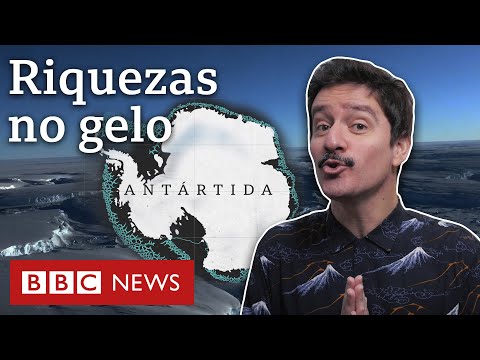
Diversos países disputam a Antártida, que tem maior reserva de água doce do mundo
Antarctica: A Continent of Interest and Dispute
Overview of Antarctica
- Antarctica is the coldest, driest, and windiest continent on Earth, with no indigenous population.
- Despite its harsh conditions, it is highly coveted due to its unique characteristics.
- Seven countries claim sovereignty over parts of Antarctica, although no one officially owns the territory.
Sovereignty Claims
- The Antarctic Treaty of 1959 established the continent as an international scientific reserve for peaceful purposes.
- Countries claiming territory include Chile, Argentina, New Zealand, Australia, the United Kingdom, France, and Norway.
- Argentina was the first to establish a permanent base in 1904; Brazil has no current claims but operates a research station.
Historical Context of Claims
- The UK claimed territory in 1908 overlapping with Argentina's claims; Chile made its claim in 1940 based on territorial extension arguments.
- Other claims are rooted in historical explorations by figures like Roald Amundsen and James Clark Ross under British auspices.
Governance and Treaties
- The Antarctic Treaty was signed by seven claimant nations plus five others (Belgium, USA, Japan, South Africa, Russia).
- Since 1961, 42 additional countries have joined the treaty; currently totaling 54 members with only 29 having voting rights for decision-making.
Scientific Research vs. Military Use
- All member states agree to prohibit non-scientific activities; however, there are allegations of dual-use facilities serving military purposes.
- Antarctica's clear skies make it ideal for deep space research and satellite observation but raise concerns about surveillance capabilities.
Natural Resources and Future Implications
- Experts suggest that Antarctica holds significant oil reserves but extraction remains unfeasible due to prohibitive costs and regulations.
Understanding the Impact of Climate Change
Introduction to Climate Change
- The speaker introduces climate change as a pressing global issue, emphasizing its widespread effects on ecosystems and human societies.
- A brief overview of the scientific consensus regarding climate change is presented, highlighting the role of greenhouse gases in global warming.
- The importance of addressing climate change through international cooperation and policy changes is underscored.
Effects on Ecosystems
- Discussion on how rising temperatures are affecting biodiversity, with specific examples of species at risk due to habitat loss.
- The impact of climate change on oceanic systems is explored, particularly coral bleaching and its consequences for marine life.
- Changes in weather patterns leading to extreme events such as hurricanes and droughts are highlighted as direct results of climate change.
Human Implications
- The speaker discusses the socio-economic impacts of climate change, including food security issues stemming from agricultural disruptions.
- Health risks associated with climate-related disasters are examined, stressing the need for public health preparedness.
Mitigation Strategies
- Various strategies for mitigating climate change are proposed, including renewable energy adoption and carbon footprint reduction initiatives.
- The role of technology in combating climate change is discussed, focusing on innovations that can lead to sustainable practices.
Conclusion: Call to Action
- A strong call to action encourages individuals and governments alike to take immediate steps towards sustainability.