Galáxias Longínquas - Completo !!! 720p
The Vastness of the Universe
Understanding Our Place in the Cosmos
- The Sun is just one star among billions in the Milky Way galaxy, which itself is one of hundreds of billions in the observable universe.
- The Hubble Space Telescope provides a glimpse into the past of the universe, allowing us to see light that has traveled for millions of years.
- The universe is approximately three times older than Earth, with our solar system being around 4 billion years old compared to the universe's age.
- Galaxies are vast collections of stars held together by gravitational forces; a single galaxy can contain about 100 billion stars.
- The Milky Way appears as a white band across the night sky and was named after its resemblance to a river of milk.
Characteristics and Scale of Galaxies
- There are more stars in the universe than grains of sand on all Earth's beaches combined, highlighting its immense scale.
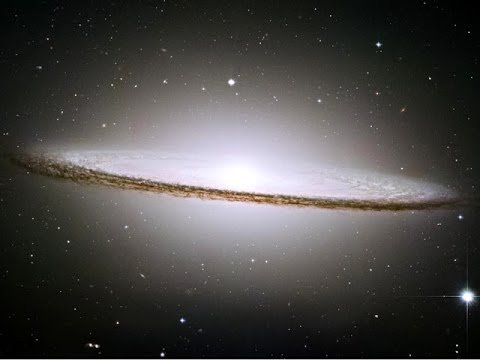
- Images from Hubble reveal diverse galaxies; for example, Sombrero Galaxy (M104), which has nearly 800 billion times more mass than our Sun.
- Collaboration between major telescopes (Chandra, Hubble, Spitzer) allows for comprehensive imaging across different wavelengths, revealing detailed characteristics of galaxies like Sombrero.
- M51 or Whirligig Galaxy features spiral arms resembling cotton candy and has an exceptionally bright center filled with stars.
Active Galactic Nuclei and Quasars
- Centaurus A emits significant radio waves and is one of the closest active galaxies known for its energetic core.
- Observing distant galaxies through Hubble reveals their past states when they were much younger than today; some light we see left these galaxies over 13 billion years ago.
- Andromeda is our nearest galaxy at 2 million light-years away; observing it gives insight into how it appeared millions of years ago.
Evolutionary Insights from Astronomy
- By examining distant stars and galaxies, astronomers can trace back cosmic evolution similar to studying geological layers on Earth’s surface.
- Galaxies are categorized mainly into spiral (like Milky Way), elliptical (round or oval), and irregular shapes based on their structure and star formation activity.
Energy Emission from Active Galaxies
- Spiral galaxies have ample gas and dust for new star formation while elliptical ones lack sufficient materials for creating new stars due to their age.
- Astronomers identify active galactic nuclei by detecting intense energy emissions from their centers that can outshine all other stars within those galaxies.
- Quasars represent some of the most powerful active galactic nuclei known, emitting extraordinary amounts of energy—up to a trillion times brighter than our Sun.
Galactic Collisions and the Nature of Active Galactic Nuclei
The Nature of Active Galactic Nuclei
- Active galactic nuclei (AGN) are peculiar regions in galaxies, showcasing the violent nature of space.
- A significant collision is occurring nearby, involving a dwarf galaxy known as Canis Major.
Dynamics of Galaxy Collisions
- Dwarf galaxies, like Canis Major, are smaller and harder to detect; they are on a collision course with the Milky Way due to gravitational forces.
- When galaxies collide, they distort and stretch each other; stars within these galaxies feel mutual gravitational attraction leading to complex movements.
Formation of Galaxies
- To understand distant galaxies, we must look back billions of years to when all matter was compressed into an incredibly small point—a gravitational singularity that exploded in the Big Bang.
- This event marked the beginning of our universe, where matter and energy began forming into distant galaxies over time.
Early Universe and Galaxy Formation
- After the Big Bang, denser regions began contracting under gravity, eventually forming gas pockets that led to star formation.
- The first galaxy formation occurred approximately one billion years post-Big Bang; however, precise timelines remain uncertain.
Understanding Our Galaxy: The Milky Way
- Observing our own galaxy is challenging due to its structure; dust and gas obscure our view. The Milky Way is a spiral galaxy with a diameter of 100,000 light-years.
- Stars orbit around the dense central core at varying distances; it takes about 250 million years for our solar system to complete one orbit around this center.
Spiral Structure and Density Waves
- The beautiful spiral arms result from density waves—regions where stars are more densely packed than others—creating dynamic movement akin to traffic congestion on highways.
Andromeda: Our Neighboring Galaxy
- At 2.5 million light-years away lies Andromeda (M31), similar in size to the Milky Way but less active in star formation.
- Historical texts referenced Andromeda long before its identification as a galaxy; it remains visible without telescopes despite being so far away.
Future Collision with Andromeda
- While minor collisions with dwarf galaxies may not significantly impact us, an eventual encounter with Andromeda will dramatically alter both galaxies' structures due to their immense sizes.
Gravitational Forces at Play
- Gravity drives the approach between Andromeda and the Milky Way at speeds exceeding 100 km/s. In billions of years, these two spirals will collide.
Consequences of Galactic Collision
- Although direct stellar collisions are unlikely due to vast distances between stars, significant changes will occur: some stars may be ejected into space while others could fall into central black holes.
The Expanding Universe and Its Mysteries
The Nature of the Universe's Expansion
- The common experience of a bomb explosion illustrates that everything moves away from the center. This raises questions about whether the universe's center is empty and if galaxies are receding from an original explosion.
- Astronomer Edwin Hubble established that the universe expands over time, with space itself stretching. An analogy using rubber bands shows how galaxies move apart as space expands.
- Galaxies farther from a given point move faster than those nearby due to more space between them, supporting Hubble's observations regarding galaxy movement.
- No galaxy can claim to be the center of the universe; each galaxy perceives others moving away uniformly, challenging historical beliefs that Earth was at the universe's center.
- Hubble revealed that our planet is one among many, reshaping our understanding of Earth's place in a vast cosmos filled with numerous galaxies.
Local Group of Galaxies
- Our local group consists of around 30 galaxies, including dominant ones like the Milky Way and Andromeda, alongside smaller dwarf galaxies.
- Larger galaxies influence smaller ones through gravitational interactions, forming a cohesive group orbiting around a common mass center.
- Notable dwarf galaxies in this group include the Large and Small Magellanic Clouds.
Characteristics of Dwarf Galaxies
- Scientists believe these clouds affect our Milky Way through gravitational forces, distorting parts of it over billions of years.
- Observations indicate that these clouds contain different matter compositions compared to our galaxy—richer in hydrogen and helium but poorer in metals.
The Enigma at Our Galaxy’s Center
- At the heart of the Milky Way lies something extraordinary: a supermassive black hole where normal rules of time and space break down.
- A black hole is defined by its immense mass concentrated in a small volume, creating gravity so strong that not even light can escape it.
- Supermassive black holes exist at galactic centers; they can be millions or billions times heavier than our Sun.
Gamma-Ray Explosions and Black Holes
- When black holes consume stars, they can produce powerful gamma-ray bursts—extremely hot phenomena observable across vast distances (up to 10 billion light-years).
- These gamma-ray emissions could be seen with binoculars if aimed correctly at specific areas in space during their occurrence.
Dark Matter: The Universe’s Hidden Component
- It is estimated that less than half of our universe consists of observable matter (stars, planets), leading scientists to theorize about dark matter filling distant galaxies post-Big Bang.
- Dark matter exerts gravitational pull yet remains invisible; its existence is inferred through effects like galaxy rotation speeds influenced by unseen mass.
Mapping Dark Matter
- Researchers are pioneering techniques for creating three-dimensional maps of dark matter distribution within the universe using gravitational lensing—a phenomenon predicted by Einstein.
Understanding Dark Matter and Dark Energy in the Universe
The Role of Gravitational Lensing
- The presence of dark matter is inferred through the curvature of light rays emerging from dark matter regions, allowing for mapping its distribution despite not being directly visible.
- Gravitational lensing acts as a magnifying lens, making distant objects appear larger and brighter, functioning like a natural telescope in space.
Expansion of the Universe
- Galaxies are moving away from us due to the ongoing expansion of the universe, which is driven by a mysterious force known as dark energy.
- Dark energy is more enigmatic than dark matter; it accelerates the universe's expansion over time rather than slowing it down through gravitational forces.
Acceleration of Cosmic Expansion
- The universe's expansion has accelerated over billions of years due to increasing dark energy influence, counteracting gravitational attraction among galaxies.
- This acceleration has been occurring for approximately four to five billion years, indicating a significant shift in cosmic dynamics.
Black Holes and Stellar Dynamics
- When stars approach black holes at galactic centers, chaos ensues; this phenomenon was studied using the GALEX telescope that observes ultraviolet waves.
- Ultraviolet wavelengths are crucial for studying star formation in galaxies that are half the age of the universe and detecting flares when stars fall into black holes.
Observations with Advanced Telescopes
- High-energy events occur when gas from a destroyed star falls into a black hole, releasing intense ultraviolet and X-ray radiation observable by telescopes like GALEX and others.
- The James Webb Space Telescope (JWST), launched in 2013, aims to capture infrared images through dust clouds obstructing views within our galaxy and beyond.
Technological Advances in Astronomy
- JWST differs from previous telescopes by having a larger mirror and operating on longer infrared wavelengths, enhancing observational capabilities significantly.
- Ground-based observatories utilize adaptive optics technology to correct atmospheric turbulence effects on images, achieving clarity up to 10–20 times better than without such technology.
The Scale of the Universe
- The universe contains celestial bodies far larger than Earth or even our solar system; it emphasizes that our Milky Way is just one among billions of galaxies within the observable universe.