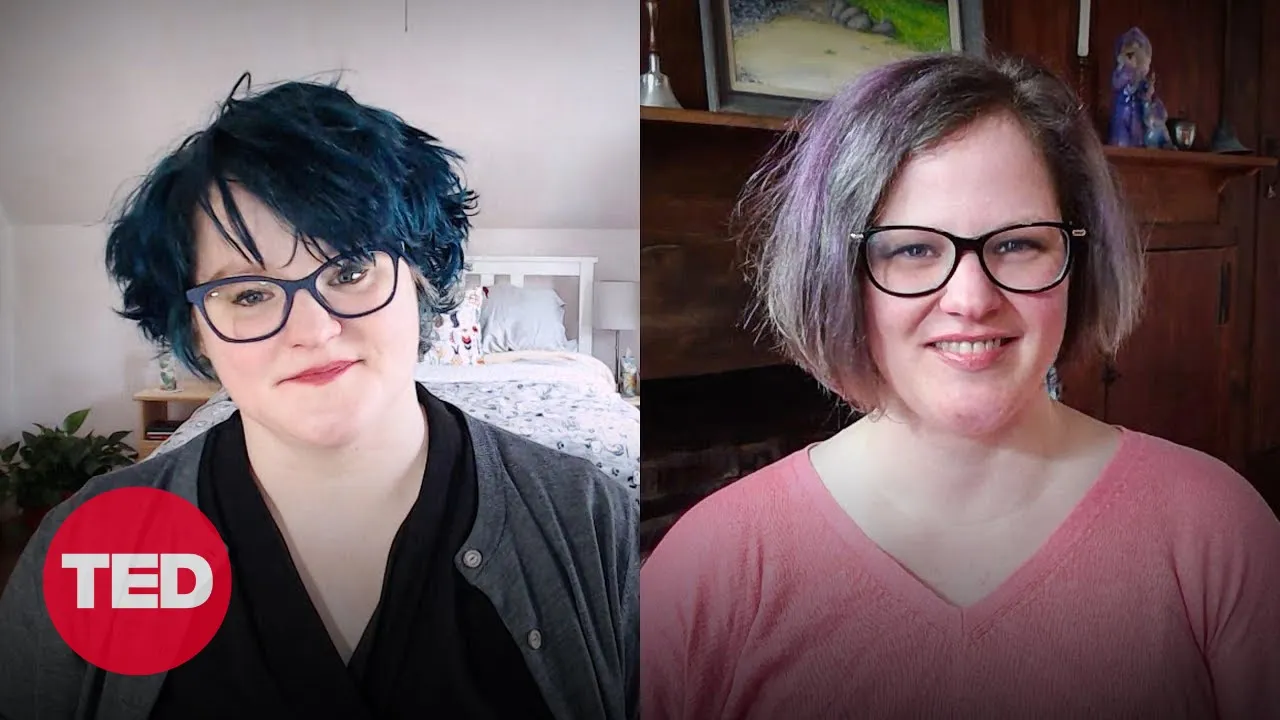
Emily Nagoski and Amelia Nagoski: The cure for burnout (hint: it isn't self-care) | TED
How to Deal with Difficult Feelings
In this TED Interview series, Cloe Shasha Brooks interviews Dr. Emily Nagoski and Dr. Amelia Nagoski about burnout, its three components, and how to complete the stress cycle.
Burnout Experience
- Amelia Nagoski shares her experience with burnout while getting her doctorate in musical arts in conducting.
- She was diagnosed with stress-induced abdominal pain and didn't believe that stress could cause physiological symptoms.
- After reading peer-reviewed science on the topic, she realized that stress manifests in the body and can turn into symptoms of illness.
Three Components of Burnout
- According to Herbert Freudenberger's original technical definition from the 1970s, burnout involves depersonalization, decreased sense of accomplishment, and emotional exhaustion.
- For men, burnout tends to manifest as depersonalization in particular. For women, it tends to manifest as emotional exhaustion.
Factors Leading to Burnout
- The factors that lead to burnout are not just professional ones but also parenting and social activism.
- Anything where there are ongoing demands that are unmeetable expectations and unceasing demands is a formula for burnout.
Completing the Stress Cycle
- There is a difference between your stressors (the things that cause your stress) and your stress (the physiological thing that happens in your body in response to any perceived threat).
- The complete stress response cycle has a beginning, middle, and end.
- The main thing people need to begin with is completing the stress response cycle.
Dealing with Stress
In this section, the speaker talks about how people deal with stress and how to complete the stress response cycle.
Dealing with Chronic Stressors
- Most of our stressors are chronic stressors that are there day after day, week after week, year after year.
- You can deal with the stress while the stressor still exists.
- There are a dozen concrete, specific, evidence-based ways to help people deal with the stress response cycle.
Completing the Stress Response Cycle
- Using your body is what communicates to your body that your body is now a safe place for you to be.
- You have to separate dealing with the stress from dealing with the thing that caused the stress.
Burnout and Recognizing Hard Stuff
In this section, the speakers talk about burnout and recognizing hard stuff.
What is Burnout?
- Burnout is feeling overwhelmed and exhausted by everything you have to do while still worrying that you're not doing enough.
- If you feel like you are struggling even to get out of bed and get the basics done, that goes beyond burnout.
- Burnout is where you can show up for work but spend your whole day fantasizing about being at a different job.
Recognizing Hard Stuff
- One of the things that causes burnout is our inability to recognize hard stuff welling up inside us.
- The solution is to be able to turn toward difficult feelings with kindness and compassion instead of just trying to tell yourself to relax.
- Feelings are tunnels. Stress is a tunnel. You've got to work all the way through it.
Practicing Mindfulness
In this section, the speakers discuss how to practice mindfulness and allow emotions to move through the body.
Practicing Mindfulness
- The speaker began a practice of noticing when their body was experiencing a sensation, allowing it to be and allowing it to move all the way through.
- As they practiced with gentle emotions, they were able to practice it with more intense emotions.
- By doing so, they trust that their body will go all the way through the feelings without being trapped in the dark with predators.
Talking About Burnout at Work
In this section, the speakers discuss how to talk about burnout at work and get real support.
Talking About Burnout at Work
- If you're in a workplace where you don't feel like you can say to your boss that you're experiencing burnout, know that there are corporations making active efforts to incorporate acknowledging people's emotional and physical needs.
- Managers should be ready to cope when their supervisee comes in and has a bunch of feelings that they need to process and move through.
- However, some workplaces are trapped in an industrial, super patriarchal mindset where individuals need to protect themselves against toxic culture by creating a bubble of love at home.
Wellness & Caring for Each Other
In this section, the speakers define wellness as freedom from oscillating through all cycles of being human. They also discuss how caring for each other is the cure for burnout.
Wellness & Caring for Each Other
- The cure for burnout is not self-care, but all of us caring for each other.
- People who care about your well-being as much as you care about theirs can help you take one more step towards wellness.
- When feeling stuck, what we actually need is more help and kindness.
Connection & Support
In this section, the speakers discuss how connection and support are essential to ending burnout forever.
Connection & Support
- Baseline culture change that will end burnout forever is more kindness.
- If you feel isolated, there's probably someone on the other side of that wall who wants just as much as you to connect with someone else.
- We're going to be healthier and stronger when we work together.
Burnout in Teaching
In this section, the speakers discuss how teachers can deal with stressors leading to burnout.
Burnout in Teaching
- Completing the stress response cycle is key when dealing with everyday stressors in teaching.
Imagining Pummeling Stressors
In this section, the speaker suggests using imagination to pummel stressors and recover from them.
Using Imagination to Pummel Stressors
- You can use your imagination to pummel all of the stressors into the ground.
- Your imagination doesn't know the difference between pummeling the stressors in your imagination versus pummeling them in real life.
- This technique can help you recover from stress.
Deserving Care and Love
In this section, the speaker emphasizes that educators deserve care, love, and resources.
Educators Deserve Care and Love
- Educators are valuable, educated, wonderful human beings who deserve care and love.
- They should not see themselves as just Darth Vader dealing with kids but as valuable persons deserving of resources and freedom to oscillate.
Conclusion
In this section, CSB thanks both speakers for teaching about burnout and the stress cycle.
Thanking Speakers
- CSB thanks both speakers for joining us together and teaching about burnout and the stress cycle.
Turn any video into a summary like this
YouTube links, meetings, lectures. With transcripts, search, and chat.