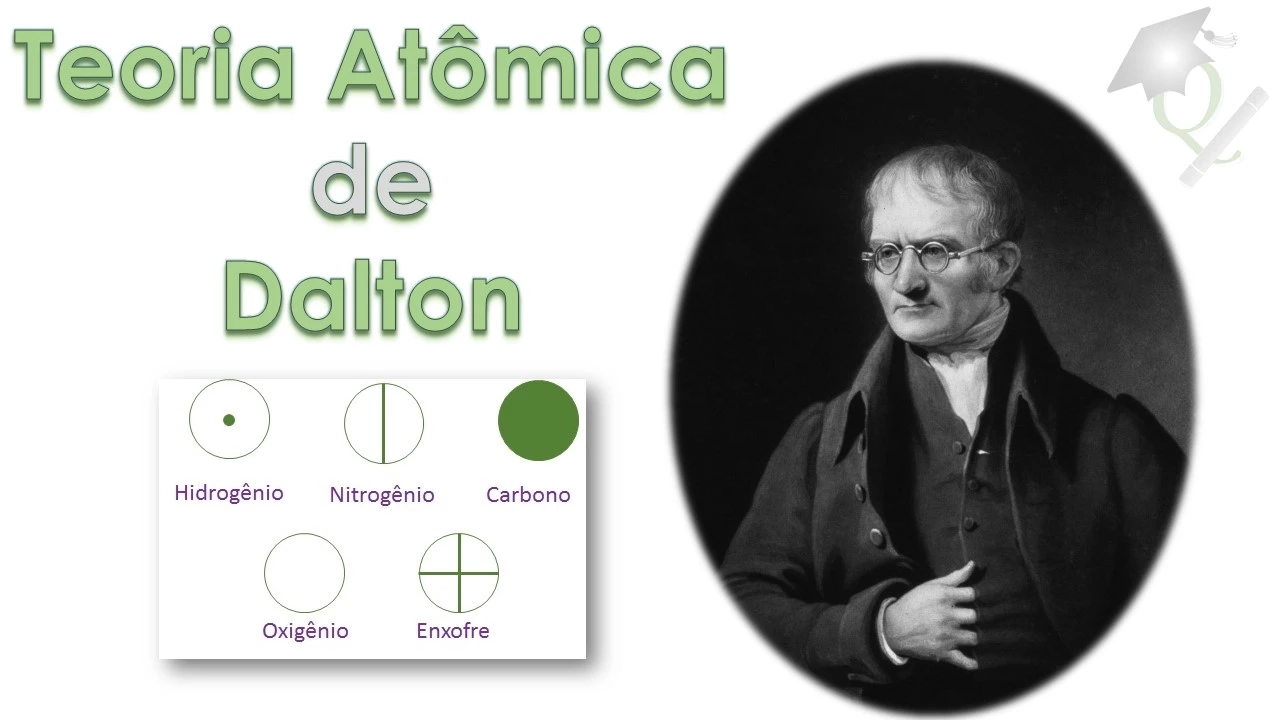
Episódio 1 - Um daltônico que enxergava muito bem ... (Teoria atômica de Dalton)
Analysis of Matter in Chemistry
The lecture delves into the historical context of scientific thought in the late 18th to early 19th centuries, focusing on key figures and their contributions to understanding matter.
French Contributions to Matter Analysis
- Antoine Lavoisier, a wealthy Frenchman with a passion for chemistry, concluded that matter is not destroyed but transformed.
- Lavoisier's experiments led to the concept of the conservation of matter within closed systems.
Law of Definite Proportions by Joseph Proust
- Joseph Proust determined that elements in compounds are always in fixed proportions, known as the Law of Definite Proportions or Proust's Law.
- This law illustrated through examples like water (H2O), showcasing consistent ratios regardless of quantity.
John Dalton's Atomic Theory
- English scientist John Dalton proposed atoms as indivisible, indestructible particles forming all matter.
- Dalton envisioned atoms as tiny spheres with varying masses distinguishing elements.
Explanation of Atomic Structure and Reactions
The discussion transitions into Dalton's atomic theory detailing atomic composition and reactions based on fixed proportions.
Atomic Composition and Mass Differentiation
- Dalton theorized atoms vary in mass, likening hydrogen atoms to marbles and heavier elements like mercury to bowling balls.
Explanation Through Chemical Reactions
- Dalton explained chemical reactions by atom rearrangement rather than destruction, supporting the conservation of matter principle.
Law of Definite Proportions Application
Applying Dalton's atomic theory to illustrate how fixed proportions govern chemical reactions.
Illustration Through Water Formation
- Water formation exemplifies fixed proportions where hydrogen and oxygen atoms combine without altering their quantities.
Consistency in Reaction Ratios
Dalton's Contributions to Chemistry
In this section, the speaker discusses John Dalton's contributions to chemistry, highlighting his insights and impact on the field.
Dalton's Vision and Theoretical Framework
- Dalton's unique perspective allowed him to see matter in a novel way, going beyond his color blindness.
- He formulated the atomic theory of matter, which later became known as Dalton's atomic theory.
- Dalton developed a symbolic representation system for atoms, using different symbols for various elements like hydrogen, oxygen, sulfur, nitrogen, and carbon.
Publication of "A New System of Chemical Philosophy"
- In 1808, John Dalton published "A New System of Chemical Philosophy," a groundbreaking work that laid the foundation for modern chemistry.
- This seminal book is accessible online today and provides valuable insights into Dalton's atomic theory.
Legacy and Recognition
- Despite modifications over time, Dalton's atomic theory remains fundamental in understanding matter composition.
- The concept of atoms predates Dalton by centuries; early philosophers like Democritus and Leucippus proposed similar ideas.
Dalton's Influence and Recognition
This section delves into how John Dalton's work was received during his lifetime and the recognition he received posthumously.
Acceptance of Atomic Theory
- While Aristotle initially opposed atomism, Dalton's atomic hypothesis gained acceptance due to its explanatory power regarding matter composition.
Posthumous Honors
- Various institutions honored John Dalton posthumously for his contributions to science. Notably, the Royal Society of Chemistry named a prestigious journal after him.
Royal Society of Chemistry Tribute
- The Royal Society of Chemistry recognized John Dalton with significant honors through awards and naming one of their leading journals after him.