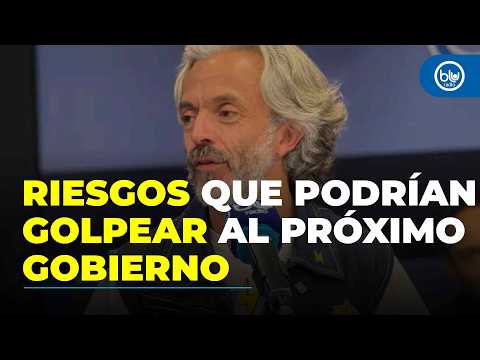
Habla Juan Daniel Oviedo: cinco bombas a punto de estallar que recibiría si ganan la Presidencia
The Political Landscape in Colombia: Insights from Juan Daniel Oviedo
Introduction to the Candidates
- The race for the Casa de Nariño is underway, with candidates being closely monitored. The program invites presidential and vice-presidential candidates to engage with the audience.
- Juan Daniel Oviedo returns as Paloma Valencia's vice-presidential candidate, having previously appeared as a presidential pre-candidate.
Transition from Pre-Candidate to Vice-Presidential Candidate
- Oviedo reflects on his journey from being a pre-candidate to now running for vice presidency, emphasizing a responsible decision for the country.
- He achieved second place in the right-wing consultation, which he views as significant progress given initial skepticism about his candidacy.
Public Perception and Political Strategy
- Oviedo discusses how his political approach sparked national conversation on social media, highlighting discomfort around engaging with right-wing politics.
- He notes that many people fear returning to past political dynamics associated with Uribe's leadership but insists on addressing current national issues instead of distractions like popular television shows.
Critique of Current Government Policies
- The discussion shifts towards President Petro's narrative of class struggle and its implications for governance, particularly regarding economic policies affecting wealth distribution.
- Oviedo critiques Petro’s portrayal of wealthy individuals as oppressors while pointing out that many citizens earn below minimum wage due to informal employment conditions.
Popularity vs. Economic Reality
- A question arises about Iván Cepeda's popularity despite economic challenges; Oviedo explains that people's aspirations are tied to potential earnings rather than actual income levels.
- He highlights how government promises create illusions of financial opportunity among citizens who do not currently earn minimum wage.
Illusions in Political Messaging
- The conversation addresses how political messaging can manipulate public perception by creating false hopes regarding salary increases and economic improvement.
- Oviedo describes recent events where government actions led to widespread public optimism despite underlying economic realities.
Personal Connections in Politics
- The dialogue touches upon Oviedo’s long-standing relationship with María del Rosario Guerra, illustrating personal ties within Colombian politics dating back over three decades.
Understanding Political Identity and Relationships
The Influence of María del Rosario Guerrero
- The speaker reflects on their academic journey, highlighting how a challenge from María del Rosario Guerrero led to becoming the best in class and eventually her assistant as vice-rector.
- After completing a doctorate in France, the speaker was invited to assist with the re-election campaign for President Uribe, marking the beginning of a significant professional relationship.
Exploring Uribismo
- The discussion shifts to defining "Uribismo," which is centered around Álvaro Uribe's political influence and its implications.
- The speaker expresses concern about being labeled as an Uribista despite attempts to distance themselves from that identity, emphasizing the need for individual political identities.
Professional Divergence
- A pivotal moment occurred when María del Rosario entered Congress, leading to a professional split between them. The speaker did not participate in forming the Centro Democrático party.
- There is a societal tendency to associate individuals with political movements based solely on proximity or past associations.
Personal Beliefs vs. Political Affiliations
- The speaker articulates disagreements with certain policies associated with Uribismo, particularly regarding gender ideology and peace agreements.
- They emphasize their right to disagree while maintaining personal relationships, illustrating complexity in political affiliations.
Reflections on Current Political Climate
- Criticism arises regarding public perception of Colombia's political decisions, especially concerning plebiscite outcomes that seem disconnected from reality.
- The speaker highlights ongoing ideological conflicts within Colombian politics and their personal stance against certain prevailing views.
Collaboration Across Differences
- Acknowledging Paloma Valencia’s role in fostering collaboration among diverse groups, the speaker emphasizes unity over division in addressing national issues.
- They reflect on their commitment to work together across different ideologies for collective progress rather than perpetuating divisions within society.
Political Strategies and Security in Colombia
Reactions to Álvaro Uribe's Potential Role
- The speaker expresses disapproval of the idea of Álvaro Uribe becoming the Minister of Defense under Paloma Valencia, emphasizing respect for differing opinions during political campaigns.
Political Messaging and Public Perception
- The speaker discusses a recent interview where they were asked about the return to "democratic security," highlighting concerns over leftist narratives that aim to revert Colombia back to past violence levels.
Current State of Violence and Criminal Influence
- There is a perception that criminals are increasingly influencing Colombian politics, with references to how they finance political campaigns and affect local governance.
Leadership Expectations
- The speaker calls for strong leadership capable of providing timely information on violent incidents, contrasting this with current leaders who focus on personal celebrations rather than addressing national security issues.
Critique of Political Narratives
- A critique is made regarding Iván Cepeda's claims about political strategies aimed at him, suggesting that such narratives distract from real issues like violence and insecurity affecting ordinary citizens.
Addressing Societal Challenges
- The speaker emphasizes the need for Colombians to confront uncomfortable realities instead of getting lost in melodramatic narratives, advocating for collective healing rather than division.
Engaging Youth Voters
- Excitement is expressed about engaging younger voters who are increasingly active in politics, noting significant shifts in voter demographics since 2002.
Emotional Connections with Voters
- Personal anecdotes illustrate emotional connections formed with voters, showcasing a shift in support towards candidates like Paloma Valencia despite previous political affiliations.
Fear-Based Politics vs. Hopeful Futures
- The speaker critiques the current government's tactics as manipulative distractions from substantive progress, arguing that fear-based politics stifles hope for a better future.
Accountability in Governance
- There’s an assertion that government accountability is lacking, particularly regarding development plans which have not been transparently updated or effectively implemented.
Understanding Colombia's Political Challenges
The Urgency of Addressing Socioeconomic Issues
- The speaker emphasizes the critical nature of current problems in Colombia, likening them to "time bombs" that could explode if not addressed. Key issues include energy crises and unemployment linked to illegal activities.
- A call for national awareness is made, suggesting that Colombians need to move beyond passionate rhetoric and focus on constructive solutions during challenging times.
Identifying the "Time Bombs"
- The speaker identifies five major "time bombs" threatening Colombia:
- Insecurity
- Energy crisis
- Health system failures
- Lack of investment (trust issues)
- Corruption
- It is argued that the high fiscal deficit is a strategic tool used by the government to manipulate public sentiment against wealthier citizens, framing it as a necessity for funding.
Political Dynamics and Internal Conflicts
- Recent political tensions are highlighted, particularly between Paloma Valencia and Abelardo de la Espriella, with accusations stemming from media coverage regarding their campaigns.
- The discussion touches on internal conflicts within right-wing factions in Colombia, indicating a struggle for power against figures like Iván Cepeda.
Voter Sentiment and Political Trust
- There’s an exploration of voter distrust towards politicians, with concerns about hidden agendas influencing electoral decisions.
- A hypothetical question arises about voting preferences in a potential second round between candidates Abelardo de la Espriella and Iván Cepeda, reflecting broader sentiments about political integrity.
Center Politics and Future Directions
- The conversation shifts to perceptions of centrist politics in Colombia, where individuals often feel marginalized or misrepresented by both leftist and rightist factions.
- Emphasis is placed on the need for collaboration across political divides to address pressing national issues effectively rather than perpetuating division through partisan politics.
Election Strategy and Vision for Colombia
Commitment to Winning
- The speaker expresses confidence in winning the election alongside Paloma, emphasizing their ability to surprise Colombia with an honest and clear proposal despite only three years in politics.
Principles of Competition
- The candidate advocates for a non-aggressive approach to campaigning, focusing on narratives rather than personal attacks. They believe that clean voting is essential for victory.
Gender Representation
- The discussion highlights the importance of having a female president and supporting single mothers, linking this vision to real-life stories that resonate with voters.
Metaphor of the Car
- The speaker uses a car metaphor (Reno 4) to illustrate the current state of Colombia's political situation, suggesting that while it appears fine from one side, there are underlying issues (a flat tire).
Vision for Change
- Emphasizing readiness to take risks, the speaker insists on being prepared as a backup (the spare tire), aiming for significant change over 25 years to avoid a future characterized by poverty and violence.