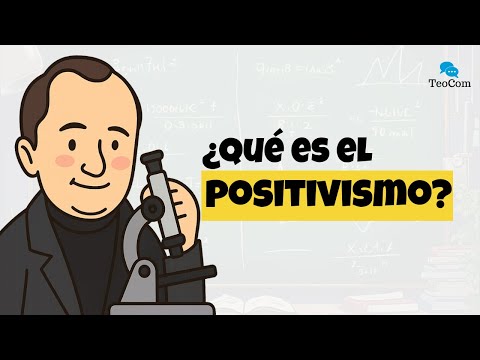
Positivismo: Qué es y por qué importa🔍
What is Positivism and Why Does It Matter?
Understanding Positivism
- Positivism is a paradigm that emphasizes understanding the world through observation, measurement, and scientific verification. It rejects assumptions and magical explanations.
- The core idea of positivism is that valid knowledge must be based on facts, data, and real evidence rather than beliefs or superstitions.
- For example, to understand why one student passes an exam while another fails, a positivist would analyze concrete factors like study hours and concentration instead of attributing outcomes to luck.
Origin and History of Positivism
- Auguste Comte, known as the father of positivism, introduced this concept in the 19th century through his law of three stages: theological, metaphysical, and positivist.
- In the theological stage, explanations relied on deities; in the metaphysical stage, they were philosophical but not verifiable; finally, in the positivist stage, science became the sole reliable tool for understanding reality.
- Comte believed that this scientific approach liberated humanity from superstition and laid the groundwork for sociology as a discipline.
Applications of Positivism
- Positivism influences various academic fields such as philosophy (transforming thought processes), epistemology (defining scientific knowledge), and research methodology (inspiring scientific methods).
- It applies across disciplines including communication (using surveys for audience analysis), education (standardized tests for performance measurement), psychology (experiments to explain behavior), and sociology (analyzing social communities scientifically).
Advantages and Critiques of Positivism
- Key advantages include promoting impartiality in knowledge acquisition by minimizing personal biases and ensuring rigorous methodologies with testable hypotheses.
- However, critiques highlight its reductionist nature—positivism often overlooks complex human experiences by focusing solely on quantifiable data.
- For instance, explaining love merely through metrics like message counts fails to capture deeper emotional connections.
Conclusion on Positivism's Impact
- In summary, positivism asserts that only observable phenomena are valid knowledge. While it has advanced science significantly by providing a structured approach to inquiry, it also reveals limitations in addressing profound human experiences.
- The discussion invites reflection on whether all aspects of life can indeed be explained through data alone.