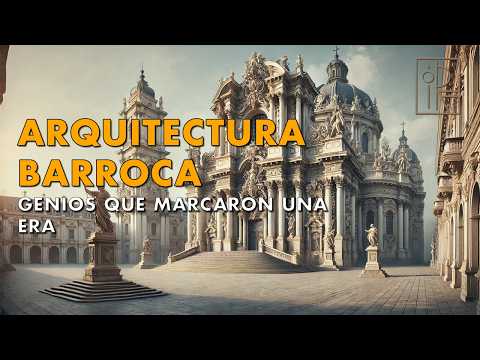
El Espectáculo del Barroco: Historia, Arquitectura y Genios que Marcaron una Era
Architecture Baroque: A Journey Through Time
Introduction to Baroque Architecture
- The video opens with a vivid description of walking through a building where architecture tells stories, highlighting the magical interplay of light and shadow.
- Baroque architecture emerged in the 15th century amidst political, religious, and social tensions in Europe, particularly influenced by the Protestant Reformation and the Catholic Counter-Reformation.
The Role of Architecture in Religion
- The Church recognized that mere words were insufficient; it needed architecture that spoke to people's hearts and souls.
- Baroque style transformed religious ceremonies into theatrical experiences, captivating all who entered churches or palaces.
Symbolism of Power and Opulence
- Beyond religion, Baroque became a symbol of power for monarchs like Louis XIV, showcasing wealth through grand structures.
- Public spaces were also transformed with plazas and fountains that celebrated both beauty and authority.
Unique Characteristics of Baroque Style
- Unlike previous styles, Baroque combines complexity and dynamism; it is extravagant and passionate.
- Key features include dramatic curves (e.g., Salomonic columns), undulating facades, and an emphasis on chiaroscuro to create depth.
Ornamentation and Integration of Arts
- Rich ornamentation is prevalent—golden altars, frescoed ceilings—designed to overwhelm viewers with beauty.
- Churches are not just buildings but complex artworks where sculpture integrates seamlessly with architecture to tell stories.
Illusionistic Techniques in Baroque Design
- Techniques like trompe-l'œil create stunning visual effects; for instance, ceilings appear to extend beyond their physical limits.
- Monumental spaces evoke awe; elements such as grand domes enhance emotional experiences during ceremonies.
Iconic Examples of Baroque Architecture
- The church of San Carlo alle Quattro Fontane showcases Francesco Borromini's innovative use of geometric forms creating dynamic spaces.
- St. Peter's Square designed by Gian Lorenzo Bernini symbolizes welcoming arms embracing visitors within its elliptical layout.
Mastery of Perspective in Art
- The church of San Ignacio de Loyola features a false dome painted by Andrea Pozzo that creates an illusionary three-dimensional effect.
Luxurious Expressions at Versailles
Baroque Architecture: A Fusion of Art and Emotion
The Essence of Baroque Architecture
- Baroque architecture is characterized by its ability to multiply light and create a spectacular atmosphere, merging European influences with local traditions in Latin America.
- An exemplary structure is the Cathedral of Puebla in Mexico, which showcases a unique blend of European styles with indigenous details like gilded altarpieces and religious sculptures.
- The Fountain of the Four Rivers, designed by Bernini, exemplifies how Baroque art unites architecture and sculpture to create a visual spectacle; each figure symbolizes an important river from four continents known at that time.
Key Figures in Baroque Architecture
- Gian Lorenzo Bernini stands out as a genius of total art—sculptor, architect, and painter—revolutionizing architectural design by integrating sculptural elements into his works.
- His masterpiece, St. Peter's Square in Vatican City, illustrates how architecture can evoke drama and grandeur beyond mere structural function.
Innovations and Rivalries
- Bernini’s contemporaneous rival Francesco Borromini introduced innovative approaches to Baroque architecture through geometric obsession and experimentation.
- Borromini's famous work, San Carlo alle Quattro Fontane, demonstrates his audacious architectural style using unusual forms to manipulate spatial perception.
Regional Variations in Baroque Style
- In Germany, architect Johann Balthasar Neumann excelled in late Baroque and Rococo styles; his Basilica of Fiten High Lien exemplifies both monumental scale and delicate design elements.
- In Brazil, Aleijadinho emerged as a prominent figure whose works like the Church of San Francisco de Assisi reflect local adaptations of European styles while incorporating regional cultural elements.
Legacy and Impact of Baroque Architecture
- These architects were not just builders but visionaries who transformed architecture into an emotional art form filled with movement and drama that continues to inspire today.
- The Baroque period redefined architecture as a multisensory experience that resonates deeply with viewers' emotions—a true visual manifesto overflowing with passion and creativity.
- Today’s appreciation for Baroque remains strong due to its ability to convey life through materials like stone, wood, and gold.
Call to Action