Miscugli eterogenei e miscugli omogenei
Introduction to Mixtures and Solutions
Overview of Mixtures
- The speaker introduces the concept of mixtures, explaining that they occur when two substances are combined without a chemical reaction.
- Two types of mixtures are identified: homogeneous and heterogeneous. The speaker plans to demonstrate these concepts through practical experiments.
Practical Experiment with Water
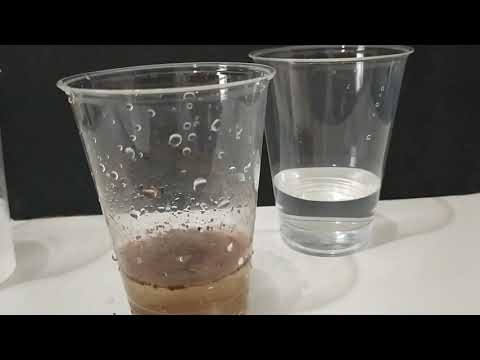
- The first experiment involves mixing talcum powder (a solid) with water in one glass, while salt (another solid) is mixed with water in another glass.
- Observations reveal that the salt dissolves in water, becoming indistinguishable, while the talcum powder does not dissolve and remains visible.
Characteristics of Mixtures
- The mixture with salt appears clear and uniform, indicating it is a homogeneous mixture. In contrast, the talcum powder creates an opaque mixture that allows light to pass poorly.
- The speaker notes that the talcum powder settles at the bottom, making it easy to identify its presence compared to dissolved salt.
Further Examples of Mixtures
Coffee as a Heterogeneous Mixture
- A second example uses coffee powder mixed with water. Unlike salt, coffee does not dissolve completely.
- This results in a turbid solution where particles remain identifiable, demonstrating another form of heterogeneous mixture.
Classification of Mixtures
- The speaker classifies mixtures into homogeneous (like saltwater where components blend uniformly) and heterogeneous (like coffee or talcum-water mixtures where individual components can be recognized).
Understanding Homogeneous Solutions
Definition and Examples
- A homogeneous solution is formed when one substance dissolves into another. For instance, mixing alcohol with water creates a uniform solution.
- The discussion includes alcoholic beverages like wine as examples where water is a significant component alongside alcohol.