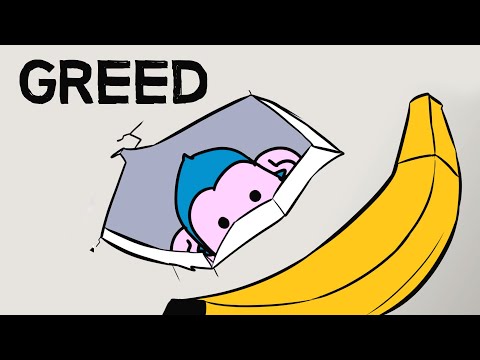
The More You Want, the Worse It Gets | The Seven Deadly Sins | GREED
How to Catch a Monkey
This section tells the story of how a farmer caught a monkey using greed.
The Story of the Monkey and the Coconut
- A farmer cut a hole in a coconut, put a banana inside, and tied it to a tree.
- A curious monkey came to check out the coconut and smelled the banana. The monkey put his hand inside the coconut but couldn't pull out the banana because his fist didn't fit through the small hole.
- The farmer calmly walked toward the tree and caught the monkey.
Greed as a Deadly Sin
- Greed is an intense and selfish desire for something, especially wealth, power, or food.
- Greed can lead individuals down a path of self-destruction by blinding them to consequences.
- By examining pitfalls of greed, we can gain better understanding of how this sin influences both individual behavior and broader societal issues.
The Seven Deadly Sins
This section explores Christian concept of Seven Deadly Sins.
History of Seven Deadly Sins
- Evagrius Ponticus listed "eight evil thoughts" which included gluttony, lust, avarice, anger, sloth, sadness, vainglory and pride.
- In sixth century Pope Gregory I revised Evagrius' list into seven sins: pride, greed, lust, envy,
gluttony, wrath and sloth.
Beyond Christianity
- Can non-christians benefit from this concept?
What is Greed?
This section defines greed from Christian viewpoint.
Definition of Greed
- Greed is an intense desire for something external, predominantly things like money, power, or food.
- From Christian viewpoint greed is bad and within the sin of greed lies the root of all evil.
Love of Money
- It's not money itself in which the root of evil lies but our love of money.
- Pursuit of money and other worldly goods often stems from selfish desires.
The Dangers of Greed
This section explores how greed can compromise morals and ethics.
Selfish Desires
- Individuals seeking their own self-interest may do so at the expense of others.
- People blinded by greed can compromise their morals and ethics in order to acquire what they want.
Serving God vs. Worldly Desires
- Serving God requires a commitment to moral and ethical principles that prioritize needs of others above our own self-interest.
- Selfish pursuit of worldly things is at odds with Christian path.
The Dangers of Greed
This section discusses how greed can lead to stress, despair, and perpetual dissatisfaction. It also explores the underlying psychological conditions and mechanisms related to greed.
Greed as a Dangerous Force
- If we allow our happiness to depend on the acquisition of worldly things such as money, expensive possessions, or carnal pleasure, we place ourselves in a precarious position.
- The sin of greed is one of the most destructive sins that not only alienates individuals from the spiritual path but also renders their happiness dependent on the pursuit of wealth and material possessions.
- The accumulation of worldly goods can never truly satisfy, leaving individuals in a perpetual state of yearning.
Insatiable Nature of Desire
- Greed presents us with a persistent delusion that promises contentment after we’ve acquired what we want. However, the sense of satisfaction is short-lived.
- With Greed, there is no end. The insatiable desire for more, the perpetual dissatisfaction with what one has, no matter how much, is woven into the fabric of this sin.
Psychological Conditions and Mechanisms Related to Greed
- One primary driver of greed is the belief that material possessions and wealth will lead to happiness and fulfillment.
- Cultural messages and societal norms that equate success and status with material wealth reinforce this belief.
- Another factor that contributes to greed is a sense of insecurity or fear of scarcity.
- Certain personality traits are associated with greed including narcissism, entitlement, impulsivity.
- Biological factors such as testosterone have been found to contribute to greed.
Conclusion
This section summarizes the key points discussed in the transcript.
- Greed is a dangerous force that can lead to stress, despair, and perpetual dissatisfaction.
- The insatiable nature of desire makes it impossible for greed to be a means to an end.
- The belief that material possessions and wealth will lead to happiness and fulfillment is one primary driver of greed.
- Cultural messages and societal norms that equate success and status with material wealth reinforce this belief.
- Certain personality traits such as narcissism, entitlement, impulsivity are associated with greed.
- Biological factors such as testosterone have been found to contribute to greed.
The Dangers of Greed
This transcript discusses the dangers of greed and how it can cause people to act selfishly, turn against each other, and create a cycle of mistrust. It also explores how greed can contribute to inequality and injustice, as well as harm the natural environment.
The Story of the Wealthy Farmer
- The wealthy farmer got rid of his workers and hired people he could trust after discovering what had happened to his servants.
- Greed caused the workers to act selfishly and turn against each other in their desire for the farm.
- Being rich among the poor makes one a target for crime, which is why Tao Te Ching advises not to display riches to others.
The Cycle of Mistrust
- Greed creates a cycle of mistrust and suspicion that makes it difficult for people to work together towards common goals.
- In society at large, greed can contribute to inequality and injustice as those who are most driven by wealth may be less likely to consider the needs and interests of others.
- This creates a sense of division between different groups with each group trying to maximize its own advantage at the expense of others.
The Insatiable Desire for More
- If acquisition of wealth is our main goal, then two groups emerge: "haves" and "have nots."
- Following greed is a vain practice as it will never deliver what it promises.
- Greed blinds us from seeing what truly matters in life such as nature's beauty, companionship, and richness in life.
Conclusion
- Greed does not lead to happiness, but rather a sense of general dissatisfaction as we're never truly satisfied with what we have.
- Contentment comes from within and cannot be bought or acquired through material possessions.
The Nature of Greed
This section explores the psychological and social effects of greed, as well as the Christian perspective on this sin.
Is Greed Inherently Bad?
- Greed is considered one of the seven deadly sins for a reason.
- It can lead to negative emotions such as anxiety, depression, and loneliness.
- Moreover, it can create division and conflict in society, contributing to inequality and injustice.
Positive Aspects of Greed
- While there are positive side effects of greed such as driving humanity to advance, they come with a price.
- Ultimately, greed is a force that can lead us down a path of vanity and despair.
Harmful Effects of Greed
This section delves deeper into the harmful effects of greed.
The Pursuit of Wealth
- When people prioritize wealth above all else, they often neglect other important aspects of life such as relationships and social responsibility.
- Furthermore, while greed may promise contentment and happiness, in reality it often leads to disappointment and dissatisfaction.
The Price We Pay for More
- The more money and material possessions we need, the more time and energy it takes to get them.
- Hence, the more you want, the worse it gets.
Conclusion
This section concludes by summarizing the main points made throughout the video.
Final Thoughts on Greed
- Greed creates a sense of isolation as we focus solely on ourselves rather than on others.
- While there are positive aspects to greed such as ambition for success without greed being an integral part thereof; ultimately its harmful effects outweigh any benefits.
- Greed can blind us to the beauty of the world and the richness of life, leaving us feeling empty and dissatisfied, craving for more.
Turn any video into a summary like this
YouTube links, meetings, lectures. With transcripts, search, and chat.