The biology of our best and worst selves | Robert Sapolsky
Introduction and Background
In this section, Chris Anderson introduces Robert Sapolsky and highlights his expertise in understanding human behavior. Sapolsky discusses the inadequacy of language in explaining human behavior.
Robert Sapolsky's Perspective on Human Behavior
- Sapolsky has spent years contemplating the peculiarities of human behavior.
- He believes that our current language is insufficient to explain these behaviors.
The Fantasy of Overpowering Adolf Hitler
In this section, Sapolsky shares a personal fantasy involving overpowering Adolf Hitler and the dark thoughts that arise from it.
The Fantasy Scenario
- Sapolsky imagines overpowering Hitler and arresting him for crimes against humanity.
- He describes his violent thoughts about what he would do to Hitler if given the chance.
- Despite having such fantasies since childhood, he acknowledges that he doesn't believe in souls or evil.
Conflicting Views on Violence
This section explores Sapolsky's conflicting views on violence and his struggle to reconcile them.
Conflicting Perspectives
- Sapolsky admits to having contradictory opinions regarding violence.
- He expresses a desire to see certain individuals killed but opposes the death penalty.
- He enjoys violent movies but supports strict gun control measures.
- He reflects on a time when he had fun playing laser tag, highlighting his confusion about violence.
Humanity's Relationship with Violence
In this section, Sapolsky discusses humanity's complex relationship with violence, acknowledging both its prevalence and our selective acceptance of it.
Humanity's Problem with Violence
- Humans engage in various forms of extreme violence, including using weapons as tools of destruction.
- However, we don't universally condemn violence; instead, we celebrate and reward it in certain contexts.
Understanding Human Behavior
Sapolsky delves into the challenge of understanding human behavior, particularly the meaning behind our actions.
The Complexity of Behavior
- Understanding behavior goes beyond simply analyzing the physical actions involved.
- The meaning and context of behavior are crucial factors to consider.
- Different situations can transform an act from compassionate to betraying or from appalling to heroic.
Multiple Levels of Causality in Behavior
Sapolsky emphasizes that behavior cannot be explained by a single factor but rather involves multiple levels of causality.
Behavior's Multifaceted Nature
- No single brain region, hormone, gene, childhood experience, or evolutionary mechanism can explain all aspects of behavior.
- Each behavior has multiple layers of causality that need to be considered for a comprehensive understanding.
Example Scenario - Pulling the Trigger
Using an example scenario involving pulling a trigger, Sapolsky illustrates how various factors contribute to behavior.
Analyzing a Trigger-Pulling Incident
- A crisis situation with rioting and violence unfolds.
- A stranger approaches in an agitated state, holding something resembling a handgun.
- The person pulls the trigger only to realize later that it was just a cell phone.
- Factors such as brain activity in the amygdala and environmental cues play roles in this incident.
Role of Amygdala in Violence and Fear
Sapolsky explores the role of the amygdala, a brain region associated with violence and fear, in triggering certain behaviors.
The Amygdala's Involvement
- The amygdala initiates cascades of activity related to violence and fear.
- Understanding the level of amygdala activity before a behavior can provide insights into its causality.
Environmental Factors and Perception
Sapolsky highlights the importance of environmental factors in shaping perception and influencing behavior.
Impact of the Environment
- The sights and sounds of the rioting environment influence perception.
- Mistaking a cell phone for a handgun is more likely when encountering an agitated stranger who is male.
New Section
This section discusses the impact of pain, hunger, and exhaustion on the frontal cortex's ability to function properly.
The Role of Pain, Hunger, and Exhaustion
- When experiencing pain, hunger, or exhaustion, the frontal cortex is impaired in its ability to communicate with the amygdala effectively.
- In such situations, the brain may struggle to accurately assess potential threats and react appropriately.
New Section
This section explores how hormones, specifically testosterone and stress hormones, can influence perception and brain activity.
Hormones and Perception
- Elevated levels of testosterone in the blood can lead individuals to perceive neutral facial expressions as threatening.
- Increased stress hormone levels can result in heightened activity in the amygdala and reduced functioning of the frontal cortex.
New Section
This section delves into neural plasticity and how experiences over weeks to months can shape brain structure.
Neural Plasticity
- The brain has the capacity for change through neural plasticity.
- Stressful experiences over a period of months can cause enlargement of the amygdala and decreased functionality of the frontal cortex.
New Section
This section discusses how experiences during childhood and fetal life can have long-lasting effects on brain development.
Childhood Experiences
- Stressful or traumatic experiences during childhood can lead to an enlarged amygdala and atrophied frontal cortex.
- These changes are relevant to understanding behavior in critical moments later in life.
New Section
This section focuses on adolescence as a crucial period for shaping brain development.
Adolescent Brain Development
- During adolescence, the frontal cortex is still developing and not fully mature until around age 25.
- Environmental factors and experiences during this period play a significant role in sculpting the adult version of the frontal cortex.
New Section
This section highlights the importance of environment and experience during adolescence and early adulthood.
Environment and Experience
- The years of adolescence and early adulthood are critical for shaping the frontal cortex based on environmental influences and experiences.
- These factors contribute to the version of the frontal cortex an individual possesses in crucial moments.
New Section
This section explores how experiences during childhood and fetal life can lead to epigenetic changes that impact brain development.
Epigenetic Changes
- Experiences during childhood and fetal life can result in permanent epigenetic changes that activate or deactivate certain genes.
- Exposure to stress hormones as a fetus can lead to a more excitable amygdala in adulthood and elevated stress hormone levels.
New Section
This section emphasizes that genes alone do not determine behavior but interact with environmental factors.
Gene-Environment Interactions
- Genes play a significant role, but their effects are influenced by different environments.
- The example of the MAO-A gene variant illustrates that genetic predispositions for antisocial violence only manifest if combined with childhood abuse.
New Section
This section discusses how ancestral behaviors, such as nomadic pastoralism, can influence cultural values over centuries.
Ancestral Influences
- Ancestors engaged in specific activities, like nomadic pastoralism, can shape cultural values and behaviors over generations.
- The culture of honor, characterized by retributive violence and clan vendettas, can persist for centuries.
New Section
This section explores the evolutionary aspects of aggression and human potential for change.
Evolutionary Patterns
- Different primate species exhibit varying levels of aggression.
- Humans possess the potential to display both low levels and high levels of aggression, depending on various factors.
New Section
This section emphasizes the complexity of understanding behavior and the importance of considering multiple factors.
Understanding Behavior
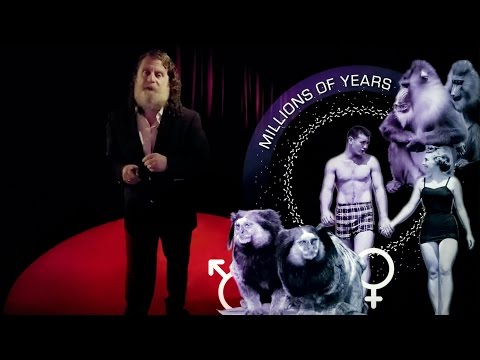
- To comprehend behavior fully, one must consider a range of influences from seconds before an event to millions of years in the past.
- It is crucial to approach behavioral analysis with caution and avoid hasty conclusions.
New Section
This section highlights the capacity for change in biological systems, including ecosystems, cultures, and brains.
Embracing Change
- Biological systems are dynamic and subject to change.
- Ecosystems transform over time, cultures evolve, and brains undergo continuous modifications.
- Human examples demonstrate extraordinary potential for change based on these dynamics.
Amazing Grace and Extraordinary Human Change
This section explores the concept of extraordinary human change through historical examples and personal stories. It emphasizes the importance of studying history and biology to understand how individuals can transform from their worst to their best behaviors.
Amazing Grace: A Hymn Celebrating Change
- Newton's hymn "Amazing Grace" symbolizes a significant change that occurred within him.
- The hymn represents the idea of transformation and redemption.
Zenji Abe's Apology
- Zenji Abe, a Japanese pilot who participated in the attack on Pearl Harbor, later apologized for his actions as an old man.
- He expressed remorse for what he had done during his youth.
World War I Christmas Truce
- During World War I, British and German soldiers initiated a truce during Christmas.
- They helped each other collect bodies, dig graves, prayed together, celebrated Christmas, played soccer, and exchanged addresses.
- The truce created a new sense of unity among soldiers on both sides.
My Lai Massacre and Hugh Thompson's Intervention
- The My Lai Massacre was a horrifying event during the Vietnam War where American soldiers killed hundreds of civilians.
- Hugh Thompson, an American helicopter pilot, intervened by landing between surviving villagers and American soldiers.
- He aimed his machine guns at his fellow Americans to stop the killing.
Importance of Studying History for Change
- Understanding history is crucial to avoid repeating past mistakes.
- Studying extraordinary human change helps us learn from transformative moments in history.
Conclusion
This section highlights various instances of extraordinary human change throughout history. It emphasizes the significance of studying history and biology to comprehend how individuals can undergo profound transformations.
Turn any video into a summary like this
YouTube links, meetings, lectures. With transcripts, search, and chat.