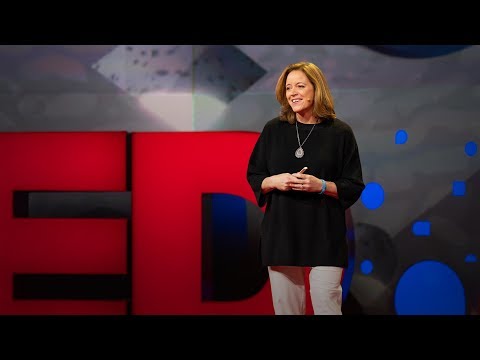
The difference between healthy and unhealthy love | Katie Hood | TED
The Importance of Love
In this section, the speaker talks about how love is a central part of our lives and yet we are never explicitly taught how to love.
Love and Its Connection to Our Lives
- Love is a word that comes to mind when we think about a child, close friend, or romantic partner.
- Despite its importance in our lives, we are never explicitly taught how to love.
- We often harm and disrespect the ones we love without realizing it.
Unhealthy Relationships and Abuse
- 100% of us will be on the receiving end of unhealthy relationship behaviors and 100% of us will do unhealthy things. It's part of being human.
- One in three women and one in four men will experience relationship abuse in their lifetime.
- Unhealthy relationships and abuse are all around us but we often ignore the connection.
One Love's Mission
- One Love was started by a family whose daughter was killed by her ex-boyfriend because no one understood the warning signs that were there.
- The organization aims to give people a language for talking about an awkward subject, empower friends to help, and improve everyone's ability to love better.
Five Markers of Unhealthy Love
In this section, the speaker uses "The Couplets" video from One Love to illustrate five markers of unhealthy love.
Intensity
- Abusive relationships don't start out abusive but rather exciting and exhilarating with an intensity of affection and emotion that feels really good at first.
- However, in unhealthy love, these feelings shift over time from exciting to overwhelming and suffocating.
- It's important to pay attention to how you're feeling in the early days of a new relationship and whether you're comfortable with the pace of intimacy and have space to breathe.
Obsession
- Unhealthy love can manifest as an obsession where one partner is possessive, jealous, or controlling.
- This can lead to isolation from friends and family, which makes it easier for the abusive partner to control their victim.
Isolation
- Abusive partners often isolate their victims from friends and family as a way of gaining control over them.
- They may also use guilt or manipulation to keep their victim from spending time with others.
Sabotage
- Unhealthy love can involve sabotage where one partner undermines the other's success or happiness out of jealousy or insecurity.
- This can take many forms such as belittling accomplishments, discouraging goals, or even causing intentional harm.
Control
- In unhealthy love, one partner may try to control every aspect of the other's life including what they wear, who they talk to, and where they go.
- This behavior is often disguised as concern but is really about power and domination over the other person.
Signs of Unhealthy Love
In this video, the speaker discusses five markers of unhealthy love that are often missed or misunderstood. These markers include control, isolation, extreme jealousy, belittling, and volatility.
Control
- Control is a marker of unhealthy love.
- It can manifest in different ways such as controlling what you wear or who you talk to.
- This behavior can escalate over time and lead to more serious forms of abuse.
- Healthy relationships involve mutual respect and trust.
Isolation
- Isolation is another marker of unhealthy love.
- It occurs when your partner pulls you away from your friends and family.
- They may sow seeds of doubt about everyone from your pre-relationship life.
- Healthy love includes independence and maintaining connections with people outside the relationship.
Extreme Jealousy
- Extreme jealousy is a third marker of unhealthy love.
- It brings possessiveness, mistrust, frequent accusations of flirting or cheating, and refusal to listen to you when you tell them they have nothing to worry about.
- There's a threatening, desperate and angry edge to it.
- Love shouldn't feel like this.
Belittling
- Belittling is another marker of unhealthy love where words are used as weapons.
-Conversations that used to be fun turn mean and embarrassing.
-Maybe your partner makes fun of you in a way that hurts or tells stories for laughs at your expense.
-In healthy relationships partners should build each other up not break each other down.
Volatility
- Finally, volatility is the fifth marker where there are frequent breakups followed by emotional makeups, hateful and hurtful comments followed quickly by apologies and promises it will never happen again.
-As tension rises, so does volatility.
-It can be really hard to see when unhealthy love turns towards abuse.
Conclusion
The speaker concludes that the more of these markers your relationship might have, the more unhealthy and maybe dangerous your relationship could be. If your instinct is to break up and leave, which is advice so many of us give our friends.
Understanding Unhealthy Love
In this section, the speaker explains that understanding the signs of unhealthy love can help you audit and understand nearly every relationship in your life.
Importance of Understanding Unhealthy Love
- Understanding unhealthy love can help you understand why you're disappointed in a friendship or why every interaction with a certain family member leaves you discouraged and anxious.
- It can also help you see how your own intensity and jealousy is causing problems with colleagues at work.
Improving Relationships
- Open communication, mutual respect, kindness, patience are key to improving relationships.
- Practicing healthy relationship skills can improve nearly every aspect of your life.
The Art of Being Healthy
In this section, the speaker talks about how even though she does this for a living, she still struggles with unhealthy behaviors in her relationships. She emphasizes the importance of having a language to make us pause when we engage in unhealthy behaviors.
Struggles with Unhealthy Behaviors
- Even experts struggle with unhealthy behaviors in their relationships.
- The speaker shares an example of losing her temper with her kids amidst quarreling and squabbling.
Importance of Having a Language for Healthy Behaviors
- Her son called out her behavior as not being loving which made her pause and reflect on her actions.
- The speaker wants all kids to have a language to use when they are not being treated well instead of just accepting it.
Conclusion: Building Skills for Better Love
In this section, the speaker concludes by emphasizing that while love is an instinct and an emotion, the ability to love better is a skill that can be built and improved over time.
Building Skills for Better Love
- The ability to love better is a skill we can all build and improve on over time.
Turn any video into a summary like this
YouTube links, meetings, lectures. With transcripts, search, and chat.